Asteraceae
Siam Weed: Medicinal Uses & Care Tips
Chromolaena odorata
An extremely low-maintenance, fast-growing shrub that thrives in full sun with regular moisture and well-draining soil. In frost-free tropical and subtropical climates it needs virtually no care to establish and spread, which is precisely why it is classified as a noxious weed outside its native range — where permitted at all, it should be cut back regularly to control size and prevent seed set.
Every 7 days
Bright indirect
10° - 35°C
40% - 90%
Categories
What is Siam Weed?
Siam Weed (Chromolaena odorata) is a easy-care plant from the Asteraceae family. Chromolaena odorata, commonly called Siam weed, is a fast-growing, multi-stemmed shrub in the daisy family (Asteraceae), native to Central and South America and now widely naturalized as one of the world's most aggressive invasive species across tropical Africa, Asia, and the Pacific. It forms dense...
Siam Weed grows up to 2.5m, spread of 180cm, watering every 7 days, 10°C – 35°C, 40–90% humidity. It is not suitable for indoor environments and not safe for pets.
Unlike many tropical plants, Siam Weed tolerates watering mistakes. Best for beginners. Without precautions, ingestion can cause irritation in pets. Keep out of reach of cats and dogs.
How to Care for Siam Weed?
TLDR: Siam Weed needs Bright indirect, watering every 7 days, and temperatures between 10-35°C with 40-90% humidity.
How Often Should You Water Siam Weed?
Keep soil evenly moist during establishment; once rooted the plant tolerates brief dry spells but grows fastest with consistent water. Avoid waterlogged or saline soils, which stunt growth.
How Much Light Does Siam Weed Need?
Give it full sun to very bright light — it does not tolerate deep shade and grows and flowers most vigorously in open, sunny sites.
What Is the Best Soil for Siam Weed?
Tolerates a wide range of soils from sandy to clayey, but performs best in well-draining, slightly acidic soil (pH 5.5-7.0) rich in organic matter.
What Pot Should You Use for Siam Weed?
Not a houseplant or typical container subject — as a recognized invasive species it should not be deliberately cultivated. Where containment for study is required, use a large, sturdy pot with excellent drainage and a physical barrier to prevent root escape and seed dispersal.
What Is Siam Weed and Where Does It Come From?
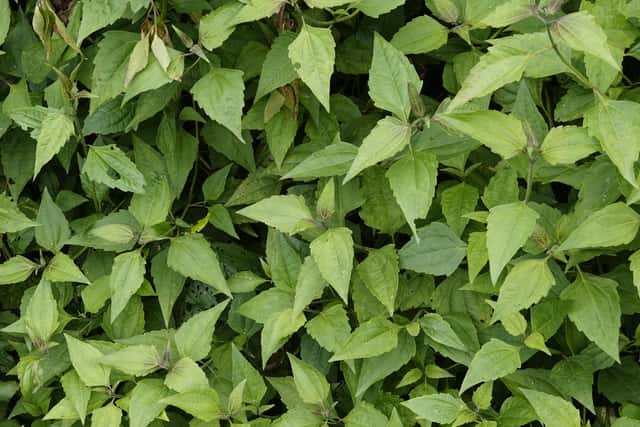
Chromolaena odorata, commonly called Siam weed, is a fast-growing, multi-stemmed shrub in the daisy family (Asteraceae), native to Central and South America and now widely naturalized as one of the world's most aggressive invasive species across tropical Africa, Asia, and the Pacific. It forms dense, tangled thickets 2-2.5 m tall in open ground (climbing several meters higher when scrambling over other vegetation), with diamond-shaped, pungent-smelling leaves and clusters of pale lilac-to-white flowers. The species spreads rapidly via wind-dispersed seed and resprouts vigorously after fire or cutting, allowing it to outcompete pastures, crops, and native vegetation wherever it establishes. Despite its status as a noxious weed and its toxicity to grazing livestock, communities across its introduced range have long used its leaves in traditional wound-healing and antimicrobial remedies.
How to Propagate Siam Weed?
Seed (natural dispersal)
- Because of its extreme invasive potential, deliberate seed propagation is strongly discouraged outside its native range and may be regulated or illegal in some jurisdictions.
- 1 Seed set
Each flower head produces large numbers of wind-dispersed seeds (a single plant can produce tens of thousands annually).
- 2 Germination
Seeds germinate readily in disturbed, sunny, moist soil with little further intervention.
Stem cuttings
- Only propagate in controlled/research settings given the species' invasive status.
- 1 Take cutting
Cut a semi-hardwood stem section with a few nodes.
- 2 Root
Place in moist, well-draining medium; roots form quickly given the plant's fast growth rate.
Materials needed:
How Big Does Siam Weed Grow?
TLDR: Siam Weed can reach up to 2.5m tall with Fast growth rate.
Max height
2.5m
Spread
1.8m
Growth rate
Fast
Foliage
Semi-evergreen
Warning: Toxic Plant
This plant can be toxic if ingested. Keep out of reach of:
Plant Uses
Medicinal
Medicinal properties
Medicinal Uses
- Traditional wound-healing and hemostatic use on cuts and soft-tissue injuries
- Leaf extracts applied for skin infections
- Traditional treatment for diarrhea and malaria in parts of Africa and Asia
- Studied for antibacterial, antioxidant and anti-diabetic activity
Is your plant showing symptoms?
Click on the symptom to discover possible causes:
What Diseases Commonly Affect Siam Weed?
TLDR: Siam Weed is susceptible to 4 known diseases. Monitor regularly for early detection.
Leaf Spot
Leaf spot is a common fungal disease caused by various pathogens including Alternaria, Ascochyta, Colletotrichum, Septoria, and Venturia. It primarily affects leaves, causing discolored spots that can lead to premature leaf drop if left untreated.
Aphids
Aphids are small, soft-bodied, pear-shaped insects (1/16 to 1/8 inch long) that feed by sucking nutrient-rich sap from plants. They reproduce rapidly and can quickly weaken plants, causing distorted growth and transmitting plant viruses. Aphids come in various colors including green, black, red, yellow, brown, and gray. They secrete honeydew, a sticky substance that attracts ants and encourages sooty mold growth.
Whiteflies
Whiteflies are small, soft-bodied, winged insects closely related to aphids and mealybugs. They are moth-like in appearance, about 1/16 inch long, triangular in shape, and gray-white in color. These sap-sucking pests feed on plant tissue, causing yellowing, stunted growth, and wilting. They also excrete honeydew, which attracts ants and promotes sooty mold growth. Whiteflies can transmit serious plant viruses.
Mealybugs
Mealybugs are small, soft-bodied insects covered with a white, waxy, cottony material. They are common pests of houseplants and outdoor plants in mild climates. These sap-sucking insects feed on plant tissue, causing damage, stunted growth, and can lead to plant death if left untreated. They produce sticky honeydew which attracts sooty mold.
Meaning & Symbolism
In its native range Siam weed has few cultural associations, but across the tropics where it has become naturalized it symbolizes the double-edged nature of introduced species — celebrated in folk medicine for its wound-healing properties, yet feared by farmers as 'devil weed' or 'bitter bush' for its relentless, land-consuming spread.
Compare with similar plants
| Attribute | Difficulty | Light | Watering | Pet Safe |
|---|---|---|---|---|
| Field Maple | Easy | Bright indirect | 14d | ✓ |
| Silver Birch | Easy | Direct sun | 14d | ✓ |
| Common Blanketflower | Easy | Direct sun | 10d | ✓ |
| Cushion Bush | Easy | Direct sun | 14d | ✓ |





