Crassulaceae
Siberian Stonecrop: Ground Cover Plant
Phedimus hybridus
This tough little succulent asks for very little: full sun, well-draining soil, and infrequent watering. Let the soil dry out between waterings and avoid soggy conditions, which can cause root rot. It tolerates poor soil and drought once established, needs no regular fertilizing, and is essentially maintenance-free in most temperate climates.
Every 14 days
Bright indirect
° - °C
% - %
Categories
What is Siberian Stonecrop?
Siberian Stonecrop (Phedimus hybridus) is a easy-care plant from the Crassulaceae family. Phedimus hybridus (formerly Sedum hybridum), commonly called Siberian stonecrop, is a low-growing succulent groundcover native to eastern and central Siberia and Central Asia, now widely naturalized across northern Europe. It forms dense mats via branching, woody rhizomes, with fleshy leaves and clu...
Siberian Stonecrop grows up to 20cm, watering every 14 days. It is not suitable for indoor environments and not safe for pets.
Unlike many tropical plants, Siberian Stonecrop tolerates watering mistakes. Best for beginners. Without precautions, ingestion can cause irritation in pets. Keep out of reach of cats and dogs.
How to Care for Siberian Stonecrop?
TLDR: Siberian Stonecrop needs Bright indirect, watering every 14 days, and temperatures between 15-30°C with 40-70% humidity.
How Often Should You Water Siberian Stonecrop?
Water deeply, then let the soil dry out completely before watering again. Established plants can go weeks without water — when in doubt, do not water.
How Much Light Does Siberian Stonecrop Need?
Give it as much direct sun as possible; it flowers best with 6+ hours a day. It tolerates light shade but growth becomes leggier and less compact.
What Is the Best Soil for Siberian Stonecrop?
Use a gritty, fast-draining mix — standard succulent/cactus soil or garden loam amended with sand, pumice, or perlite works well. Good drainage is essential to prevent rot.
What Pot Should You Use for Siberian Stonecrop?
A shallow, wide terracotta or unglazed clay pot with generous drainage holes suits its spreading, mat-forming habit and helps excess moisture evaporate quickly.
What Is Siberian Stonecrop and Where Does It Come From?
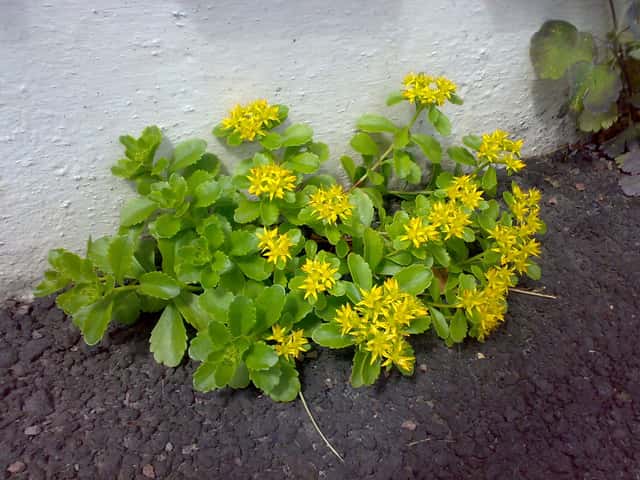
Phedimus hybridus (formerly Sedum hybridum), commonly called Siberian stonecrop, is a low-growing succulent groundcover native to eastern and central Siberia and Central Asia, now widely naturalized across northern Europe. It forms dense mats via branching, woody rhizomes, with fleshy leaves and clusters of star-shaped yellow flowers appearing on short stems from late spring through summer. Extremely cold-hardy and drought-tolerant, it thrives in rocky, well-drained soils on sunny slopes and is a popular choice for rock gardens, green roofs, and ground cover plantings.
How to Propagate Siberian Stonecrop?
Division
Best done in spring or early summer when the plant is actively growing.
- 1 Dig up a section of the spreading mat, including roots and rhizomes
- 2 Separate into smaller clumps by hand or with a clean knife
- 3 Replant immediately in well-draining soil at the same depth
- 4 Water lightly to settle the soil
Materials needed:
Stem Cutting
Like most Crassulaceae, stem sections root readily without hormone treatment.
- 1 Snip a 5-8 cm stem tip with a few sets of leaves
- 2 Let the cut end callus over for 1-2 days in a dry, shaded spot
- 3 Insert the callused end into a gritty, well-draining mix
- 4 Keep lightly moist until roots establish
Materials needed:
Seed
Germination can be slow and uneven; division or cuttings are faster and more reliable.
- 1 Surface-sow fine seeds onto moist, well-draining soil in a tray or greenhouse
- 2 Do not cover seeds, as they need light to germinate
- 3 Keep consistently moist but not waterlogged until germination
- 4 Transplant seedlings once large enough to handle
Materials needed:
How Big Does Siberian Stonecrop Grow?
TLDR: Siberian Stonecrop can reach up to 20cm tall with Fast growth rate.
Max height
20cm
Growth rate
Fast
Foliage
Semi-evergreen
Warning: Toxic Plant
This plant can be toxic if ingested. Keep out of reach of:
Plant Uses
Ornamental
Great for decoration
Ground Cover
Soil coverage
Medicinal
Medicinal properties
Medicinal Uses
- Traditionally applied as a poultice to soothe cuts and minor skin irritations
- Used in folk medicine for its anti-inflammatory and pain-relieving properties
Culinary Uses
- Leaves are technically edible but rarely eaten due to bland flavor and mild alkaloid content
Is your plant showing symptoms?
Click on the symptom to discover possible causes:
What Diseases Commonly Affect Siberian Stonecrop?
TLDR: Siberian Stonecrop is susceptible to 7 known diseases. Monitor regularly for early detection.
Slugs and Snails
Slugs and snails are mollusks that feed on plant tissue, causing irregular holes in leaves and damage to young seedlings. They are most active at night and in moist conditions, leaving characteristic silvery slime trails. These pests can quickly devastate gardens, especially during wet seasons.
Scale Insects
Scale insects are small sap-sucking pests that appear as brown, shell-like bumps on plant stems and leaves. There are over 25 species, divided into armored (hard) and unarmored (soft) scales. They feed by piercing plant tissue and extracting sap, which weakens the plant and can lead to yellowing, stunted growth, and even death if left untreated. They also excrete honeydew, which attracts ants and promotes sooty mold growth.
Mealybugs
Mealybugs are small, soft-bodied insects covered with a white, waxy, cottony material. They are common pests of houseplants and outdoor plants in mild climates. These sap-sucking insects feed on plant tissue, causing damage, stunted growth, and can lead to plant death if left untreated. They produce sticky honeydew which attracts sooty mold.
Root-Knot Nematodes
Root-knot nematodes (Meloidogyne species) are microscopic roundworms that parasitize plant roots, causing characteristic galls or knots. These soil-borne pests are among the most economically damaging plant pathogens worldwide, affecting a wide range of ornamental and edible plants. The nematodes inject enzymes into root cells, causing abnormal swelling and disrupting water and nutrient uptake.
Meaning & Symbolism
Like many sedums, this hardy stonecrop is often associated with resilience, endurance, and quiet persistence — a plant that thrives in harsh, rocky ground where little else survives.
Compare with similar plants
| Attribute | Difficulty | Light | Watering | Pet Safe |
|---|---|---|---|---|
| Field Maple | Easy | Bright indirect | 14d | ✓ |
| Silver Birch | Easy | Direct sun | 14d | ✓ |
| Common Blanketflower | Easy | Direct sun | 10d | ✓ |
| Cushion Bush | Easy | Direct sun | 14d | ✓ |





