Asteraceae
Signet Marigold (Tagetes tenuifolia)
Tagetes tenuifolia
Easy to grow; needs full sun, regular watering without waterlogging, and well-draining soil. Great for borders, containers, and vegetable gardens as a pest-deterrent companion.
Every 3 days
Direct sun
10° - 35°C
% - %
Categories
What is Signet Marigold?
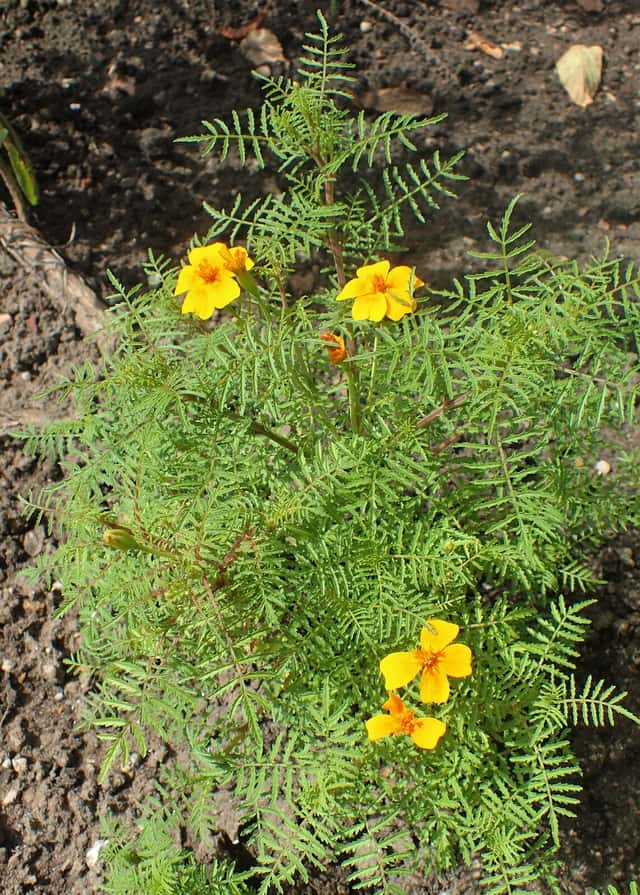
Signet Marigold (Tagetes tenuifolia) is a easy-care plant from the Asteraceae family. Signet marigold (Tagetes tenuifolia) is a compact, mounding annual native to Mexico and Central America, prized for its lacy, lemon-scented foliage and abundance of small single flowers in yellow, orange, and gold. It blooms profusely from early summer through fall and is a popular edging and compan...
Signet Marigold grows up to 76cm, spread of 76cm, watering every 3 days, 10°C – 35°C. It is not suitable for indoor environments and safe for pets.
Unlike many tropical plants, Signet Marigold tolerates watering mistakes. Best for beginners. Unlike many popular species, Signet Marigold is safe to keep around pets.
How to Care for Signet Marigold?
TLDR: Signet Marigold needs Direct sun, watering every 3 days, and temperatures between 10-35°C with 40-70% humidity.
How Often Should You Water Signet Marigold?
Keep soil evenly moist, watering at the base in the morning. Water 2-3 times a week in hot weather, less often in cooler seasons. Avoid soggy soil, which promotes root rot.
How Much Light Does Signet Marigold Need?
Needs at least 6 hours of direct sun daily for the best, most colorful blooms.
What Is the Best Soil for Signet Marigold?
Prefers fertile, well-draining soil; tolerates sandy, clay, or loam soils as long as they drain well. Slightly acidic to neutral pH.
What Pot Should You Use for Signet Marigold?
Containers, window boxes, or garden beds with good drainage; space plants 10-18 inches (25-45 cm) apart.
Care Schedule
Fertilize
Every 30 days
What Is Signet Marigold and Where Does It Come From?
Signet marigold (Tagetes tenuifolia) is a compact, mounding annual native to Mexico and Central America, prized for its lacy, lemon-scented foliage and abundance of small single flowers in yellow, orange, and gold. It blooms profusely from early summer through fall and is a popular edging and companion plant.
How to Propagate Signet Marigold?
Seed sowing
Start seeds 4-6 weeks before the last frost date for earlier blooms; avoid excess nitrogen, which reduces flowering.
- 1 Sow seeds 1/4 inch (0.5 cm) deep in trays or directly in the bed
- 2 Keep substrate moist until germination, between 70-75°F (21-24°C)
- 3 Transplant seedlings once they have 2-3 true leaves, spacing 10-18 in (25-45 cm) apart
Materials needed:
How Big Does Signet Marigold Grow?
TLDR: Signet Marigold can reach up to 76cm tall with Medium growth rate.
Max height
76cm
Spread
76cm
Growth rate
Medium
Foliage
Deciduous
Warning: Toxic Plant
This plant can be toxic if ingested. Keep out of reach of:
Plant Uses
Ornamental
Great for decoration
Edible
Can be consumed
Aromatic
Pleasant fragrance
Culinary Uses
- Edible flowers used as a garnish in salads and dishes
Is your plant showing symptoms?
Click on the symptom to discover possible causes:
What Diseases Commonly Affect Signet Marigold?
TLDR: Signet Marigold is susceptible to 6 known diseases. Monitor regularly for early detection.
Gray Mold (Botrytis Blight)
Gray mold, caused by the fungus Botrytis cinerea, is one of the most common fungal diseases in plants. It affects over 200 plant species, including ornamentals, vegetables, fruits, and houseplants. The disease thrives in cool, humid conditions with poor air circulation, causing grayish spots and soft rot on infected tissues.
Slugs and Snails
Slugs and snails are mollusks that feed on plant tissue, causing irregular holes in leaves and damage to young seedlings. They are most active at night and in moist conditions, leaving characteristic silvery slime trails. These pests can quickly devastate gardens, especially during wet seasons.
Spider Mites
Spider mites are tiny arachnids (less than 1/20 inch long) related to spiders and ticks that feed on plant sap. They thrive in hot, dry conditions and can cause significant damage to ornamental and vegetable plants. During severe infestations, crop losses can reach 14% or higher as these pests disrupt vital plant processes including photosynthesis, carbon dioxide absorption, and transpiration.
Leafminers
Leafminers are the larvae of various insects including flies, moths, sawflies, and beetles that tunnel between leaf surfaces, creating distinctive serpentine trails or blotchy patches. While primarily cosmetic, severe infestations can weaken plants by reducing photosynthesis capacity and making them susceptible to secondary infections.
Meaning & Symbolism
Long linked to garden protection and, in Mexican tradition, tagetes flowers adorn Dia de los Muertos altars, symbolizing the fleeting brightness of life.
Fun Facts
Native to Mexico and Central America, its flowers are used on Dia de los Muertos altars
The foliage releases a citrus scent when touched
The edible flowers have a spicy, citrusy taste and are used as a garnish
Frequently asked questions
How often should I water signet marigold?
Does signet marigold need full sun?
Is signet marigold toxic to cats and dogs?
How do you propagate signet marigold?
What pests commonly affect this plant?
Compare with similar plants
| Attribute | Difficulty | Light | Watering | Pet Safe |
|---|---|---|---|---|
| Field Maple | Easy | Bright indirect | 14d | ✓ |
| Silver Birch | Easy | Direct sun | 14d | ✓ |
| Common Blanketflower | Easy | Direct sun | 10d | ✓ |
| Cushion Bush | Easy | Direct sun | 14d | ✓ |





