Urticaceae
Pilea libanensis (Silver Sparkle Pilea) Care Guide
Pilea libanensis
Easy-care trailing houseplant that wants bright, indirect light, evenly moist (never soggy) well-draining soil, and average to slightly elevated humidity. Let the top half-inch of soil dry between waterings and pinch back stems to keep growth compact.
Every 7 days
Partial shade
15° - 24°C
50% - 70%
Categories
What is Silver Sparkle Pilea?
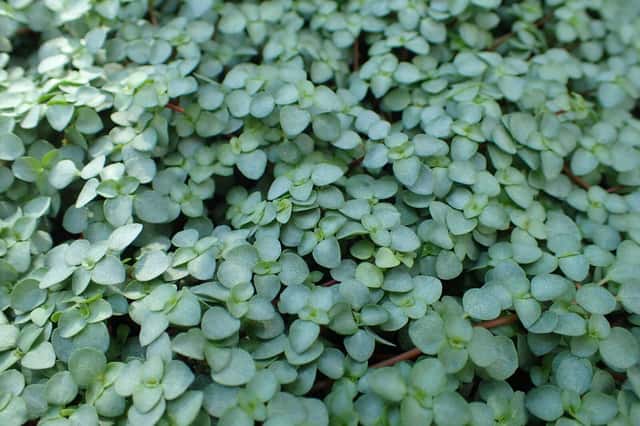
Silver Sparkle Pilea (Pilea libanensis) is a easy-care plant from the Urticaceae family. Pilea libanensis is a low-growing, mat-forming evergreen perennial in the nettle family (Urticaceae), prized for its tiny, glaucous blue-gray leaves that shimmer with a silvery frost on wiry, reddish trailing stems. Native to Central and South America, it is often sold interchangeably with Pilea gla...
Silver Sparkle Pilea grows up to 15cm, spread of 40cm, watering every 7 days, 15°C – 24°C, 50–70% humidity. It is suitable for indoor environments and safe for pets.
Unlike many tropical plants, Silver Sparkle Pilea tolerates watering mistakes. Best for beginners. Unlike many popular species, Silver Sparkle Pilea is safe to keep around pets. Without adequate drainage, root rot can develop within 14 days.
How to Care for Silver Sparkle Pilea?
TLDR: Silver Sparkle Pilea needs Partial shade, watering every 7 days, and temperatures between 15-24°C with 50-70% humidity.
How Often Should You Water Silver Sparkle Pilea?
Water when the top 1-2cm of soil has dried out, soaking thoroughly until water drains from the pot, then discard excess. This plant is sensitive to both overwatering (root rot) and prolonged dryness.
How Much Light Does Silver Sparkle Pilea Need?
Bright, indirect light is ideal, such as near an east-facing window. Avoid direct sun, which scorches the delicate leaves; too little light causes leggy growth and dull color.
What Is the Best Soil for Silver Sparkle Pilea?
Use a light, well-draining mix, e.g. 3 parts peat-based potting soil to 1 part perlite, to keep roots aerated and prevent waterlogging.
What Pot Should You Use for Silver Sparkle Pilea?
Shallow, wide pot or hanging basket with drainage holes to accommodate trailing/mat-forming growth
Care Schedule
Fertilize
Every 30 days
Misting
Every 7 days
Rotate
Every 14 days
Repot
Every 365 days
What Is Silver Sparkle Pilea and Where Does It Come From?
Pilea libanensis is a low-growing, mat-forming evergreen perennial in the nettle family (Urticaceae), prized for its tiny, glaucous blue-gray leaves that shimmer with a silvery frost on wiry, reddish trailing stems. Native to Central and South America, it is often sold interchangeably with Pilea glauca and Pilea glaucophylla and is a popular choice for hanging baskets, terrariums, and as a groundcover in mixed containers.
How to Propagate Silver Sparkle Pilea?
Stem cutting
Cuttings root quickly in water or soil; keep humidity elevated for best results and use clean, sharp scissors.
- 1 Snip 1-2 inch (2.5-5cm) segments from healthy stems
- 2 Lay the cuttings on top of moist, well-draining soil or place in water
- 3 Keep in bright indirect light with consistent moisture and higher humidity
Materials needed:
How Big Does Silver Sparkle Pilea Grow?
TLDR: Silver Sparkle Pilea can reach up to 15cm tall with Fast growth rate.
Max height
15cm
Spread
40cm
Growth rate
Fast
Foliage
Evergreen
Plant Uses
Ornamental
Great for decoration
Ground Cover
Soil coverage
Is your plant showing symptoms?
Click on the symptom to discover possible causes:
What Diseases Commonly Affect Silver Sparkle Pilea?
TLDR: Silver Sparkle Pilea is susceptible to 11 known diseases. Monitor regularly for early detection.
Root Rot
Root rot is a serious fungal disease that affects the root system of plants, causing them to decay and die. It is primarily caused by overwatering, poor drainage, or soil-borne fungi such as Pythium, Phytophthora, Rhizoctonia, and Fusarium. The disease thrives in waterlogged conditions where roots are deprived of oxygen, making them susceptible to fungal infection.
Gray Mold (Botrytis Blight)
Gray mold, caused by the fungus Botrytis cinerea, is one of the most common fungal diseases in plants. It affects over 200 plant species, including ornamentals, vegetables, fruits, and houseplants. The disease thrives in cool, humid conditions with poor air circulation, causing grayish spots and soft rot on infected tissues.
Southern Blight
Southern blight is a devastating soilborne fungal disease caused by Athelia rolfsii (formerly Sclerotium rolfsii), affecting over 500 plant species including vegetables, ornamentals, and fruit crops. The fungus survives in soil through resting structures called sclerotia that resemble mustard seeds and can remain viable for years.
Leaf Spot
Leaf spot is a common fungal disease caused by various pathogens including Alternaria, Ascochyta, Colletotrichum, Septoria, and Venturia. It primarily affects leaves, causing discolored spots that can lead to premature leaf drop if left untreated.
Fun Facts
Its leaves are covered in a fine silvery, glaucous bloom that gives the plant its shimmering appearance
Despite the species name libanensis (suggesting Lebanon), the plant is native to Central and South America
It is frequently sold under three different names - Pilea glauca, Pilea glaucophylla, and Pilea libanensis - for the same plant
Frequently asked questions
Is Pilea libanensis toxic to cats or dogs?
How often should I water my Silver Sparkle Pilea?
Why are the leaves of my Pilea glauca turning brown or dropping?
How do I propagate Pilea libanensis?
Compare with similar plants
| Attribute | Difficulty | Light | Watering | Pet Safe |
|---|---|---|---|---|
| Field Maple | Easy | Bright indirect | 14d | ✓ |
| Silver Birch | Easy | Direct sun | 14d | ✓ |
| Common Blanketflower | Easy | Direct sun | 10d | ✓ |
| Cushion Bush | Easy | Direct sun | 14d | ✓ |
Choose & Compare
Sources & References
- Pilea Glauca Care - Smart Garden Guide
- Silver Sparkle Pilea (Pilea glauca) - Gardenia.net
- Pilea libanensis - Pumpkin Beth
- Pilea Glauca - Vital Care and Propagation Tips - Ohio Tropics
- Toxic and Non-toxic Plants: Creeping Pilea - ASPCA
- How Can You Tell If A Pilea libanensis Is Dying? - Greg App
- Ultimate Guide to Solving Pilea Glauca Problems - Greg App
- Pilea Glaucaphylla / Libanensis - UK Houseplants
- Pilea glauca o Llama plata - Biospace.es





