Aspleniaceae
Asplenium monanthes (Single-sorus Spleenwort): Care Guide
Asplenium monanthes
Give it bright shade or soft indirect light, steady warmth and high humidity. Keep the substrate evenly moist but never soggy, and keep water out of the crown. Use a loose, organic, well-draining mix. Feed lightly during the growing season and protect it from drafts and dry air.
Every 4 days
Low light
10° - 27°C
60% - 90%
Categories
What is Single-sorus Spleenwort?
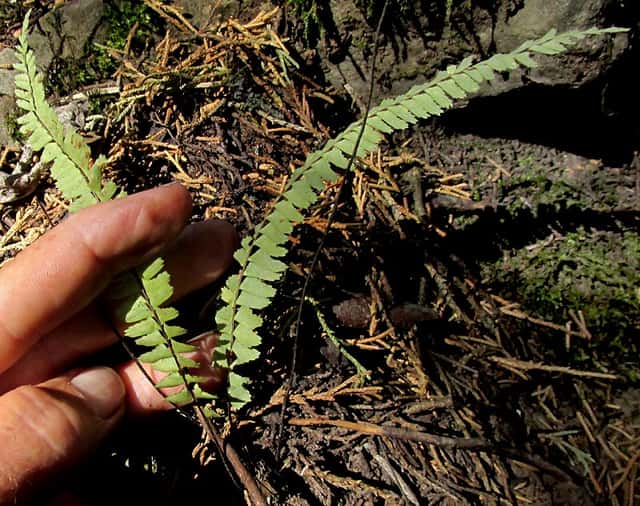
Single-sorus Spleenwort (Asplenium monanthes) is a medium-care plant from the Aspleniaceae family. Asplenium monanthes is a small evergreen fern with erect, once-divided fronds on shiny, dark reddish-brown to blackish stalks. Each fertile leaflet carries a single sorus, which gives the species its name. It grows in tropical and subtropical regions of the Americas, Africa and Atlantic islands, usu...
Single-sorus Spleenwort grows up to 30cm, spread of 30cm, watering every 4 days, 10°C – 27°C, 60–90% humidity. It is suitable for indoor environments and safe for pets.
Unlike many popular species, Single-sorus Spleenwort is safe to keep around pets. Without adequate drainage, root rot can develop within 8 days.
How to Care for Single-sorus Spleenwort?
TLDR: Single-sorus Spleenwort needs Low light, watering every 4 days, and temperatures between 10-27°C with 60-90% humidity.
How Often Should You Water Single-sorus Spleenwort?
Water when the top of the mix starts to dry, roughly every 3 to 5 days. Water the soil rather than the crown, and make sure the pot drains well.
How Much Light Does Single-sorus Spleenwort Need?
Bright shade or filtered indirect light suits it best. Direct sun scorches the delicate fronds.
What Is the Best Soil for Single-sorus Spleenwort?
Use a loose, humus-rich mix, such as peat-free potting soil with bark and perlite. It tolerates neutral to slightly alkaline conditions, since it grows on limestone in the wild.
What Pot Should You Use for Single-sorus Spleenwort?
A small pot with drainage holes. Terracotta or plastic both work if the mix stays moist and airy.
Care Schedule
Fertilize
Every 30 days
Misting
Every 3 days
Rotate
Every 14 days
Repot
Every 730 days
What Is Single-sorus Spleenwort and Where Does It Come From?
Asplenium monanthes is a small evergreen fern with erect, once-divided fronds on shiny, dark reddish-brown to blackish stalks. Each fertile leaflet carries a single sorus, which gives the species its name. It grows in tropical and subtropical regions of the Americas, Africa and Atlantic islands, usually on shaded, humid forest floors and moist rock faces. Fronds are typically around 15 to 30 cm long.
How to Propagate Single-sorus Spleenwort?
Division of clumps
Divide only large, well-established clumps and avoid damaging the roots.
- 1 Remove the plant from its pot and shake off the loose mix.
- 2 Gently separate the clump into sections, each with roots and several fronds.
- 3 Pot each section in a fresh, moist, airy mix.
- 4 Keep it humid and in shade until new growth appears.
Materials needed:
Spore sowing
Patience is essential, because it takes months to see young ferns.
- 1 Collect ripe spores from the sori on the underside of the fronds.
- 2 Sow them on the surface of moist, sterile peat-based mix.
- 3 Cover with a clear lid and keep it warm in bright shade.
- 4 Mist with clean water until the green prothallia appear.
- 5 Transplant the young ferns once they have several fronds.
Materials needed:
How Big Does Single-sorus Spleenwort Grow?
TLDR: Single-sorus Spleenwort can reach up to 30cm tall with Slow growth rate.
Max height
30cm
Spread
30cm
Growth rate
Slow
Foliage
Evergreen
Plant Uses
Ornamental
Great for decoration
Is your plant showing symptoms?
Click on the symptom to discover possible causes:
What Diseases Commonly Affect Single-sorus Spleenwort?
TLDR: Single-sorus Spleenwort is susceptible to 4 known diseases. Monitor regularly for early detection.
Root Rot
Root rot is a serious fungal disease that affects the root system of plants, causing them to decay and die. It is primarily caused by overwatering, poor drainage, or soil-borne fungi such as Pythium, Phytophthora, Rhizoctonia, and Fusarium. The disease thrives in waterlogged conditions where roots are deprived of oxygen, making them susceptible to fungal infection.
Scale Insects
Scale insects are small sap-sucking pests that appear as brown, shell-like bumps on plant stems and leaves. There are over 25 species, divided into armored (hard) and unarmored (soft) scales. They feed by piercing plant tissue and extracting sap, which weakens the plant and can lead to yellowing, stunted growth, and even death if left untreated. They also excrete honeydew, which attracts ants and promotes sooty mold growth.
Fungus Gnats
Fungus gnats are small, gray-to-black mosquito-like insects (1/8 to 1/10 inches long) commonly found in indoor plants. Adult gnats are mostly a nuisance, but their larvae feed on plant roots and organic matter in soil, potentially causing serious damage to young or vulnerable plants. The larvae are translucent white with distinctive black heads and can leave slime trails on the soil surface in heavy infestations.
Leaf Spot
Leaf spot is a common fungal disease caused by various pathogens including Alternaria, Ascochyta, Colletotrichum, Septoria, and Venturia. It primarily affects leaves, causing discolored spots that can lead to premature leaf drop if left untreated.
Meaning & Symbolism
Like many spleenworts, it stands for resilience and quiet beauty in shaded places.
Fun Facts
The species name monanthes refers to the single sorus carried by each fertile leaflet.
It occurs across the Americas, Africa and Atlantic islands such as the Azores and the Canary Islands.
It has been recorded growing on limestone, so it tolerates alkaline conditions better than many ferns.
Frequently asked questions
How often should I water Asplenium monanthes?
Does it need direct sun?
Is it safe for pets?
Why are the fronds turning brown?
Compare with similar plants
| Attribute | Difficulty | Light | Watering | Pet Safe |
|---|---|---|---|---|
| Dark Fieldcap | Medium | Low light | 2d | ⚠️ |
| Azalea | Medium | Partial shade | 3d | ⚠️ |
| Muriel's Bamboo | Medium | Partial shade | 3d | ✓ |
| Bougainvillea | Medium | Direct sun | 7d | ⚠️ |




