Lamiaceae
Skullcap: Medicinal Uses & Care Tips
Scutellaria
Skullcaps are low-maintenance perennials that reward little attention with seasonal blooms. They prefer full sun to partial shade, well-draining organically rich soil, and moderate watering. Most species are drought-tolerant once established. Prune lightly after flowering to encourage bushiness. They spread gently via rhizomes and self-seeding, filling in naturalistic garden beds over time.
Every 7 days
Bright indirect
10° - 24°C
40% - 70%
Categories
What is Skullcap?
Skullcap (Scutellaria) is a easy-care plant from the Lamiaceae family. Scutellaria is a diverse genus of approximately 350 herbaceous perennials in the mint family (Lamiaceae), found across temperate and subtropical regions worldwide. Recognizable by their square stems, opposite leaves, and distinctively lipped flowers, skullcaps take their common name from the small s...
Skullcap grows up to 1.0m, spread of 60cm, watering every 7 days, 10°C – 24°C, 40–70% humidity. It is suitable for indoor environments and safe for pets.
Unlike many tropical plants, Skullcap tolerates watering mistakes. Best for beginners. Unlike many popular species, Skullcap is safe to keep around pets. Without adequate drainage, root rot can develop within 14 days.
How to Care for Skullcap?
TLDR: Skullcap needs Bright indirect, watering every 7 days, and temperatures between 10-24°C with 40-70% humidity.
How Often Should You Water Skullcap?
Water regularly during establishment; once mature, most species tolerate drought well. Avoid overwatering and waterlogged soils, which are the primary cause of root rot. Moisture-loving species like S. lateriflora prefer consistently moist but not soggy conditions.
How Much Light Does Skullcap Need?
Provide at least six hours of direct sunlight daily. Afternoon partial shade is beneficial in hot climates. Plants can flower in partial shade but produce the most abundant blooms and highest-quality medicinal material in full sun.
What Is the Best Soil for Skullcap?
Prefers well-draining, moderately fertile soil rich in organic matter. Sandy or shallow rocky textures are ideal. Adaptable to a range of pH levels depending on species. Avoid heavy clay or poorly draining soils to prevent root rot.
What Pot Should You Use for Skullcap?
Terracotta or unglazed clay pots are ideal as they promote drainage and aeration, reducing the risk of root rot. Choose containers with ample drainage holes. Deep pots accommodate the rhizomatous root system.
Care Schedule
Fertilize
Every 30 days
Misting
Every 3 days
Repot
Every 365 days
What Is Skullcap and Where Does It Come From?
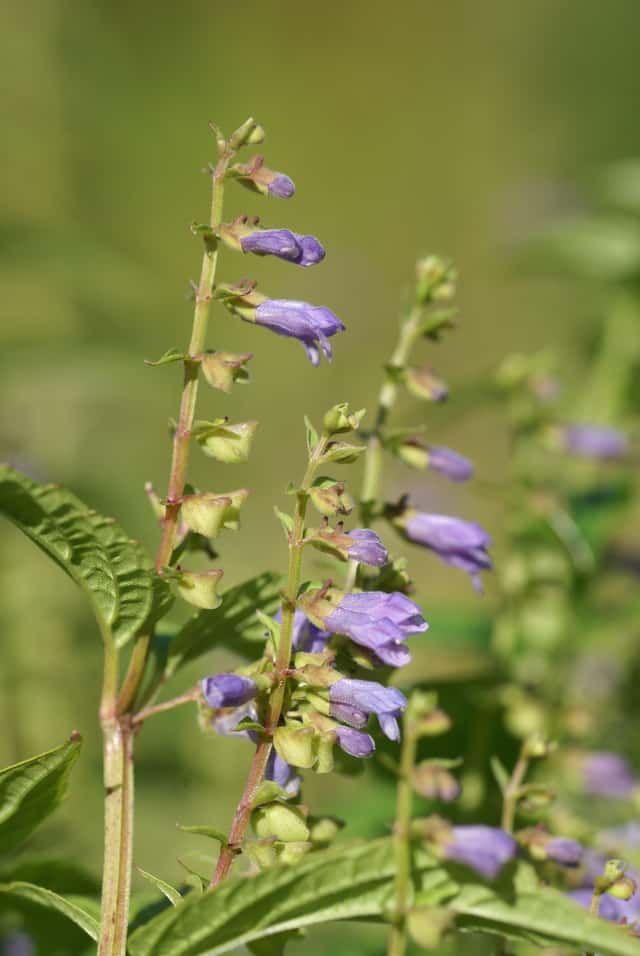
Scutellaria is a diverse genus of approximately 350 herbaceous perennials in the mint family (Lamiaceae), found across temperate and subtropical regions worldwide. Recognizable by their square stems, opposite leaves, and distinctively lipped flowers, skullcaps take their common name from the small shield-like protrusion on the calyx that resembles a miniature medieval helmet. Species range from the moisture-loving American skullcap (S. lateriflora) native to woodland streams of eastern North America, to the drought-tolerant Chinese skullcap (S. baicalensis) prized in traditional East Asian medicine. All species produce elegant tubular flowers, typically in shades of blue, purple, pink, or white, making them attractive to pollinators and gardeners alike.
How to Propagate Skullcap?
How Big Does Skullcap Grow?
TLDR: Skullcap can reach up to 1.0m tall with Fast growth rate.
Max height
1.0m
Spread
60cm
Growth rate
Fast
Foliage
Deciduous
Warning: Toxic Plant
This plant can be toxic if ingested. Keep out of reach of:
Plant Uses
Medicinal
Medicinal properties
Ornamental
Great for decoration
Medicinal Uses
- Nervine tonic: traditionally used to calm anxiety, nervous tension, and hysteria
- Sedative and antispasmodic: S. lateriflora contains scutellarein and scutellarein compounds with confirmed mild sedative effects
- Anti-inflammatory: S. baicalensis root (Huang Qin) used in Traditional Chinese Medicine for infections, fever, and inflammation
- Antioxidant and anticancer research: flavonoids baicalin, wogonin, and oroxylin A are subjects of active pharmacological study
- Anticonvulsant: historically used to treat epilepsy and convulsions in folk medicine
- Liver support: used in TCM formulas for liver heat and damp-heat conditions
Is your plant showing symptoms?
Click on the symptom to discover possible causes:
What Diseases Commonly Affect Skullcap?
TLDR: Skullcap is susceptible to 8 known diseases. Monitor regularly for early detection.
Root Rot
Root rot is a serious fungal disease that affects the root system of plants, causing them to decay and die. It is primarily caused by overwatering, poor drainage, or soil-borne fungi such as Pythium, Phytophthora, Rhizoctonia, and Fusarium. The disease thrives in waterlogged conditions where roots are deprived of oxygen, making them susceptible to fungal infection.
Overwatering
Overwatering occurs when plants receive too much water, depriving roots of oxygen and causing root rot. This environmental stress is one of the most common causes of houseplant death, as waterlogged soil prevents roots from breathing and functioning properly.
Powdery Mildew
Powdery mildew is a common fungal disease caused by various fungi species including Erysiphe, Podosphaera, Oïdium, and Leveillula. It affects over 10,000 plant species worldwide. The disease thrives in warm, dry climates with high humidity and appears as a distinctive white powdery coating on plant surfaces.
Aphids
Aphids are small, soft-bodied, pear-shaped insects (1/16 to 1/8 inch long) that feed by sucking nutrient-rich sap from plants. They reproduce rapidly and can quickly weaken plants, causing distorted growth and transmitting plant viruses. Aphids come in various colors including green, black, red, yellow, brown, and gray. They secrete honeydew, a sticky substance that attracts ants and encourages sooty mold growth.
Meaning & Symbolism
The genus name derives from Latin scutella, meaning "small dish or platter," referencing the distinctive shield on the calyx. In Western herbalism, skullcap is associated with calm, protection, and the quieting of an overactive mind. It has historically been linked to nervous system support and was used in 18th-century North America as a remedy for rabies-induced hysteria.
Compare with similar plants
| Attribute | Difficulty | Light | Watering | Pet Safe |
|---|---|---|---|---|
| Field Maple | Easy | Bright indirect | 14d | ✓ |
| Silver Birch | Easy | Direct sun | 14d | ✓ |
| Common Blanketflower | Easy | Direct sun | 10d | ✓ |
| Cushion Bush | Easy | Direct sun | 14d | ✓ |





