Hydrangeaceae
Slender Deutzia: Pet-Safe Plant
Deutzia gracilis
An undemanding, hardy shrub that thrives in sunny or semi-shaded locations. It requires loose-textured, nutrient-rich, well-drained soil with a pH ranging from slightly acidic to neutral. It needs regular, moderate watering, especially during flowering and prolonged dry spells, but does not tolerate overwatering well. After flowering, it is recommended to prune back spent shoots and old branches once a year, as the following year's flowers bloom on old wood.
Every 7 days
Bright indirect
-26° - 35°C
% - %
Categories
What is Slender Deutzia?
Slender Deutzia (Deutzia gracilis) is a easy-care plant from the Hydrangeaceae family. The Slender Deutzia (Deutzia gracilis) is a deciduous, low-growing ornamental shrub native to Japan and a member of the hydrangea family (Hydrangeaceae). It typically grows 100-150 cm tall and spreads about 120 cm wide, featuring elliptical, light green leaves that turn a yellowish hue in autumn. Be...
Slender Deutzia grows up to 1.5m, spread of 120cm, watering every 7 days, -26°C – 35°C. It is not suitable for indoor environments and safe for pets.
Unlike many tropical plants, Slender Deutzia tolerates watering mistakes. Best for beginners. Unlike many popular species, Slender Deutzia is safe to keep around pets.
How to Care for Slender Deutzia?
TLDR: Slender Deutzia needs Bright indirect, watering every 7 days, and temperatures between -26-35°C with 40-70% humidity.
How Often Should You Water Slender Deutzia?
Water regularly to keep the soil consistently moist, especially during the flowering period and long dry, hot spells. Avoid standing water and overwatering, as this can lead to root rot — the soil surface should dry out slightly between waterings.
How Much Light Does Slender Deutzia Need?
It requires full sun for the most abundant flowering but also grows well in partial shade — in intense, direct sun on hot summer afternoons, partial shade helps protect the leaves.
What Is the Best Soil for Slender Deutzia?
Choose a loose-textured, humus-rich, well-drained soil with a pH between slightly acidic (approx. 5.5) and neutral (approx. 7.5). The shrub thrives in clay, sandy, and loamy soils as long as they do not remain permanently waterlogged.
What Pot Should You Use for Slender Deutzia?
Although primarily a garden ornamental, it can be grown in larger pots (at least 40-50 cm in diameter) with good drainage holes to decorate terraces or balconies; place a thick drainage layer at the bottom of the pot to avoid stagnant water.
Care Schedule
Fertilize
Every 30 days
What Is Slender Deutzia and Where Does It Come From?
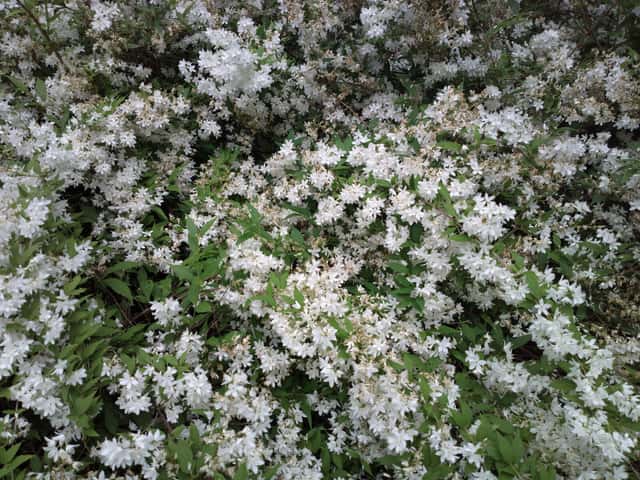
The Slender Deutzia (Deutzia gracilis) is a deciduous, low-growing ornamental shrub native to Japan and a member of the hydrangea family (Hydrangeaceae). It typically grows 100-150 cm tall and spreads about 120 cm wide, featuring elliptical, light green leaves that turn a yellowish hue in autumn. Between late April and early June, it produces lush clusters of tiny, star-shaped, snow-white flowers that are lightly fragrant and attract bees and other pollinators. It is an easy-to-grow, hardy species that tolerates both sunny and semi-shaded locations, making it a popular choice for front gardens, hedges, or mixed shrub borders.
How to Propagate Slender Deutzia?
How Big Does Slender Deutzia Grow?
TLDR: Slender Deutzia can reach up to 1.5m tall with Medium growth rate.
Max height
1.5m
Spread
1.2m
Growth rate
Medium
Foliage
Deciduous
Plant Uses
Ornamental
Great for decoration
Is your plant showing symptoms?
Click on the symptom to discover possible causes:
What Diseases Commonly Affect Slender Deutzia?
TLDR: Slender Deutzia is susceptible to 6 known diseases. Monitor regularly for early detection.
Powdery Mildew
Powdery mildew is a common fungal disease caused by various fungi species including Erysiphe, Podosphaera, Oïdium, and Leveillula. It affects over 10,000 plant species worldwide. The disease thrives in warm, dry climates with high humidity and appears as a distinctive white powdery coating on plant surfaces.
Root Rot
Root rot is a serious fungal disease that affects the root system of plants, causing them to decay and die. It is primarily caused by overwatering, poor drainage, or soil-borne fungi such as Pythium, Phytophthora, Rhizoctonia, and Fusarium. The disease thrives in waterlogged conditions where roots are deprived of oxygen, making them susceptible to fungal infection.
Leaf Spot
Leaf spot is a common fungal disease caused by various pathogens including Alternaria, Ascochyta, Colletotrichum, Septoria, and Venturia. It primarily affects leaves, causing discolored spots that can lead to premature leaf drop if left untreated.
Scale Insects
Scale insects are small sap-sucking pests that appear as brown, shell-like bumps on plant stems and leaves. There are over 25 species, divided into armored (hard) and unarmored (soft) scales. They feed by piercing plant tissue and extracting sap, which weakens the plant and can lead to yellowing, stunted growth, and even death if left untreated. They also excrete honeydew, which attracts ants and promotes sooty mold growth.
Meaning & Symbolism
Due to its snow-white, star-shaped flower clusters, it is traditionally a symbol of purity, innocence, and bridal joy — in many cultures, it is favored as a wedding ornamental and an addition to bridal bouquets.
Compare with similar plants
| Attribute | Difficulty | Light | Watering | Pet Safe |
|---|---|---|---|---|
| Field Maple | Easy | Bright indirect | 14d | ✓ |
| Silver Birch | Easy | Direct sun | 14d | ✓ |
| Common Blanketflower | Easy | Direct sun | 10d | ✓ |
| Cushion Bush | Easy | Direct sun | 14d | ✓ |





