Ranunculaceae
Small Pasque Flower (Pulsatilla pratensis)
Pulsatilla pratensis
A rock-garden perennial for cold climates (hardy to USDA zone 3). It needs full sun and very well-drained, gritty or sandy soil. Once established it handles drought and needs little watering. It has a taproot and dislikes being moved, so choose its final spot at planting. It is toxic: keep it away from children and pets and wear gloves when handling it.
Every 14 days
Bright indirect
-40° - °C
% - %
Categories
What is Small pasque flower?
Small pasque flower (Pulsatilla pratensis) is a medium-care plant from the Ranunculaceae family. Small pasque flower (Pulsatilla pratensis) is a small perennial in the buttercup family, Ranunculaceae, native to central and eastern Europe from southeast Norway and Denmark to Bulgaria. It grows in dry sandy grassland and open pine and oak woods, from sea level up to 2,100 m. It reaches 8 to 30 cm...
Small pasque flower grows up to 30cm, watering every 14 days. It is not suitable for indoor environments and not safe for pets.
Without precautions, ingestion can cause irritation in pets. Keep out of reach of cats and dogs.
How to Care for Small pasque flower?
TLDR: Small pasque flower needs Bright indirect, watering every 14 days, and temperatures between -40-30°C with 40-70% humidity.
How Often Should You Water Small pasque flower?
Water regularly only for the first weeks after planting. After that, only in long dry spells, every 2 weeks or more. Soggy soil rots the root.
How Much Light Does Small pasque flower Need?
Full sun, all day if possible. In shade it gets weak and flowers little.
What Is the Best Soil for Small pasque flower?
Sandy or stony, gritty soil that drains very fast. It tolerates chalky soil. No fertilizer needed.
What Pot Should You Use for Small pasque flower?
A deep clay pot or stone trough with drainage holes and a very gritty mix. Keep it outdoors: it needs winter cold.
What Is Small pasque flower and Where Does It Come From?
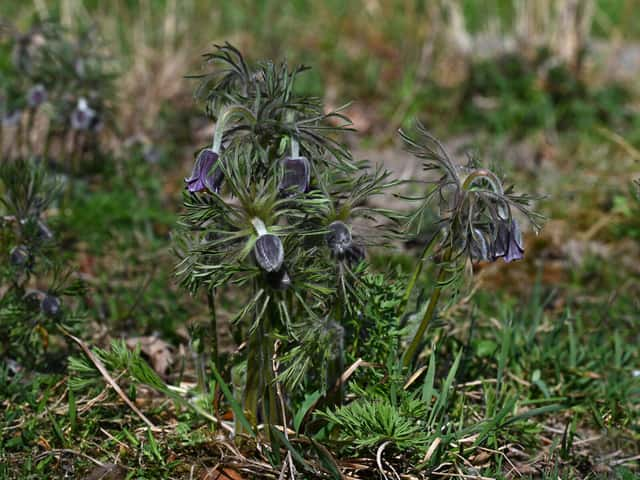
Small pasque flower (Pulsatilla pratensis) is a small perennial in the buttercup family, Ranunculaceae, native to central and eastern Europe from southeast Norway and Denmark to Bulgaria. It grows in dry sandy grassland and open pine and oak woods, from sea level up to 2,100 m. It reaches 8 to 30 cm and has finely divided, thread-like leaves covered in silvery hairs. In spring it bears nodding bell-shaped flowers 2 to 4 cm long, in very dark purple, violet or wine red, with yellow stamens. Feathery, silvery seed heads follow. It is rare and legally protected in several European countries.
How to Propagate Small pasque flower?
Fresh seed
Seeds lose viability quickly, so sow them fresh. Removing the feathery tail helps germination. Seedlings usually take 2 to 3 years to flower.
- 1 Collect seeds as soon as they ripen in late summer
- 2 Sow right away in small pots of gritty mix, barely covered
- 3 Leave the pots outdoors over winter so they get the cold
- 4 In spring, when seedlings have a few leaves, move each to its final spot or a deep pot without breaking the root
Materials needed:
How Big Does Small pasque flower Grow?
TLDR: Small pasque flower can reach up to 30cm tall with Slow growth rate.
Max height
30cm
Growth rate
Slow
Foliage
Deciduous
Warning: Toxic Plant
This plant can be toxic if ingested. Keep out of reach of:
Plant Uses
Ornamental
Great for decoration
Medicinal
Medicinal properties
Medicinal Uses
- Used in European folk herbal medicine and in homeopathy. The fresh plant is toxic and irritant; do not use without professional advice.
Is your plant showing symptoms?
Click on the symptom to discover possible causes:
What Diseases Commonly Affect Small pasque flower?
TLDR: Small pasque flower is susceptible to 1 known diseases. Monitor regularly for early detection.
Fun Facts
The name pratensis means "of the meadow", one of the places it grows.
Flower color shifts across its range: purple in the north and more greenish-violet in the south.
After flowering, the seeds grow feathery tails that form a silvery tuft.
Frequently asked questions
Is small pasque flower poisonous?
Can I move the plant?
Why did my plant rot?
Can I collect seeds in the wild?
Compare with similar plants
| Attribute | Difficulty | Light | Watering | Pet Safe |
|---|---|---|---|---|
| Dark Fieldcap | Medium | Low light | 2d | ⚠️ |
| Azalea | Medium | Partial shade | 3d | ⚠️ |
| Muriel's Bamboo | Medium | Partial shade | 3d | ✓ |
| Bougainvillea | Medium | Direct sun | 7d | ⚠️ |




