Caprifoliaceae
Pigeon Scabious: Edible Plant
Scabiosa columbaria
Sunny, well-drained location with calcareous soil. Water sparingly – tolerates drought well, absolutely avoid waterlogging. Fertilize lightly every 4 weeks during the growing season. Regularly deadhead spent flowers for a longer blooming period. Very frost-hardy down to -23 °C (Zone 3).
Every 14 days
Direct sun
-23° - 35°C
30% - 50%
Categories
What is Pigeon Scabious?
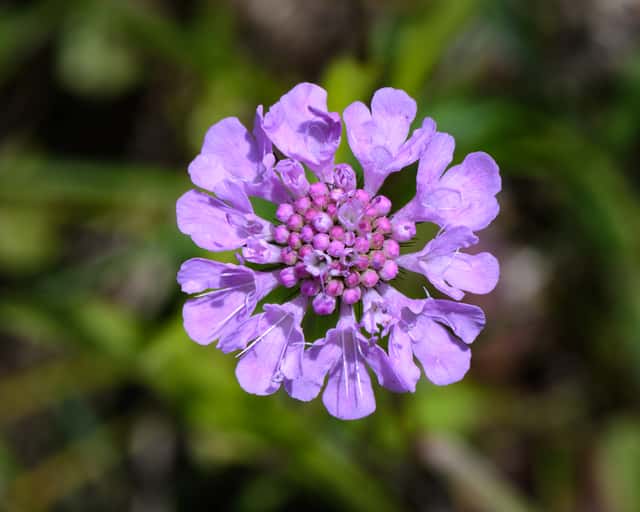
Pigeon Scabious (Scabiosa columbaria) is a easy-care plant from the Caprifoliaceae family. Pigeon Scabious (Scabiosa columbaria) is a delicate perennial wild herbaceous plant from the honeysuckle family (Caprifoliaceae), native to Europe, West Asia, and North Africa. It forms finely feathered leaves and bears delicate, pincushion-like flower heads in purple, blue-violet, or pink from June...
Pigeon Scabious grows up to 75cm, spread of 50cm, watering every 14 days, -23°C – 35°C, 30–50% humidity. It is not suitable for indoor environments and safe for pets.
Unlike many tropical plants, Pigeon Scabious tolerates watering mistakes. Best for beginners. Unlike many popular species, Pigeon Scabious is safe to keep around pets.
How to Care for Pigeon Scabious?
TLDR: Pigeon Scabious needs Direct sun, watering every 14 days, and temperatures between -23-35°C with 30-50% humidity.
How Often Should You Water Pigeon Scabious?
Water only during prolonged dry spells. Once established, Pigeon Scabious is very drought-tolerant. Allow the soil to dry out completely between waterings. Waterlogging must be avoided as it causes root rot. Pay particular attention to good drainage in winter.
How Much Light Does Pigeon Scabious Need?
Full sun is ideal – at least 6 hours of direct sunlight daily. In semi-shady locations, the plant will develop longer, weaker stems and bloom significantly less. For abundant flowering, definitely choose a sunny, south-facing spot.
What Is the Best Soil for Pigeon Scabious?
Well-drained, calcareous to slightly alkaline soil (pH 7.0–8.0) is optimal. Sandy or stony, nutrient-poor soils are well tolerated. Heavy, clayey, or waterlogged soils are unsuitable. Incorporate lime into acidic soils.
What Pot Should You Use for Pigeon Scabious?
For container cultivation, choose a terracotta or stoneware pot with very good drainage holes. Mix substrate from gravel, garden soil, and some lime. No plastic pots – waterlogging is the most common cause of death. At least 25 cm pot depth due to its deep root system.
Care Schedule
Fertilize
Every 30 days
What Is Pigeon Scabious and Where Does It Come From?
Pigeon Scabious (Scabiosa columbaria) is a delicate perennial wild herbaceous plant from the honeysuckle family (Caprifoliaceae), native to Europe, West Asia, and North Africa. It forms finely feathered leaves and bears delicate, pincushion-like flower heads in purple, blue-violet, or pink from June to October. It thrives in calcareous, well-drained soils and is a valuable nectar source for bees, butterflies, and hoverflies. As a robust, drought-tolerant plant, it is excellently suited for natural gardens, rock gardens, gravel beds, and wildflower meadows.
How to Propagate Pigeon Scabious?
How Big Does Pigeon Scabious Grow?
TLDR: Pigeon Scabious can reach up to 75cm tall with Medium growth rate.
Max height
75cm
Spread
50cm
Growth rate
Medium
Foliage
Deciduous
Plant Uses
Ornamental
Great for decoration
Medicinal
Medicinal properties
Edible
Can be consumed
Medicinal Uses
- Traditionally used against skin diseases, dandruff, and scabies
- In folk medicine, brewed as an anti-inflammatory tea from leaves and flowers
- Applied externally as a wound dressing for eczema and boils
Culinary Uses
- Young leaves edible raw in salads
- Flowers usable as edible decoration for dishes
Is your plant showing symptoms?
Click on the symptom to discover possible causes:
What Diseases Commonly Affect Pigeon Scabious?
TLDR: Pigeon Scabious is susceptible to 9 known diseases. Monitor regularly for early detection.
Powdery Mildew
Powdery mildew is a common fungal disease caused by various fungi species including Erysiphe, Podosphaera, Oïdium, and Leveillula. It affects over 10,000 plant species worldwide. The disease thrives in warm, dry climates with high humidity and appears as a distinctive white powdery coating on plant surfaces.
Root Rot
Root rot is a serious fungal disease that affects the root system of plants, causing them to decay and die. It is primarily caused by overwatering, poor drainage, or soil-borne fungi such as Pythium, Phytophthora, Rhizoctonia, and Fusarium. The disease thrives in waterlogged conditions where roots are deprived of oxygen, making them susceptible to fungal infection.
Rust
Rust is a common fungal disease caused by fungi in the order Pucciniales that affects a wide variety of plants. The disease gets its name from the characteristic orange, yellow, or reddish-brown pustules that appear on leaves, resembling metal rust. This obligate fungal parasite requires living plants to survive and can cause significant economic losses in agricultural crops.
Pythium Root Rot
Pythium root rot is a serious fungal disease caused by various Pythium species including P. aphanidermatum, P. ultimum, and P. irregulare. These water molds are present in practically all cultivated soils and attack plant roots under wet conditions, causing rapid wet rot that can extend into the stem. The disease is favored by poor drainage, overwatering, and specific temperatures depending on the species.
Meaning & Symbolism
Pigeon Scabious is also known as 'Widow Flower' and traditionally symbolizes grief, remembrance, and loss. In Central European folk medicine, it also represents healing and protection. Its delicate, pincushion-like flowers also stand for tenderness and constancy.
Compare with similar plants
| Attribute | Difficulty | Light | Watering | Pet Safe |
|---|---|---|---|---|
| Field Maple | Easy | Bright indirect | 14d | ✓ |
| Silver Birch | Easy | Direct sun | 14d | ✓ |
| Common Blanketflower | Easy | Direct sun | 10d | ✓ |
| Cushion Bush | Easy | Direct sun | 14d | ✓ |





