Asteraceae
Small-tongue rock daisy: Aromatic Plant
Perityle microglossa
It is a hardy, low-maintenance plant adapted to drought and direct sun. It thrives in poor, rocky, and fast-draining soils; overwatering or substrates that retain moisture are its main risks (root rot). No toxicity or specific documented pests or diseases have been reported for the species.
Every 9 days
Bright indirect
10° - 35°C
20% - 45%
Categories
What is Small-tongue rock daisy?
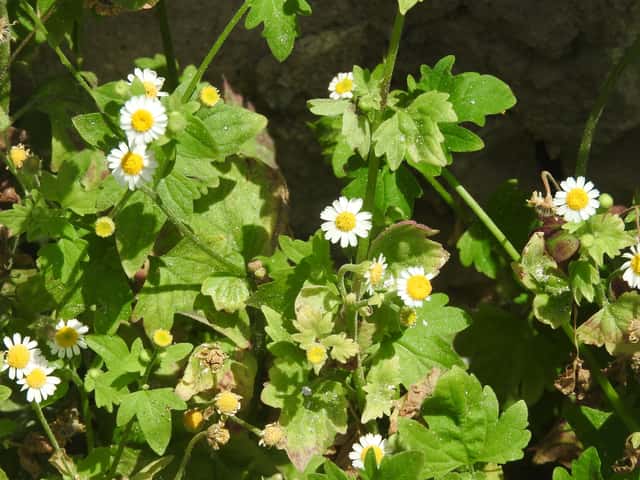
Small-tongue rock daisy (Perityle microglossa) is a easy-care plant from the Asteraceae family. Perityle microglossa is an annual herb of the Asteraceae family, erect or decumbent, 15 to 60 cm tall, with fine and aromatic foliage. It is native to arid and rocky areas of northern and central Mexico (Sonora, Sinaloa, Baja California Sur, Bajío) and the southwestern United States, where it grows...
Small-tongue rock daisy grows up to 60cm, spread of 40cm, watering every 9 days, 10°C – 35°C, 20–45% humidity. It is not suitable for indoor environments and safe for pets.
Unlike many tropical plants, Small-tongue rock daisy tolerates watering mistakes. Best for beginners. Unlike many popular species, Small-tongue rock daisy is safe to keep around pets.
How to Care for Small-tongue rock daisy?
TLDR: Small-tongue rock daisy needs Bright indirect, watering every 9 days, and temperatures between 10-35°C with 20-45% humidity.
How Often Should You Water Small-tongue rock daisy?
Allow the substrate to dry out completely between waterings; water only approximately every 9-10 days and reduce frequency even further during cold seasons. Avoid waterlogging, as it is very sensitive to excess water.
How Much Light Does Small-tongue rock daisy Need?
Requires abundant, bright, and preferably direct light; full sun outdoors or as close as possible to a very bright window if grown indoors.
What Is the Best Soil for Small-tongue rock daisy?
Prefers sandy or stony substrates with very fast drainage, low in organic matter, with a slightly acidic to alkaline pH (6.5-8). Avoid heavy mixes or those that retain moisture.
What Pot Should You Use for Small-tongue rock daisy?
Use unglazed clay or terracotta pots with large drainage holes, as they promote evaporation and help mimic its natural rocky habitat.
What Is Small-tongue rock daisy and Where Does It Come From?
Perityle microglossa is an annual herb of the Asteraceae family, erect or decumbent, 15 to 60 cm tall, with fine and aromatic foliage. It is native to arid and rocky areas of northern and central Mexico (Sonora, Sinaloa, Baja California Sur, Bajío) and the southwestern United States, where it grows wild in rock crevices, stony slopes, and poor soils in full sun. It produces small flower heads with short white ray florets and yellow disc florets, blooming mainly in spring and summer. In several regions, it is considered a weed due to its ability to colonize disturbed soils.
How to Propagate Small-tongue rock daisy?
Seed propagation
- Being an annual, it reseeds easily on its own if some flower heads are left to dry on the plant.
- Avoid overwatering in the first few weeks to prevent root rot.
- 1 Collection
Collect seeds from dry flower heads at the end of the flowering period in summer.
- 2 Sowing
Sow in spring in a fast-draining sandy substrate, barely covering the seeds.
- 3 Location
Place the seedbed in full sun and keep the substrate slightly moist until germination.
- 4 Thinning
Once the seedlings have several true leaves, thin them out, leaving only the most vigorous ones.
Materials needed:
How Big Does Small-tongue rock daisy Grow?
TLDR: Small-tongue rock daisy can reach up to 60cm tall with Medium growth rate.
Max height
60cm
Spread
40cm
Growth rate
Medium
Foliage
Deciduous
Plant Uses
Ornamental
Great for decoration
Aromatic
Pleasant fragrance
Medicinal Uses
- There are no confirmed and documented medicinal uses for this species.
- The common name 'chamomile' refers to a superficial resemblance to common chamomile (Matricaria chamomilla), but it is a different species and should not be assumed to share its properties.
Is your plant showing symptoms?
Click on the symptom to discover possible causes:
What Diseases Commonly Affect Small-tongue rock daisy?
TLDR: Small-tongue rock daisy is susceptible to 4 known diseases. Monitor regularly for early detection.
Root Rot
Root rot is a serious fungal disease that affects the root system of plants, causing them to decay and die. It is primarily caused by overwatering, poor drainage, or soil-borne fungi such as Pythium, Phytophthora, Rhizoctonia, and Fusarium. The disease thrives in waterlogged conditions where roots are deprived of oxygen, making them susceptible to fungal infection.
Aphids
Aphids are small, soft-bodied, pear-shaped insects (1/16 to 1/8 inch long) that feed by sucking nutrient-rich sap from plants. They reproduce rapidly and can quickly weaken plants, causing distorted growth and transmitting plant viruses. Aphids come in various colors including green, black, red, yellow, brown, and gray. They secrete honeydew, a sticky substance that attracts ants and encourages sooty mold growth.
Spider Mites
Spider mites are tiny arachnids (less than 1/20 inch long) related to spiders and ticks that feed on plant sap. They thrive in hot, dry conditions and can cause significant damage to ornamental and vegetable plants. During severe infestations, crop losses can reach 14% or higher as these pests disrupt vital plant processes including photosynthesis, carbon dioxide absorption, and transpiration.
Powdery Mildew
Powdery mildew is a common fungal disease caused by various fungi species including Erysiphe, Podosphaera, Oïdium, and Leveillula. It affects over 10,000 plant species worldwide. The disease thrives in warm, dry climates with high humidity and appears as a distinctive white powdery coating on plant surfaces.
Compare with similar plants
| Attribute | Difficulty | Light | Watering | Pet Safe |
|---|---|---|---|---|
| Field Maple | Easy | Bright indirect | 14d | ✓ |
| Silver Birch | Easy | Direct sun | 14d | ✓ |
| Common Blanketflower | Easy | Direct sun | 10d | ✓ |
| Cushion Bush | Easy | Direct sun | 14d | ✓ |





