Euphorbiaceae
Snowflake Euphorbia: Full Sun Plant
Euphorbia polygona
Grow in full sun to bright light with fast-draining soil, watering about weekly in summer and sparingly in winter. Handle with care — the milky sap is a skin and eye irritant.
Every 10 days
Direct sun
7° - 38°C
30% - 50%
Categories
What is Snowflake Euphorbia?
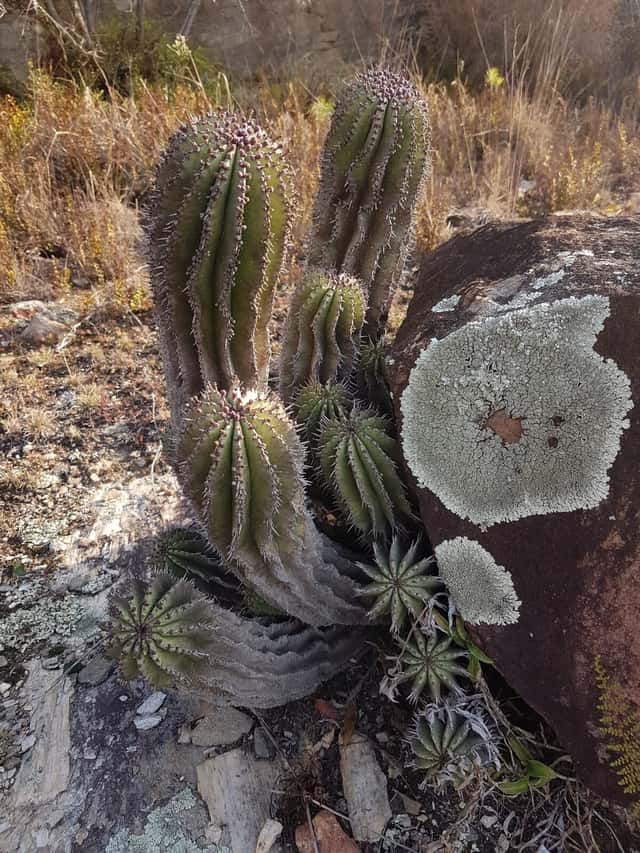
Snowflake Euphorbia (Euphorbia polygona) is a medium-care plant from the Euphorbiaceae family. Euphorbia polygona is a slow-growing columnar succulent from South Africa with ribbed, blue-green to grey stems edged in tidy rows of dark spines; the popular 'Snowflake' form is dusted powdery white. Small purple flowers line the ridges in summer. It makes an architectural, sculptural feature plant...
Snowflake Euphorbia grows up to 1.0m, spread of 30cm, watering every 10 days, 7°C – 38°C, 30–50% humidity. It is suitable for indoor environments and not safe for pets.
Without precautions, ingestion can cause irritation in pets. Keep out of reach of cats and dogs. Without adequate drainage, root rot can develop within 20 days.
How to Care for Snowflake Euphorbia?
TLDR: Snowflake Euphorbia needs Direct sun, watering every 10 days, and temperatures between 7-38°C with 30-50% humidity.
How Often Should You Water Snowflake Euphorbia?
Use the soak-and-dry method but do not let it stay bone dry for long; water roughly weekly in heat and much less in winter.
How Much Light Does Snowflake Euphorbia Need?
Full to partial sun keeps the ribs tight and the colour strong; too little light causes weak, etiolated growth.
What Is the Best Soil for Snowflake Euphorbia?
Plant in gritty, very well-draining cactus soil; it will rot in heavy or waterlogged mixes.
What Pot Should You Use for Snowflake Euphorbia?
A heavy, stable terracotta pot with drainage suits its top growth and prevents tipping.
Care Schedule
Rotate
Every 30 days
Repot
Every 1095 days
What Is Snowflake Euphorbia and Where Does It Come From?
Euphorbia polygona is a slow-growing columnar succulent from South Africa with ribbed, blue-green to grey stems edged in tidy rows of dark spines; the popular 'Snowflake' form is dusted powdery white. Small purple flowers line the ridges in summer. It makes an architectural, sculptural feature plant for bright spots.
How Big Does Snowflake Euphorbia Grow?
TLDR: Snowflake Euphorbia can reach up to 1.0m tall with Slow growth rate.
Max height
1.0m
Spread
30cm
Growth rate
Slow
Foliage
Evergreen
Warning: Toxic Plant
This plant can be toxic if ingested. Keep out of reach of:
Plant Uses
Ornamental
Great for decoration
Is your plant showing symptoms?
Click on the symptom to discover possible causes:
What Diseases Commonly Affect Snowflake Euphorbia?
TLDR: Snowflake Euphorbia is susceptible to 4 known diseases. Monitor regularly for early detection.
Root Rot
Root rot is a serious fungal disease that affects the root system of plants, causing them to decay and die. It is primarily caused by overwatering, poor drainage, or soil-borne fungi such as Pythium, Phytophthora, Rhizoctonia, and Fusarium. The disease thrives in waterlogged conditions where roots are deprived of oxygen, making them susceptible to fungal infection.
Mealybugs
Mealybugs are small, soft-bodied insects covered with a white, waxy, cottony material. They are common pests of houseplants and outdoor plants in mild climates. These sap-sucking insects feed on plant tissue, causing damage, stunted growth, and can lead to plant death if left untreated. They produce sticky honeydew which attracts sooty mold.
Spider Mites
Spider mites are tiny arachnids (less than 1/20 inch long) related to spiders and ticks that feed on plant sap. They thrive in hot, dry conditions and can cause significant damage to ornamental and vegetable plants. During severe infestations, crop losses can reach 14% or higher as these pests disrupt vital plant processes including photosynthesis, carbon dioxide absorption, and transpiration.
Scale Insects
Scale insects are small sap-sucking pests that appear as brown, shell-like bumps on plant stems and leaves. There are over 25 species, divided into armored (hard) and unarmored (soft) scales. They feed by piercing plant tissue and extracting sap, which weakens the plant and can lead to yellowing, stunted growth, and even death if left untreated. They also excrete honeydew, which attracts ants and promotes sooty mold growth.
Meaning & Symbolism
Symbolizes protection and boundaries through its defensive spines and sap.
Compare with similar plants
| Attribute | Difficulty | Light | Watering | Pet Safe |
|---|---|---|---|---|
| Dark Fieldcap | Medium | Low light | 2d | ⚠️ |
| Azalea | Medium | Partial shade | 3d | ⚠️ |
| Muriel's Bamboo | Medium | Partial shade | 3d | ✓ |
| Bougainvillea | Medium | Direct sun | 7d | ⚠️ |




