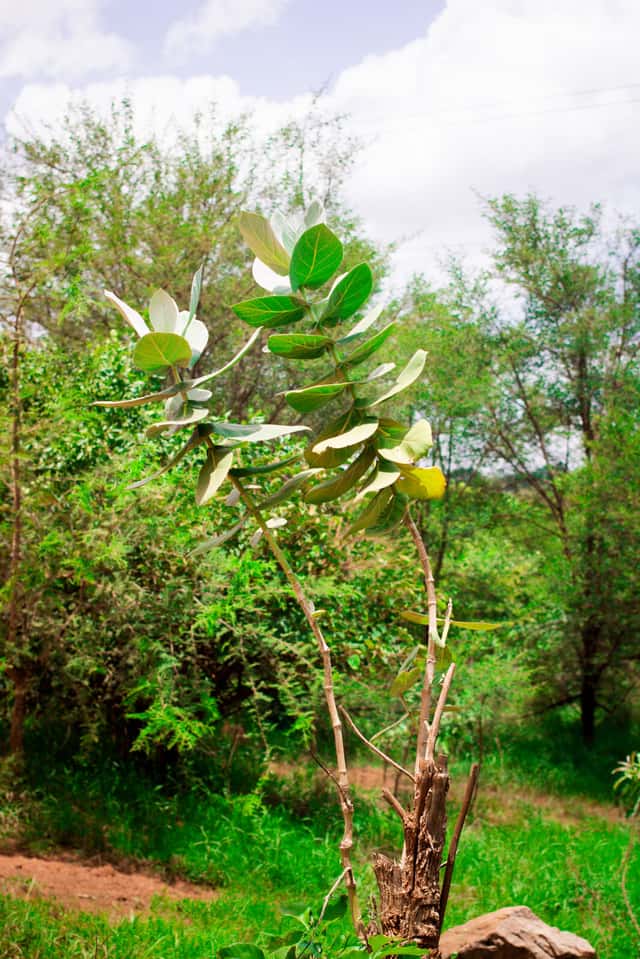
Apocynaceae
Sodom apple: Full Sun Plant
Calotropis procera
An extremely low-maintenance, tough shrub built for poor, sandy soil and intense heat. It thrives on neglect but cannot tolerate soggy soil or frost. Always wear gloves when pruning or handling due to the caustic latex.
Every 14 days
Direct sun
10° - 42°C
20% - 40%
Categories
What is Sodom apple?
Sodom apple (Calotropis procera) is a easy-care plant from the Apocynaceae family. A tall, evergreen, drought-tolerant shrub native to North Africa, the Middle East and South Asia, prized for its silvery-grey leaves, clusters of waxy white flowers tipped in purple, and inflated seed pods. Every part of the plant exudes a thick, milky latex that is highly toxic and can cause severe...
Sodom apple grows up to 3.0m, spread of 250cm, watering every 14 days, 10°C – 42°C, 20–40% humidity. It is not suitable for indoor environments and not safe for pets.
Unlike many tropical plants, Sodom apple tolerates watering mistakes. Best for beginners. Without precautions, ingestion can cause irritation in pets. Keep out of reach of cats and dogs.
How to Care for Sodom apple?
TLDR: Sodom apple needs Direct sun, watering every 14 days, and temperatures between 10-42°C with 20-40% humidity.
How Often Should You Water Sodom apple?
Water only when the soil is fully dry, roughly every two weeks; overwatering is the leading cause of root rot in this drought-adapted species.
How Much Light Does Sodom apple Need?
Give it full, direct sun for best flowering and compact growth; it tolerates light shade but becomes leggy.
What Is the Best Soil for Sodom apple?
Plant in sandy, well-draining, even nutrient-poor soil; avoid heavy, waterlogged, or compacted ground.
What Pot Should You Use for Sodom apple?
Unglazed terracotta or clay pot with several drainage holes to prevent moisture buildup around the roots.
What Is Sodom apple and Where Does It Come From?
A tall, evergreen, drought-tolerant shrub native to North Africa, the Middle East and South Asia, prized for its silvery-grey leaves, clusters of waxy white flowers tipped in purple, and inflated seed pods. Every part of the plant exudes a thick, milky latex that is highly toxic and can cause severe skin and eye irritation.
How to Propagate Sodom apple?
Seed propagation
Wear gloves when handling seeds and pods due to the toxic latex; germination is fast in warm conditions.
- 1 Collect seeds from mature pods, avoiding contact with the latex
- 2 Sow in well-draining sandy mix, covering lightly
- 3 Keep moist and in a sunny spot until germination
Materials needed:
How Big Does Sodom apple Grow?
TLDR: Sodom apple can reach up to 3.0m tall with Medium growth rate.
Max height
3.0m
Spread
2.5m
Growth rate
Medium
Foliage
Evergreen
Warning: Toxic Plant
This plant can be toxic if ingested. Keep out of reach of:
Plant Uses
Ornamental
Great for decoration
Medicinal
Medicinal properties
Medicinal Uses
- Traditional topical use of latex for joint and rheumatic pain
- Folk treatment for skin conditions and fungal infections
- Traditional use as an antipyretic and for jaundice
Is your plant showing symptoms?
Click on the symptom to discover possible causes:
What Diseases Commonly Affect Sodom apple?
TLDR: Sodom apple is susceptible to 6 known diseases. Monitor regularly for early detection.
Root Rot
Root rot is a serious fungal disease that affects the root system of plants, causing them to decay and die. It is primarily caused by overwatering, poor drainage, or soil-borne fungi such as Pythium, Phytophthora, Rhizoctonia, and Fusarium. The disease thrives in waterlogged conditions where roots are deprived of oxygen, making them susceptible to fungal infection.
Spider Mites
Spider mites are tiny arachnids (less than 1/20 inch long) related to spiders and ticks that feed on plant sap. They thrive in hot, dry conditions and can cause significant damage to ornamental and vegetable plants. During severe infestations, crop losses can reach 14% or higher as these pests disrupt vital plant processes including photosynthesis, carbon dioxide absorption, and transpiration.
Mealybugs
Mealybugs are small, soft-bodied insects covered with a white, waxy, cottony material. They are common pests of houseplants and outdoor plants in mild climates. These sap-sucking insects feed on plant tissue, causing damage, stunted growth, and can lead to plant death if left untreated. They produce sticky honeydew which attracts sooty mold.
Leaf Spot
Leaf spot is a common fungal disease caused by various pathogens including Alternaria, Ascochyta, Colletotrichum, Septoria, and Venturia. It primarily affects leaves, causing discolored spots that can lead to premature leaf drop if left untreated.
Meaning & Symbolism
Regarded mainly as a hardy, sometimes invasive desert shrub in most regions, though in South Asia its flowers are ritually offered to the Hindu god Shiva as a symbol of resilience and protection.
Compare with similar plants
| Attribute | Difficulty | Light | Watering | Pet Safe |
|---|---|---|---|---|
| Field Maple | Easy | Bright indirect | 14d | ✓ |
| Silver Birch | Easy | Direct sun | 14d | ✓ |
| Common Blanketflower | Easy | Direct sun | 10d | ✓ |
| Cushion Bush | Easy | Direct sun | 14d | ✓ |
Choose & Compare
Sources & References
- Calotropis procera - Wikipedia
- Common Calotropis procera Problems
- Calotropis procera - How to grow & care
- Calotropis procera - PFAF Plant Database
- Review on phytochemical constituents and pharmacological potential of Calotropis procera
- Why we worship Calotropis to Lord Shiva
- Phytochemical screening of Calotropis procera organs and ovicidal effect on Cadra cautella
- How To Grow Calotropis procera | EarthOne





