Berberidaceae
Soft Caress Mahonia: Low Water Needs
Mahonia eurybracteata
Soft Caress mahonia is easy to care for and well-suited for shaded beds. It thrives best in partial to full shade in a sheltered location, in moist but well-drained, humus-rich soil. Once established, it is drought-tolerant and only requires extra watering during prolonged dry spells. It grows slowly, requires virtually no fertilizer, and is best pruned every 2-3 years to maintain a dense shape.
Every 14 days
Partial shade
-10° - °C
% - %
Categories
What is Soft Caress Mahonia?
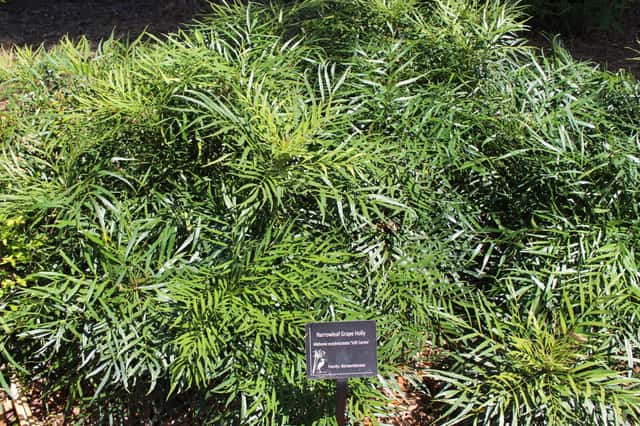
Soft Caress Mahonia (Mahonia eurybracteata) is a easy-care plant from the Berberidaceae family. Mahonia eurybracteata 'Soft Caress' is an evergreen ornamental shrub native to China, known for its soft, thornless, narrow leaves that grow in rosettes and resemble ferns. From late summer to early spring, it blooms with lemon-yellow, sweetly scented flower spikes, which are later followed by blue...
Soft Caress Mahonia grows up to 1.2m, spread of 120cm, watering every 14 days. It is not suitable for indoor environments and not safe for pets.
Unlike many tropical plants, Soft Caress Mahonia tolerates watering mistakes. Best for beginners. Without precautions, ingestion can cause irritation in pets. Keep out of reach of cats and dogs.
How to Care for Soft Caress Mahonia?
TLDR: Soft Caress Mahonia needs Partial shade, watering every 14 days, and temperatures between -10-30°C with 40-70% humidity.
How Often Should You Water Soft Caress Mahonia?
Water newly planted specimens regularly during the first year (approximately every 14 days in summer, less frequently in winter) until the roots are established. After this, the plant manages with natural rainfall and only needs supplemental watering during long dry periods—allow the soil to dry out slightly between waterings.
How Much Light Does Soft Caress Mahonia Need?
Choose a spot in partial to full shade; the plant also tolerates some morning sun but should be shielded from harsh afternoon sun, which can scorch the delicate leaves.
What Is the Best Soil for Soft Caress Mahonia?
Plant in moist but well-drained, humus-rich garden soil. Compost can be added to the soil for better drainage and nutrient content—the plant tolerates most pH levels from slightly acidic to alkaline.
What Pot Should You Use for Soft Caress Mahonia?
Can be planted in a large pot with drainage holes and a well-drained substrate mixed with compost. Choose a frost-proof pot if the plant is to stay outside during winter, as the root system in a container is more vulnerable to frost than in the ground.
Care Schedule
Repot
Every 365 days
What Is Soft Caress Mahonia and Where Does It Come From?
Mahonia eurybracteata 'Soft Caress' is an evergreen ornamental shrub native to China, known for its soft, thornless, narrow leaves that grow in rosettes and resemble ferns. From late summer to early spring, it blooms with lemon-yellow, sweetly scented flower spikes, which are later followed by blue berries that birds enjoy. The shrub has a compact, upright growth habit and rarely exceeds one meter in height, making it suitable as a groundcover or a specimen plant in shade gardens.
How to Propagate Soft Caress Mahonia?
How Big Does Soft Caress Mahonia Grow?
TLDR: Soft Caress Mahonia can reach up to 1.2m tall with Slow growth rate.
Max height
1.2m
Spread
1.2m
Growth rate
Slow
Foliage
Evergreen
Warning: Toxic Plant
This plant can be toxic if ingested. Keep out of reach of:
Plant Uses
Ornamental
Great for decoration
Culinary Uses
- The berries are edible but very sour and are rarely eaten directly—they are best known as a food source for birds.
Is your plant showing symptoms?
Click on the symptom to discover possible causes:
What Diseases Commonly Affect Soft Caress Mahonia?
TLDR: Soft Caress Mahonia is susceptible to 8 known diseases. Monitor regularly for early detection.
Powdery Mildew
Powdery mildew is a common fungal disease caused by various fungi species including Erysiphe, Podosphaera, Oïdium, and Leveillula. It affects over 10,000 plant species worldwide. The disease thrives in warm, dry climates with high humidity and appears as a distinctive white powdery coating on plant surfaces.
Rust
Rust is a common fungal disease caused by fungi in the order Pucciniales that affects a wide variety of plants. The disease gets its name from the characteristic orange, yellow, or reddish-brown pustules that appear on leaves, resembling metal rust. This obligate fungal parasite requires living plants to survive and can cause significant economic losses in agricultural crops.
Leaf Spot
Leaf spot is a common fungal disease caused by various pathogens including Alternaria, Ascochyta, Colletotrichum, Septoria, and Venturia. It primarily affects leaves, causing discolored spots that can lead to premature leaf drop if left untreated.
Aphids
Aphids are small, soft-bodied, pear-shaped insects (1/16 to 1/8 inch long) that feed by sucking nutrient-rich sap from plants. They reproduce rapidly and can quickly weaken plants, causing distorted growth and transmitting plant viruses. Aphids come in various colors including green, black, red, yellow, brown, and gray. They secrete honeydew, a sticky substance that attracts ants and encourages sooty mold growth.
Meaning & Symbolism
As one of the few shrubs that bloom in the middle of winter, mahonia is often associated with endurance and hope during the dark season—a symbol of life that persists even in the cold.
Compare with similar plants
| Attribute | Difficulty | Light | Watering | Pet Safe |
|---|---|---|---|---|
| Field Maple | Easy | Bright indirect | 14d | ✓ |
| Silver Birch | Easy | Direct sun | 14d | ✓ |
| Common Blanketflower | Easy | Direct sun | 10d | ✓ |
| Cushion Bush | Easy | Direct sun | 14d | ✓ |
Choose & Compare
Sources & References
- All About Mahonia Eurybracteata Soft Caress: A Growing Guide - Gardenista
- Soft Caress Mahonia Plant Care - Greg App
- Mahonia eurybracteata subsp. ganpinensis Soft Caress - RHS
- Mahonia Soft Caress planting, growing and care - Nature & Garden
- Mahonia eurybracteata - NC State Extension Gardener Plant Toolbox
- Tornfri Mahonia Soft Caress - Plantetorvet.dk
- Pest and Diseases on Mahonia - Mahonia.co.uk
- Toxic and Non-Toxic Plants: Mahonia - ASPCA





