Poaceae
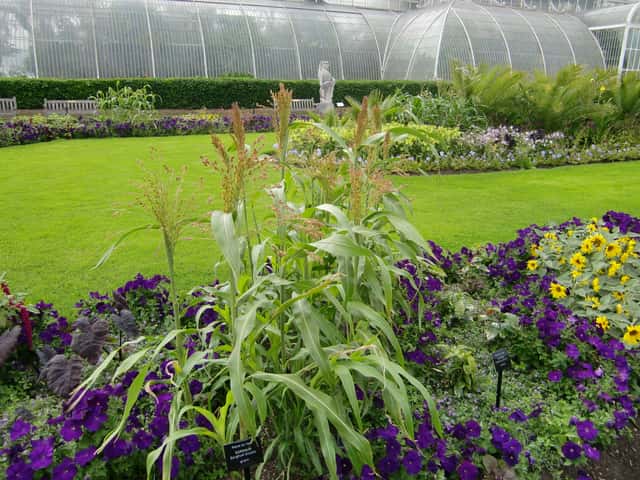
Sorghum: Edible Plant
Sorghum bicolor
An exceptionally hardy and easy-to-grow plant, sorghum tolerates poor soils and drought better than most cereal crops. It needs full sun and well-draining soil to thrive. Water regularly during the first weeks after sowing, then reduce frequency as the plant develops its natural drought tolerance. Fertilize at planting and during the vegetative growth stage for the best grain yields.
Every 7 days
Direct sun
15° - 35°C
30% - 70%
Categories
What is Sorghum?
Sorghum (Sorghum bicolor) is a easy-care plant from the Poaceae family. Sorghum (Sorghum bicolor) is a fast-growing annual or perennial cereal grass native to Africa, particularly the region spanning Ethiopia and Sudan. Cultivated for thousands of years, it is now the world's fifth most-produced cereal grain, grown for human food, livestock feed, ethanol production, and...
Sorghum grows up to 4.0m, spread of 75cm, watering every 7 days, 15°C – 35°C, 30–70% humidity. It is not suitable for indoor environments and not safe for pets.
Unlike many tropical plants, Sorghum tolerates watering mistakes. Best for beginners. Without precautions, ingestion can cause irritation in pets. Keep out of reach of cats and dogs.
How to Care for Sorghum?
TLDR: Sorghum needs Direct sun, watering every 7 days, and temperatures between 15-35°C with 30-70% humidity.
How Often Should You Water Sorghum?
Water deeply about once a week (roughly 1 inch / 2.5 cm of water), avoiding waterlogging. Once established, the plant tolerates dry spells well thanks to its deep root system — reduce watering during extended drought, but never let the soil dry out completely during flowering, the most water-sensitive stage.
How Much Light Does Sorghum Need?
Requires full sun (6 or more hours of direct light per day) — it cannot grow in shade. Plant in an open location free of shading from trees or structures to ensure good flowering and grain production.
What Is the Best Soil for Sorghum?
Adapts to sandy, clay, or loamy soils, but prefers fertile, well-draining soil rich in organic matter, with a pH between 5.5 and 7.5. Compacted or waterlogged soil harms root development.
What Pot Should You Use for Sorghum?
Not suited to small pots — as a fast-growing grass with deep roots, grow it directly in garden soil or in large containers (40 liters / 10 gallons or more) with good drainage.
Care Schedule
Fertilize
Every 30 days
What Is Sorghum and Where Does It Come From?
Sorghum (Sorghum bicolor) is a fast-growing annual or perennial cereal grass native to Africa, particularly the region spanning Ethiopia and Sudan. Cultivated for thousands of years, it is now the world's fifth most-produced cereal grain, grown for human food, livestock feed, ethanol production, and even as an ornamental garden plant in some cultivars. Its sturdy stalks can reach up to 4 meters tall, topped with a terminal panicle bearing seeds ranging from white to reddish-brown.
How to Propagate Sorghum?
Direct sowing
Warm soil greatly speeds up germination; avoid sowing too early in late winter. Sorghum tolerates poor soils but yields best in fertile, well-draining soil.
- 1 Choose a location with full sun and well-draining soil
- 2 Sow seeds 2-3 cm deep after the last frost, once soil temperature reaches at least 18°C (64°F)
- 3 Space seeds 10-15 cm apart, in rows 45-75 cm apart
- 4 Keep soil lightly moist until germination, which takes 5 to 10 days
- 5 Thin seedlings to the final spacing recommended for the cultivar
Materials needed:
How Big Does Sorghum Grow?
TLDR: Sorghum can reach up to 4.0m tall with Fast growth rate.
Max height
4.0m
Spread
75cm
Growth rate
Fast
Foliage
Deciduous
Warning: Toxic Plant
This plant can be toxic if ingested. Keep out of reach of:
Plant Uses
Edible
Can be consumed
Ornamental
Great for decoration
Medicinal Uses
- Seed decoction traditionally used as a diuretic for kidney and urinary complaints
- Leaves and panicles traditionally used to treat anemia
- Twig decoction with lemon traditionally used against jaundice
- The plant's red pigment shows antimicrobial and antifungal properties
Culinary Uses
- Grains cooked as a whole cereal or ground into flour for bread, porridge, and couscous
- Popped grains eaten like popcorn (sorghum popcorn)
- Stems of sweet varieties chewed like sugarcane or processed into syrup
- Malted grains used in beer and fermented beverage production
- Sprouted seeds eaten raw in salads
Is your plant showing symptoms?
Click on the symptom to discover possible causes:
What Diseases Commonly Affect Sorghum?
TLDR: Sorghum is susceptible to 6 known diseases. Monitor regularly for early detection.
Anthracnose
Anthracnose is a fungal disease caused by fungi in the genus Colletotrichum that affects many plants, including vegetables, fruits, and trees. The disease thrives in cool, wet conditions, causing dark, sunken lesions on leaves, stems, flowers, and fruits.
Downy Mildew
Downy mildew is a fungal-like disease caused by oomycetes (water molds) that thrives in cool, wet conditions. It affects a wide range of plants, causing yellowing leaves with fuzzy white-gray growth underneath, leading to defoliation and reduced yields if left untreated.
Rust
Rust is a common fungal disease caused by fungi in the order Pucciniales that affects a wide variety of plants. The disease gets its name from the characteristic orange, yellow, or reddish-brown pustules that appear on leaves, resembling metal rust. This obligate fungal parasite requires living plants to survive and can cause significant economic losses in agricultural crops.
Leaf Spot
Leaf spot is a common fungal disease caused by various pathogens including Alternaria, Ascochyta, Colletotrichum, Septoria, and Venturia. It primarily affects leaves, causing discolored spots that can lead to premature leaf drop if left untreated.
Meaning & Symbolism
Cultivated for millennia across the arid regions of Africa and Asia, sorghum symbolizes abundance, resilience, and sustenance — a plant that thrives even in harsh conditions and secures food in difficult times.
Compare with similar plants
| Attribute | Difficulty | Light | Watering | Pet Safe |
|---|---|---|---|---|
| Field Maple | Easy | Bright indirect | 14d | ✓ |
| Muriel's Bamboo | Medium | Partial shade | 3d | ✓ |
| Silver Birch | Easy | Direct sun | 14d | ✓ |
| Common Blanketflower | Easy | Direct sun | 10d | ✓ |
Choose & Compare
Sources & References
- Sorghum bicolor - NC State Extension Gardener Plant Toolbox
- Sorghum bicolor - Plants For A Future (PFAF)
- Diseases of Sorghum in Georgia - UGA Extension
- Sorghum - Wikipedia
- Optimal environmental conditions for Puccinia purpurea on sorghum - Australasian Plant Pathology
- Plant Guide: Sorghum - USDA NRCS





