Bromeliaceae
Spanish Moss: Pet-Safe Plant
Tillandsia usneoides
Easy to moderate care. Thrives in bright, indirect light with good air circulation; needs frequent soaking or misting followed by complete drying to prevent rot.
Every 4 days
Bright indirect
-5° - 35°C
50% - 70%
Categories
What is Spanish Moss?
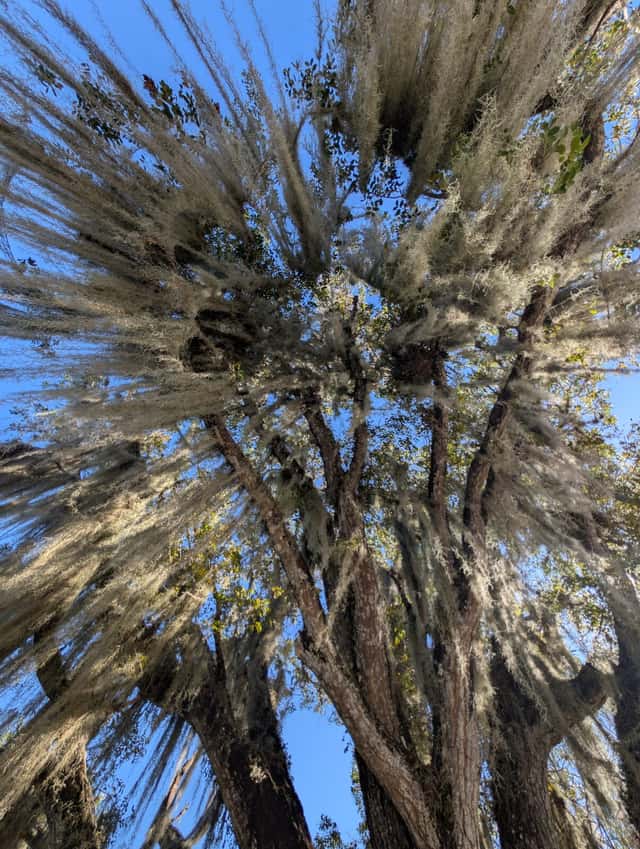
Spanish Moss (Tillandsia usneoides) is a medium-care plant from the Bromeliaceae family. Spanish moss is a flowering epiphytic bromeliad, not a true moss and not parasitic, native to the southeastern United States, Mexico, Central America, and South America. It forms long, silvery-grey strands that drape over host trees such as live oaks and bald cypress, absorbing water and nutrients f...
Spanish Moss grows up to 7.0m, watering every 4 days, -5°C – 35°C, 50–70% humidity. It is suitable for indoor environments and safe for pets.
Unlike many popular species, Spanish Moss is safe to keep around pets. Without adequate drainage, root rot can develop within 8 days.
How to Care for Spanish Moss?
TLDR: Spanish Moss needs Bright indirect, watering every 4 days, and temperatures between -5-35°C with 50-70% humidity.
How Often Should You Water Spanish Moss?
Soak or mist 1-2 times weekly with rainwater or distilled water (avoid chlorinated tap water); let dry fully within a few hours.
How Much Light Does Spanish Moss Need?
Bright indirect light; avoid harsh midday direct sun, which can scorch and blacken the strands.
What Is the Best Soil for Spanish Moss?
No soil needed - it is epiphytic; mount or hang it in a well-ventilated spot.
Care Schedule
Fertilize
Every 30 days
What Is Spanish Moss and Where Does It Come From?
Spanish moss is a flowering epiphytic bromeliad, not a true moss and not parasitic, native to the southeastern United States, Mexico, Central America, and South America. It forms long, silvery-grey strands that drape over host trees such as live oaks and bald cypress, absorbing water and nutrients from the air through specialized scales (trichomes) on its leaves rather than through roots in soil.
How Big Does Spanish Moss Grow?
TLDR: Spanish Moss can reach up to 7.0m tall with Slow growth rate.
Max height
7.0m
Growth rate
Slow
Foliage
Evergreen
Plant Uses
Ornamental
Great for decoration
Is your plant showing symptoms?
Click on the symptom to discover possible causes:
What Diseases Commonly Affect Spanish Moss?
TLDR: Spanish Moss is susceptible to 4 known diseases. Monitor regularly for early detection.
Root Rot
Root rot is a serious fungal disease that affects the root system of plants, causing them to decay and die. It is primarily caused by overwatering, poor drainage, or soil-borne fungi such as Pythium, Phytophthora, Rhizoctonia, and Fusarium. The disease thrives in waterlogged conditions where roots are deprived of oxygen, making them susceptible to fungal infection.
Spider Mites
Spider mites are tiny arachnids (less than 1/20 inch long) related to spiders and ticks that feed on plant sap. They thrive in hot, dry conditions and can cause significant damage to ornamental and vegetable plants. During severe infestations, crop losses can reach 14% or higher as these pests disrupt vital plant processes including photosynthesis, carbon dioxide absorption, and transpiration.
Sunburn (Sun Scorch)
Sunburn or sun scorch is an environmental condition that occurs when plants are exposed to intense, direct sunlight beyond their tolerance level. This causes the breakdown of chlorophyll in the leaves, resulting in bleached, dried, and damaged foliage. The damage can happen rapidly, sometimes within just a few hours of exposure.
Salt Buildup
Salt buildup (also called salt accumulation or fertilizer salt deposits) is an environmental condition where mineral salts accumulate in the soil over time, creating a toxic environment for plant roots. The most visible sign is a white or yellowish crusty layer on the soil surface or around pot edges.
Meaning & Symbolism
A hallmark of the American South, symbolizing mystery, age, and the gothic romance of moss-draped oaks; also read as an emblem of resilience and adaptability given its rootless, air-feeding nature.
Compare with similar plants
| Attribute | Difficulty | Light | Watering | Pet Safe |
|---|---|---|---|---|
| Dark Fieldcap | Medium | Low light | 2d | ⚠️ |
| Azalea | Medium | Partial shade | 3d | ⚠️ |
| Muriel's Bamboo | Medium | Partial shade | 3d | ✓ |
| Bougainvillea | Medium | Direct sun | 7d | ⚠️ |




