Amaryllidaceae
Hymenocallis (Spider Lily) Care Guide
Hymenocallis
Give Hymenocallis full sun to partial shade, keep the soil consistently moist during the growing season, and ensure sharp drainage to prevent bulb rot. It tolerates heat, humidity, and even brief flooding, making it a low-maintenance, pest-resistant choice for warm gardens and containers.
Every 5 days
Bright indirect
10° - 32°C
40% - 60%
Categories
What is Spider Lily?
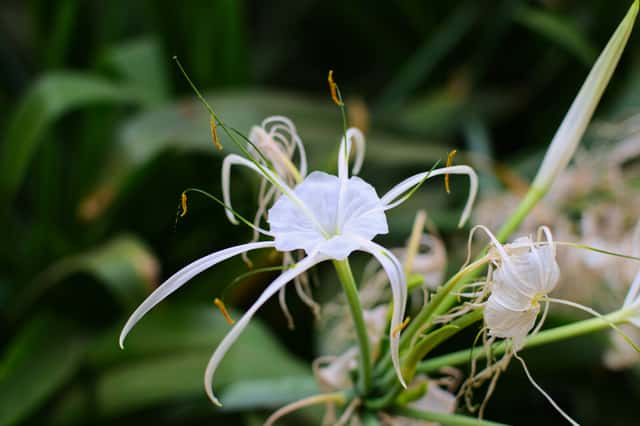
Spider Lily (Hymenocallis) is a easy-care plant from the Amaryllidaceae family. Hymenocallis, commonly known as spider lily, is a bulbous perennial genus in the Amaryllidaceae family, prized for its fragrant, spidery white flowers with long ribbon-like petals. Native to the tropical and subtropical Americas, these evergreen to semi-evergreen plants form clumps of strap-shaped l...
Spider Lily grows up to 90cm, spread of 60cm, watering every 5 days, 10°C – 32°C, 40–60% humidity. It is suitable for indoor environments and not safe for pets.
Unlike many tropical plants, Spider Lily tolerates watering mistakes. Best for beginners. Without precautions, ingestion can cause irritation in pets. Keep out of reach of cats and dogs. Without adequate drainage, root rot can develop within 10 days.
How to Care for Spider Lily?
TLDR: Spider Lily needs Bright indirect, watering every 5 days, and temperatures between 10-32°C with 40-60% humidity.
How Often Should You Water Spider Lily?
Water generously and keep soil evenly moist throughout spring and summer; reduce watering in winter, letting the top layer dry slightly between waterings.
How Much Light Does Spider Lily Need?
Provide full sun for the best blooms; in very hot climates, afternoon shade helps prevent leaf scorch.
What Is the Best Soil for Spider Lily?
Plant in loose, fertile, well-draining soil rich in organic matter; good drainage is essential to prevent bulb rot.
What Pot Should You Use for Spider Lily?
Terracotta or unglazed ceramic pots with generous drainage holes work best, as they help wick away excess moisture and prevent waterlogged bulbs.
What Is Spider Lily and Where Does It Come From?
Hymenocallis, commonly known as spider lily, is a bulbous perennial genus in the Amaryllidaceae family, prized for its fragrant, spidery white flowers with long ribbon-like petals. Native to the tropical and subtropical Americas, these evergreen to semi-evergreen plants form clumps of strap-shaped leaves and thrive in warm, humid climates near coastlines, wetlands, or well-drained garden beds.
How to Propagate Spider Lily?
Bulb Division
Use a clean, sharp knife if offsets are fused to the parent bulb, and let cuts callus for a day before replanting to reduce rot risk.
- 1 Wait until foliage dies back or the plant enters its dormant period, typically late fall or winter.
- 2 Carefully lift the parent bulb clump from the soil or pot without damaging the roots.
- 3 Gently separate the small offset bulbs (bulbils) growing at the base of the parent bulb.
- 4 Replant each offset about 10-15 cm deep in well-draining, organic-rich soil, spacing them 20-30 cm apart.
- 5 Water lightly after planting and keep soil just moist until new growth appears.
Materials needed:
How Big Does Spider Lily Grow?
TLDR: Spider Lily can reach up to 90cm tall with Medium growth rate.
Max height
90cm
Spread
60cm
Growth rate
Medium
Foliage
Evergreen
Warning: Toxic Plant
This plant can be toxic if ingested. Keep out of reach of:
Plant Uses
Ornamental
Great for decoration
Aromatic
Pleasant fragrance
Is your plant showing symptoms?
Click on the symptom to discover possible causes:
What Diseases Commonly Affect Spider Lily?
TLDR: Spider Lily is susceptible to 8 known diseases. Monitor regularly for early detection.
Root Rot
Root rot is a serious fungal disease that affects the root system of plants, causing them to decay and die. It is primarily caused by overwatering, poor drainage, or soil-borne fungi such as Pythium, Phytophthora, Rhizoctonia, and Fusarium. The disease thrives in waterlogged conditions where roots are deprived of oxygen, making them susceptible to fungal infection.
Leaf Spot
Leaf spot is a common fungal disease caused by various pathogens including Alternaria, Ascochyta, Colletotrichum, Septoria, and Venturia. It primarily affects leaves, causing discolored spots that can lead to premature leaf drop if left untreated.
Anthracnose
Anthracnose is a fungal disease caused by fungi in the genus Colletotrichum that affects many plants, including vegetables, fruits, and trees. The disease thrives in cool, wet conditions, causing dark, sunken lesions on leaves, stems, flowers, and fruits.
Spider Mites
Spider mites are tiny arachnids (less than 1/20 inch long) related to spiders and ticks that feed on plant sap. They thrive in hot, dry conditions and can cause significant damage to ornamental and vegetable plants. During severe infestations, crop losses can reach 14% or higher as these pests disrupt vital plant processes including photosynthesis, carbon dioxide absorption, and transpiration.
Fun Facts
The name Hymenocallis comes from the Greek words 'hymen' (membrane) and 'kallos' (beauty), referring to the delicate cup-like membrane joining the flower's petals.
Spider lily flowers are intensely fragrant, especially in the evening, and attract moths, butterflies, and hummingbirds.
Some Hymenocallis species grow naturally along beaches and coastal dunes, tolerating salt spray and sandy soil.
The genus is sometimes called 'basket flower' or 'Peruvian daffodil' due to its distinctive crown-shaped corona.
Frequently asked questions
Is Hymenocallis toxic to pets?
How often should I water Hymenocallis?
How do I propagate Hymenocallis?
Why are my Hymenocallis bulbs rotting?
Does Hymenocallis need full sun?
Compare with similar plants
| Attribute | Difficulty | Light | Watering | Pet Safe |
|---|---|---|---|---|
| Field Maple | Easy | Bright indirect | 14d | ✓ |
| Silver Birch | Easy | Direct sun | 14d | ✓ |
| Common Blanketflower | Easy | Direct sun | 10d | ✓ |
| Cushion Bush | Easy | Direct sun | 14d | ✓ |
Choose & Compare
Sources & References
- Hymenocallis (Spider Lily): Care Guide, Types, and Common Diseases
- Hymenocallis (Spider Lily) - Gardenia.net
- Hymenocallis | NC Extension Gardener Plant Toolbox
- Common Spider Lily Plant Diseases: How to Identify and Treat
- Hymenocallis littoralis: A Complete Guide to Growing and Caring for the Spider Lily
- Hymenocallis, Lirio araña o Himenocalis | Cuidados
- Hymenocallis littoralis | Jardim Cor





