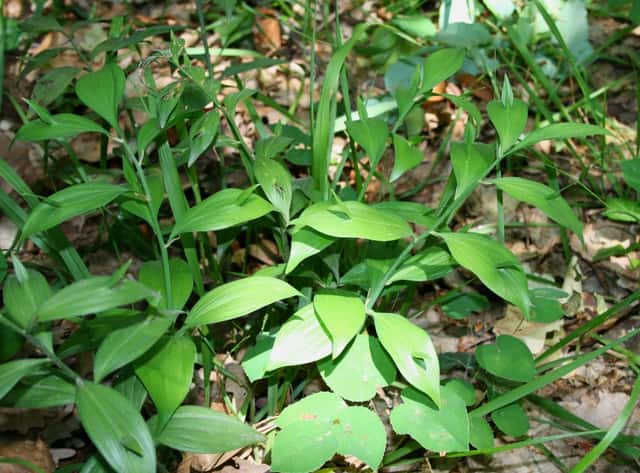
Asparagaceae
Spineless butcher's broom: Ground Cover Plant
Ruscus hypoglossum
Easy-care evergreen groundcover for shade. Grows slowly, tolerates dry spells once established, and needs well-draining soil to avoid root rot.
Every 7-10 days
Low light
° - °C
% - %
Categories
What is Spineless butcher's broom?
Spineless butcher's broom (Ruscus hypoglossum) is a easy-care plant from the Asparagaceae family. Ruscus hypoglossum, the spineless butcher's broom, is a low, evergreen shade shrub in the Asparagaceae family, native to woodlands of southern Europe and Asia Minor. Unlike its spiny relative Ruscus aculeatus, its broad, glossy cladodes (leaf-like flattened stems) are soft and unarmed, making it a p...
Unlike many tropical plants, Spineless butcher's broom tolerates watering mistakes. Best for beginners. Without precautions, ingestion can cause irritation in pets. Keep out of reach of cats and dogs.
How to Care for Spineless butcher's broom?
TLDR: Spineless butcher's broom needs Low light, watering every 7 days, and temperatures between 15-30°C with 40-70% humidity.
How Often Should You Water Spineless butcher's broom?
Water deeply about once a week in the growing season, allowing soil to dry slightly between waterings; reduce watering in winter. Avoid waterlogged soil.
How Much Light Does Spineless butcher's broom Need?
Thrives in dappled to full shade; avoid direct sun, which can scorch the glossy cladodes.
What Is the Best Soil for Spineless butcher's broom?
Plant in well-draining, loam-rich soil; good drainage is essential since the plant dislikes soggy conditions.
Care Schedule
Fertilize
Every 14 days
Misting
Every 3 days
Rotate
Every 7 days
Repot
Every 365 days
What Is Spineless butcher's broom and Where Does It Come From?
Ruscus hypoglossum, the spineless butcher's broom, is a low, evergreen shade shrub in the Asparagaceae family, native to woodlands of southern Europe and Asia Minor. Unlike its spiny relative Ruscus aculeatus, its broad, glossy cladodes (leaf-like flattened stems) are soft and unarmed, making it a popular groundcover for dark corners of gardens and shady borders.
How Big Does Spineless butcher's broom Grow?
TLDR: Spineless butcher's broom can reach up to ?cm tall with Slow growth rate.
Growth rate
Slow
Foliage
Evergreen
Warning: Toxic Plant
This plant can be toxic if ingested. Keep out of reach of:
Plant Uses
Ornamental
Great for decoration
Ground Cover
Soil coverage
Is your plant showing symptoms?
Click on the symptom to discover possible causes:
What Diseases Commonly Affect Spineless butcher's broom?
TLDR: Spineless butcher's broom is susceptible to 4 known diseases. Monitor regularly for early detection.
Root Rot
Root rot is a serious fungal disease that affects the root system of plants, causing them to decay and die. It is primarily caused by overwatering, poor drainage, or soil-borne fungi such as Pythium, Phytophthora, Rhizoctonia, and Fusarium. The disease thrives in waterlogged conditions where roots are deprived of oxygen, making them susceptible to fungal infection.
Leaf Spot
Leaf spot is a common fungal disease caused by various pathogens including Alternaria, Ascochyta, Colletotrichum, Septoria, and Venturia. It primarily affects leaves, causing discolored spots that can lead to premature leaf drop if left untreated.
Scale Insects
Scale insects are small sap-sucking pests that appear as brown, shell-like bumps on plant stems and leaves. There are over 25 species, divided into armored (hard) and unarmored (soft) scales. They feed by piercing plant tissue and extracting sap, which weakens the plant and can lead to yellowing, stunted growth, and even death if left untreated. They also excrete honeydew, which attracts ants and promotes sooty mold growth.
Powdery Mildew
Powdery mildew is a common fungal disease caused by various fungi species including Erysiphe, Podosphaera, Oïdium, and Leveillula. It affects over 10,000 plant species worldwide. The disease thrives in warm, dry climates with high humidity and appears as a distinctive white powdery coating on plant surfaces.
Compare with similar plants
| Attribute | Difficulty | Light | Watering | Pet Safe |
|---|---|---|---|---|
| Field Maple | Easy | Bright indirect | 14d | ✓ |
| Silver Birch | Easy | Direct sun | 14d | ✓ |
| Common Blanketflower | Easy | Direct sun | 10d | ✓ |
| Cushion Bush | Easy | Direct sun | 14d | ✓ |





