Araceae
Dieffenbachia picta: Spotted Dumb Cane Care Guide
Dieffenbachia picta
Thrives in bright, indirect light with moderate watering once the topsoil dries, high humidity, and warm temperatures between 18-27°C (64-81°F). Sensitive to soggy soil and cold drafts.
Every 7 days
Partial shade
18° - 27°C
50% - 70%
Categories
What is Spotted Dumb Cane?
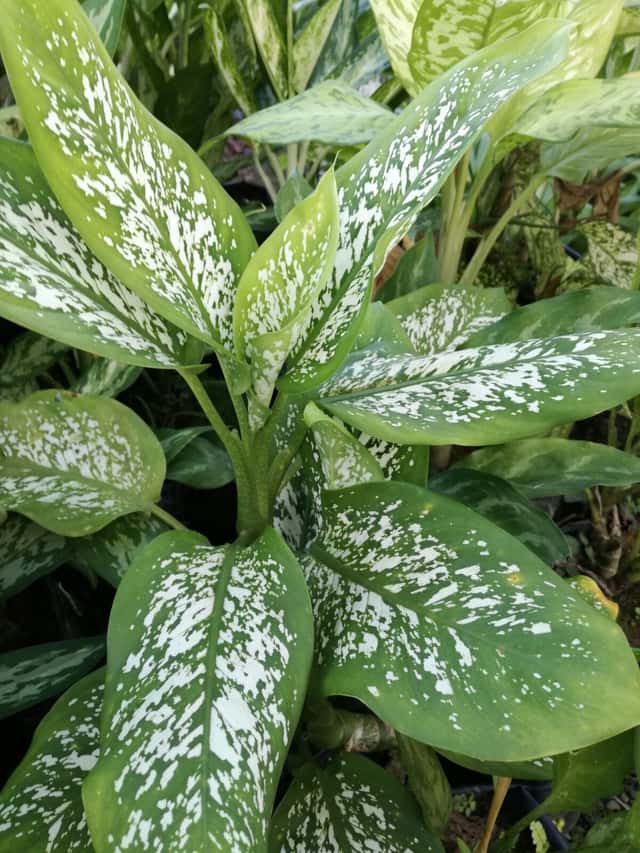
Spotted Dumb Cane (Dieffenbachia picta) is a easy-care plant from the Araceae family. Dieffenbachia picta, widely sold simply as "dumb cane" or "spotted dieffenbachia," is a striking tropical foliage houseplant in the arum family (Araceae), native to the humid forests of the Caribbean and Central and South America. Its broad, glossy leaves are marbled with irregular cream, white, or...
Spotted Dumb Cane grows up to 1.8m, spread of 90cm, watering every 7 days, 18°C – 27°C, 50–70% humidity. It is suitable for indoor environments and not safe for pets.
Unlike many tropical plants, Spotted Dumb Cane tolerates watering mistakes. Best for beginners. Without precautions, ingestion can cause irritation in pets. Keep out of reach of cats and dogs. Without adequate drainage, root rot can develop within 14 days.
How to Care for Spotted Dumb Cane?
TLDR: Spotted Dumb Cane needs Partial shade, watering every 7 days, and temperatures between 18-27°C with 50-70% humidity.
How Often Should You Water Spotted Dumb Cane?
Water when the top 2-3 cm (about 1 inch) of soil feels dry; never let the pot sit in standing water, as soggy roots quickly lead to rot.
How Much Light Does Spotted Dumb Cane Need?
Give it bright, indirect light. Direct sun scorches the leaves, while too little light causes the variegation to fade and growth to become leggy.
What Is the Best Soil for Spotted Dumb Cane?
Use a light, fast-draining, organically rich mix — a blend of potting soil, perlite, and orchid bark or coco coir works well.
What Pot Should You Use for Spotted Dumb Cane?
A pot with drainage holes, ideally terracotta, which helps balance soil moisture.
Care Schedule
Fertilize
Every 30 days
Misting
Every 7 days
Rotate
Every 14 days
Repot
Every 730 days
What Is Spotted Dumb Cane and Where Does It Come From?
Dieffenbachia picta, widely sold simply as "dumb cane" or "spotted dieffenbachia," is a striking tropical foliage houseplant in the arum family (Araceae), native to the humid forests of the Caribbean and Central and South America. Its broad, glossy leaves are marbled with irregular cream, white, or pale-green blotches over a dark green background, making it a long-standing favorite for adding jungle texture to shaded interiors. Botanically, "picta" is most often treated today as a synonym or a spotted cultivar group within Dieffenbachia seguine (=D. maculata), and nursery tags reading "D. picta" typically refer to this same variegated horticultural type. All parts of the plant are HIGHLY TOXIC: the sap contains needle-shaped calcium oxalate crystals (raphides) that, when chewed or bitten, pierce the soft tissue of the mouth and throat, causing intense burning pain, excessive drooling, and swelling severe enough to temporarily impair speech — the origin of the common name "dumb cane."
How to Propagate Spotted Dumb Cane?
Stem Cutting
Always wear gloves when taking cuttings, and keep children and pets away from the sap and clippings.
- 1 Cut a section of stem with at least one node using clean, sharp shears
- 2 Wear gloves — the sap is irritating to skin and eyes
- 3 Let the cut end callus over for a few hours before planting
- 4 Plant in lightly moist potting mix or place in water
- 5 Keep in bright, indirect light with high humidity until roots form
Materials needed:
Clump Division
Choose divisions with healthy root systems for the best success rate.
- 1 Remove the plant from its pot and separate offsets that already have their own roots
- 2 Wear gloves while handling roots and sap
- 3 Repot each division into its own well-draining pot
Materials needed:
How Big Does Spotted Dumb Cane Grow?
TLDR: Spotted Dumb Cane can reach up to 1.8m tall with Medium growth rate.
Max height
1.8m
Spread
90cm
Growth rate
Medium
Foliage
Evergreen
Warning: Toxic Plant
This plant can be toxic if ingested. Keep out of reach of:
Plant Uses
Ornamental
Great for decoration
Air Purifying
Improves air quality
Is your plant showing symptoms?
Click on the symptom to discover possible causes:
What Diseases Commonly Affect Spotted Dumb Cane?
TLDR: Spotted Dumb Cane is susceptible to 10 known diseases. Monitor regularly for early detection.
Root Rot
Root rot is a serious fungal disease that affects the root system of plants, causing them to decay and die. It is primarily caused by overwatering, poor drainage, or soil-borne fungi such as Pythium, Phytophthora, Rhizoctonia, and Fusarium. The disease thrives in waterlogged conditions where roots are deprived of oxygen, making them susceptible to fungal infection.
Bacterial Leaf Spot
Bacterial leaf spot is a plant disease caused by bacteria in the Xanthomonas and Pseudomonas genera that affects various ornamental and edible plants. The bacteria infect leaves through wounds or natural openings, causing characteristic lesions that can lead to premature leaf drop and plant weakening.
Bacterial Soft Rot
Bacterial soft rot is a destructive plant disease caused primarily by bacteria from the genera Pectobacterium (formerly Erwinia) and Dickeya. These bacteria produce enzymes that break down plant cell walls, causing rapid and foul-smelling tissue decomposition. It mainly affects succulent tissues such as tubers, fruits, stems, and bulbs, being especially problematic in warm and humid conditions.
Bacterial Soft Rot
Erwinia is a genus of plant-pathogenic bacteria that cause fast-spreading rots and blights. On apple and pear, Erwinia amylovora causes fire blight: tender shoots wilt, turn dark, and often bend like a shepherd’s crook; blossoms and twigs may ooze a sticky, amber liquid. In vegetables and many houseplants, related Erwinia-type bacteria cause soft rot: leaves or stems look water-soaked, turn mushy, and smell bad, often starting at wounds or at the crown. These bacteria spread by splashing water, insects, dirty tools, and infected plant parts, especially in warm, wet weather.
Meaning & Symbolism
In many Latin American households, dumb canes are grown near doorways in the belief they ward off envy and bad energy — a folk tradition tied directly to the plant's fearsome bite.
Fun Facts
The sap contains calcium oxalate raphides that act like microscopic needles, a defense mechanism against herbivores
The name "dumb cane" comes from historical Caribbean accounts of temporary loss of speech after contact with the sap
It rarely flowers as a houseplant, since it puts most of its energy into leaf growth instead
It is one of the most popular protective folk plants in Brazilian culture, grown in countless homes
Frequently asked questions
Is Dieffenbachia picta toxic to cats and dogs?
Why is it called dumb cane?
How often should I water my spotted dumb cane?
What is the difference between Dieffenbachia picta and Dieffenbachia seguine?
Compare with similar plants
| Attribute | Difficulty | Light | Watering | Pet Safe |
|---|---|---|---|---|
| Field Maple | Easy | Bright indirect | 14d | ✓ |
| Silver Birch | Easy | Direct sun | 14d | ✓ |
| Common Blanketflower | Easy | Direct sun | 10d | ✓ |
| Cushion Bush | Easy | Direct sun | 14d | ✓ |





