Asteraceae
Senecio viscosus - Sticky Groundsel
Senecio viscosus
A tough, fast-growing annual weed that thrives in poor, well-drained soil and full sun with essentially no care. Let the soil dry out between waterings, since it tolerates drought well and dislikes soggy ground. It is not usually cultivated on purpose and is most often encountered self-seeding on disturbed sites.
Every 10 days
Direct sun
5° - 25°C
30% - 60%
Categories
What is Sticky groundsel?
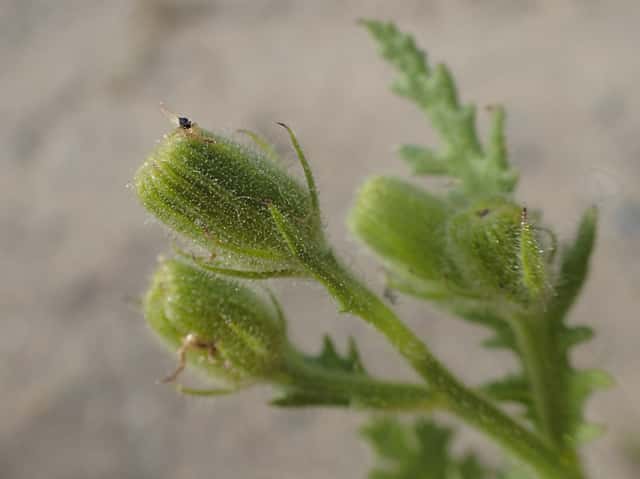
Sticky groundsel (Senecio viscosus) is a easy-care plant from the Asteraceae family. Senecio viscosus is a strong-smelling annual weed in the daisy family (Asteraceae), covered in sticky, glandular hairs that trap dust and grit, giving it a grayish, unkempt look. It bears small yellow, daisy-like flower heads with distinctive ray florets that curl sharply backward once open, and it...
Sticky groundsel grows up to 70cm, watering every 10 days, 5°C – 25°C, 30–60% humidity. It is not suitable for indoor environments and not safe for pets.
Unlike many tropical plants, Sticky groundsel tolerates watering mistakes. Best for beginners. Without precautions, ingestion can cause irritation in pets. Keep out of reach of cats and dogs.
How to Care for Sticky groundsel?
TLDR: Sticky groundsel needs Direct sun, watering every 10 days, and temperatures between 5-25°C with 30-60% humidity.
How Often Should You Water Sticky groundsel?
Water only sparingly once the soil is fully dry; this drought-tolerant plant resents wet feet and is prone to rot in waterlogged soil.
How Much Light Does Sticky groundsel Need?
Provide full sun to very light shade; it grows best and flowers most freely in bright, open, disturbed locations.
What Is the Best Soil for Sticky groundsel?
Prefers poor, sandy or gravelly, fast-draining soil over rich or heavy, waterlogged ground.
What Pot Should You Use for Sticky groundsel?
Not typically grown in containers; if attempted, use a shallow pot with a fast-draining, sandy or gritty mix.
What Is Sticky groundsel and Where Does It Come From?
Senecio viscosus is a strong-smelling annual weed in the daisy family (Asteraceae), covered in sticky, glandular hairs that trap dust and grit, giving it a grayish, unkempt look. It bears small yellow, daisy-like flower heads with distinctive ray florets that curl sharply backward once open, and it typically grows to about 70 cm tall on disturbed, sandy or gravelly ground, waste places, railway edges and roadsides. Like all Senecio species it contains toxic pyrrolizidine alkaloids and should be handled with care and kept well away from children, pets and grazing livestock.
How to Propagate Sticky groundsel?
Seed propagation
Self-seeds readily, so deadhead spent flower heads promptly if you do not want it spreading.
- 1 Collect ripe, fluffy seed heads once they turn white and fluffy.
- 2 Scatter seeds directly onto bare, disturbed, well-draining soil in a sunny spot.
- 3 Press seeds lightly into the surface without burying them, as they need light to germinate.
- 4 Keep the soil lightly moist until seedlings emerge, then reduce watering.
Materials needed:
How Big Does Sticky groundsel Grow?
TLDR: Sticky groundsel can reach up to 70cm tall with Fast growth rate.
Max height
70cm
Growth rate
Fast
Foliage
Deciduous
Warning: Toxic Plant
This plant can be toxic if ingested. Keep out of reach of:
Is your plant showing symptoms?
Click on the symptom to discover possible causes:
What Diseases Commonly Affect Sticky groundsel?
TLDR: Sticky groundsel is susceptible to 5 known diseases. Monitor regularly for early detection.
Powdery Mildew
Powdery mildew is a common fungal disease caused by various fungi species including Erysiphe, Podosphaera, Oïdium, and Leveillula. It affects over 10,000 plant species worldwide. The disease thrives in warm, dry climates with high humidity and appears as a distinctive white powdery coating on plant surfaces.
Rust
Rust is a common fungal disease caused by fungi in the order Pucciniales that affects a wide variety of plants. The disease gets its name from the characteristic orange, yellow, or reddish-brown pustules that appear on leaves, resembling metal rust. This obligate fungal parasite requires living plants to survive and can cause significant economic losses in agricultural crops.
Root Rot
Root rot is a serious fungal disease that affects the root system of plants, causing them to decay and die. It is primarily caused by overwatering, poor drainage, or soil-borne fungi such as Pythium, Phytophthora, Rhizoctonia, and Fusarium. The disease thrives in waterlogged conditions where roots are deprived of oxygen, making them susceptible to fungal infection.
Aphids
Aphids are small, soft-bodied, pear-shaped insects (1/16 to 1/8 inch long) that feed by sucking nutrient-rich sap from plants. They reproduce rapidly and can quickly weaken plants, causing distorted growth and transmitting plant viruses. Aphids come in various colors including green, black, red, yellow, brown, and gray. They secrete honeydew, a sticky substance that attracts ants and encourages sooty mold growth.
Meaning & Symbolism
As a fast-colonizing weedy annual, folk tradition sometimes links groundsels to resilience and unwelcome intrusion, reflecting how readily they take over bare, disturbed ground.
Fun Facts
Its sticky, glandular hairs trap dust and grit, giving the plant a grubby, unwashed look - hence the name sticky groundsel.
Unlike common groundsel (Senecio vulgaris), its yellow ray florets curl dramatically backward once open.
It is more salt-tolerant than common groundsel, letting it colonize maritime habitats and winter-salted roadsides.
It contains the same toxic pyrrolizidine alkaloids found throughout the Senecio genus, long linked to livestock poisoning.
Frequently asked questions
Is Senecio viscosus toxic?
How do I identify sticky groundsel?
Does sticky groundsel need special care?
Where does Senecio viscosus grow naturally?
Compare with similar plants
| Attribute | Difficulty | Light | Watering | Pet Safe |
|---|---|---|---|---|
| Field Maple | Easy | Bright indirect | 14d | ✓ |
| Silver Birch | Easy | Direct sun | 14d | ✓ |
| Common Blanketflower | Easy | Direct sun | 10d | ✓ |
| Cushion Bush | Easy | Direct sun | 14d | ✓ |





