Asteraceae
Stiff Greenthread Care Guide
Thelesperma filifolium
Stiff greenthread is an easy-care, low-maintenance wildflower. Give it full sun, well-drained sandy or gravelly soil, and minimal supplemental water once established. Deadhead spent blooms to encourage continuous flowering from spring through fall.
Every 14 days
Direct sun
7° - 35°C
20% - 50%
Categories
What is Stiff Greenthread?
Stiff Greenthread (Thelesperma filifolium) is a easy-care plant from the Asteraceae family. Thelesperma filifolium, commonly known as stiff greenthread, is a drought-tolerant wildflower native to the Great Plains and prairies of North America, from Texas to the Dakotas. It forms slender, branching stems with thread-like foliage topped by cheerful golden-yellow daisy-like flowers with reddi...
Stiff Greenthread grows up to 75cm, spread of 40cm, watering every 14 days, 7°C – 35°C, 20–50% humidity. It is not suitable for indoor environments and safe for pets.
Unlike many tropical plants, Stiff Greenthread tolerates watering mistakes. Best for beginners. Unlike many popular species, Stiff Greenthread is safe to keep around pets.
How to Care for Stiff Greenthread?
TLDR: Stiff Greenthread needs Direct sun, watering every 14 days, and temperatures between 7-35°C with 20-50% humidity.
How Often Should You Water Stiff Greenthread?
Water sparingly. Once established, this drought-tolerant plant only needs supplemental water during extended dry spells; overwatering in heavy soil can cause root problems.
How Much Light Does Stiff Greenthread Need?
Provide at least 6 hours of direct sun daily. Stiff greenthread will not thrive in shade.
What Is the Best Soil for Stiff Greenthread?
Plant in dry, sandy, gravelly, or rocky soil with excellent drainage. Avoid rich, heavily amended soil, which can reduce flowering.
What Pot Should You Use for Stiff Greenthread?
Best grown in the ground or in a wide, shallow terracotta pot with drainage holes; not well suited to standard houseplant pots due to its taproot.
What Is Stiff Greenthread and Where Does It Come From?
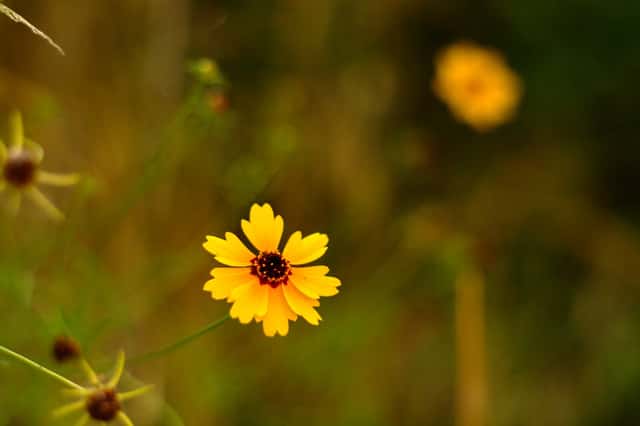
Thelesperma filifolium, commonly known as stiff greenthread, is a drought-tolerant wildflower native to the Great Plains and prairies of North America, from Texas to the Dakotas. It forms slender, branching stems with thread-like foliage topped by cheerful golden-yellow daisy-like flowers with reddish-brown centers. A winter annual or short-lived perennial, it thrives in dry, sandy, or gravelly soils and full sun, making it a favorite for native wildflower meadows and pollinator gardens.
How to Propagate Stiff Greenthread?
Seed Sowing
Direct sowing works best since stiff greenthread has a sensitive taproot that dislikes transplanting.
- 1 Sow seeds directly in prepared soil in early spring
- 2 Lightly cover seeds with a thin layer of soil
- 3 Keep soil lightly moist until germination
- 4 Thin seedlings once they reach a few inches tall
Materials needed:
Root Division
Only mature multi-stemmed clumps are suitable for division; young plants should not be divided.
- 1 Carefully dig up an established clump
- 2 Separate root sections with a clean, sharp tool
- 3 Replant divisions immediately in well-draining soil
- 4 Water lightly to help roots settle
Materials needed:
Stem Cutting
Use clean, sharp tools and provide bright, indirect light while cuttings root.
- 1 Take a 3-4 inch cutting from a healthy, non-flowering stem
- 2 Dip the cut end in rooting hormone
- 3 Insert into a well-draining potting mix
- 4 Keep lightly moist until roots establish
Materials needed:
How Big Does Stiff Greenthread Grow?
TLDR: Stiff Greenthread can reach up to 75cm tall with Medium growth rate.
Max height
75cm
Spread
40cm
Growth rate
Medium
Foliage
Deciduous
Plant Uses
Ornamental
Great for decoration
Medicinal
Medicinal properties
Edible
Can be consumed
Medicinal Uses
- Traditionally brewed as a tea to help reduce fever
- Used to ease digestive discomfort
- Applied in traditional remedies for kidney support
Culinary Uses
- Dried flowers and leaves steeped as an herbal tea (Navajo/Hopi tea)
Is your plant showing symptoms?
Click on the symptom to discover possible causes:
What Diseases Commonly Affect Stiff Greenthread?
TLDR: Stiff Greenthread is susceptible to 3 known diseases. Monitor regularly for early detection.
Aphids
Aphids are small, soft-bodied, pear-shaped insects (1/16 to 1/8 inch long) that feed by sucking nutrient-rich sap from plants. They reproduce rapidly and can quickly weaken plants, causing distorted growth and transmitting plant viruses. Aphids come in various colors including green, black, red, yellow, brown, and gray. They secrete honeydew, a sticky substance that attracts ants and encourages sooty mold growth.
Caterpillars
Caterpillars are the larval stage of moths and butterflies that feed voraciously on plant foliage, stems, flowers, and fruits. Common species include cabbage loopers, tomato hornworms, armyworms, and cutworms. These pests can cause extensive damage by consuming large amounts of plant tissue in a short time. They vary in size from small (1/4 inch) to large (5 inches), with colors ranging from green to brown, often featuring stripes or spots. Caterpillars are highly mobile and can quickly spread throughout gardens, making them one of the most destructive common pests.
Damping Off
Damping off is a soil-borne fungal disease that affects seeds and young seedlings, causing rotting of stem and root tissues at and below the soil line. It is caused by several fungi including Pythium, Rhizoctonia, Fusarium, and Phytophthora. The disease thrives in cold, wet conditions with poor air circulation.
Meaning & Symbolism
Symbolizes resilience and healing; historically brewed as a medicinal tea by Indigenous peoples of the Great Plains, representing a deep connection between people and the prairie landscape.
Fun Facts
Stiff greenthread's dried flowers and leaves have been used for centuries by the Dine (Navajo) and Nde (Apache) peoples to brew a traditional herbal tea.
The plant's thread-like, finely divided leaves give it its common name greenthread.
Despite its delicate appearance, stiff greenthread has a deep taproot that helps it survive extended droughts.
Deer tend to avoid this wildflower, making it a reliable choice for deer-resistant native gardens.
Frequently asked questions
Is stiff greenthread toxic to pets?
How often should I water stiff greenthread?
Is stiff greenthread an annual or perennial?
Can I make tea from stiff greenthread?
Does stiff greenthread attract pollinators?
Compare with similar plants
| Attribute | Difficulty | Light | Watering | Pet Safe |
|---|---|---|---|---|
| Field Maple | Easy | Bright indirect | 14d | ✓ |
| Silver Birch | Easy | Direct sun | 14d | ✓ |
| Common Blanketflower | Easy | Direct sun | 10d | ✓ |
| Cushion Bush | Easy | Direct sun | 14d | ✓ |





