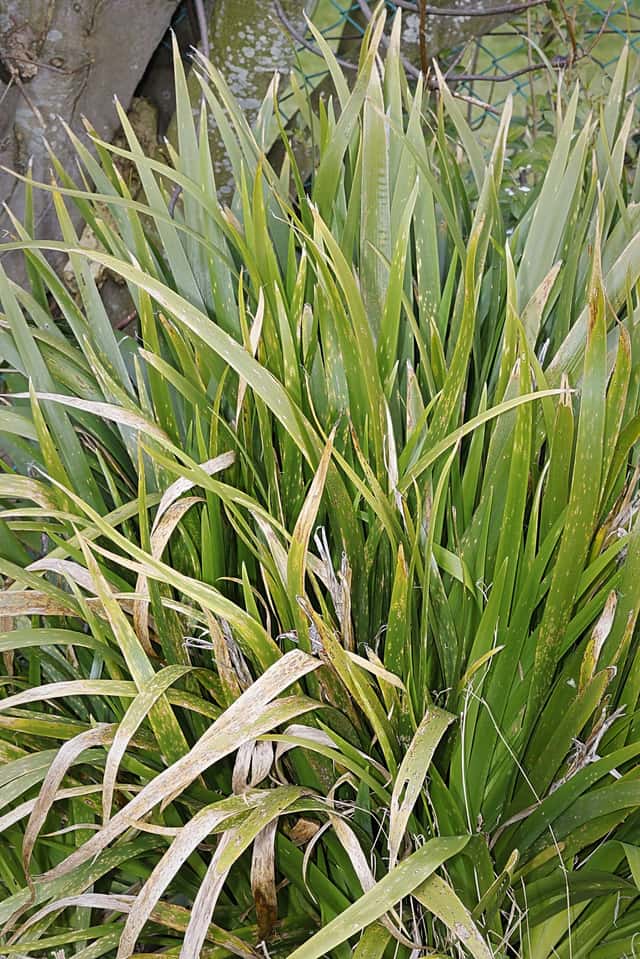
Iridaceae
Stinking Iris (Iris foetidissima)
Iris foetidissima
An exceptionally low-maintenance evergreen perennial that tolerates deep shade, drought, and poor soil once established. Water moderately until roots are established, then let nature take over.
Every 10 days
Partial shade
-15° - 32°C
% - %
Categories
What is Stinking Iris?
Stinking Iris (Iris foetidissima) is a easy-care plant from the Iridaceae family. Iris foetidissima, commonly called the stinking iris or roast-beef plant, is a tough evergreen perennial from the iris family (Iridaceae), native to woodlands and hedgerows across Europe and North Africa. Unlike most irises, which crave full sun, this shade-loving species thrives beneath trees and i...
Stinking Iris grows up to 1.0m, spread of 50cm, watering every 10 days, -15°C – 32°C. It is not suitable for indoor environments and not safe for pets.
Unlike many tropical plants, Stinking Iris tolerates watering mistakes. Best for beginners. Without precautions, ingestion can cause irritation in pets. Keep out of reach of cats and dogs.
How to Care for Stinking Iris?
TLDR: Stinking Iris needs Partial shade, watering every 10 days, and temperatures between -15-32°C with 40-70% humidity.
How Often Should You Water Stinking Iris?
Water regularly during the first growing season to help roots establish, then reduce frequency: established plants tolerate dry spells well and are more likely to suffer from overwatering and root rot than from drought.
How Much Light Does Stinking Iris Need?
Remarkably adaptable: grows in full sun, partial shade, or full shade, making it one of the few irises suited to woodland gardens and shady borders.
What Is the Best Soil for Stinking Iris?
Thrives in well-drained sandy, loamy, or clay soil across a wide pH range from acid to alkaline; avoid waterlogged conditions that encourage root and crown rot.
What Pot Should You Use for Stinking Iris?
If grown in a container, use a wide, sturdy pot with generous drainage holes to accommodate its spreading rhizomes.
What Is Stinking Iris and Where Does It Come From?
Iris foetidissima, commonly called the stinking iris or roast-beef plant, is a tough evergreen perennial from the iris family (Iridaceae), native to woodlands and hedgerows across Europe and North Africa. Unlike most irises, which crave full sun, this shade-loving species thrives beneath trees and in the driest, poorest corners of the garden where little else survives. Its narrow, sword-shaped leaves release a pungent odor reminiscent of roasting beef when bruised or crushed, giving the plant its unusual common names. In late spring, dull purple flowers with a yellow flush appear, but the real spectacle comes in autumn, when large seed pods split open to reveal clusters of glossy, bright orange-red seeds that persist through winter, making it a favorite for dried flower arrangements and winter-interest borders.
How to Propagate Stinking Iris?
Rhizome Division
Divide only healthy, vigorous clumps every 3-4 years to keep plants blooming well; discard old, woody centers.
- 1 Wait until 4-6 weeks after flowering has finished, typically in July or August.
- 2 Lift the clump carefully with a garden fork, keeping as much root intact as possible.
- 3 Divide the rhizome into sections, each with at least one healthy fan of leaves and visible roots.
- 4 Trim leaves back by about one-third to reduce water loss during establishment.
- 5 Replant divisions immediately at the same depth, spacing them 30-45 cm apart, and water well.
Materials needed:
Seed Sowing
Fresh seed germinates far more reliably than dried, stored seed, so sow as soon as pods split open.
- 1 Collect ripe orange seeds from split pods in autumn.
- 2 Sow fresh seed immediately in pots of free-draining compost, as stored seed can take up to 18 months to germinate.
- 3 Place pots in a cold frame or sheltered spot outdoors over winter to allow natural stratification.
- 4 Keep compost moist and be patient, as germination can be slow and erratic.
- 5 Transplant seedlings once they have several true leaves and are large enough to handle.
Materials needed:
How Big Does Stinking Iris Grow?
TLDR: Stinking Iris can reach up to 1.0m tall with Medium growth rate.
Max height
1.0m
Spread
50cm
Growth rate
Medium
Foliage
Evergreen
Warning: Toxic Plant
This plant can be toxic if ingested. Keep out of reach of:
Plant Uses
Ornamental
Great for decoration
Ground Cover
Soil coverage
Medicinal
Medicinal properties
Medicinal Uses
- Root historically used in folk medicine as a purgative and for pain relief (use with caution due to toxicity)
Is your plant showing symptoms?
Click on the symptom to discover possible causes:
What Diseases Commonly Affect Stinking Iris?
TLDR: Stinking Iris is susceptible to 9 known diseases. Monitor regularly for early detection.
Bacterial Soft Rot
Bacterial soft rot is a destructive plant disease caused primarily by bacteria from the genera Pectobacterium (formerly Erwinia) and Dickeya. These bacteria produce enzymes that break down plant cell walls, causing rapid and foul-smelling tissue decomposition. It mainly affects succulent tissues such as tubers, fruits, stems, and bulbs, being especially problematic in warm and humid conditions.
Leaf Spot
Leaf spot is a common fungal disease caused by various pathogens including Alternaria, Ascochyta, Colletotrichum, Septoria, and Venturia. It primarily affects leaves, causing discolored spots that can lead to premature leaf drop if left untreated.
Rust
Rust is a common fungal disease caused by fungi in the order Pucciniales that affects a wide variety of plants. The disease gets its name from the characteristic orange, yellow, or reddish-brown pustules that appear on leaves, resembling metal rust. This obligate fungal parasite requires living plants to survive and can cause significant economic losses in agricultural crops.
Crown Rot
Crown rot is a serious fungal disease that attacks the crown (base) of the plant where the stem meets the soil. It is caused by various fungal pathogens including Phytophthora, Fusarium, and Rhizoctonia. The disease thrives in waterlogged conditions and can quickly spread to kill the entire plant if not addressed promptly.
Meaning & Symbolism
In the language of flowers, Iris broadly represents wisdom, hope, and valor; the stinking iris's tenacity in deep shade and its fiery winter seed display add associations of resilience and hidden beauty.
Fun Facts
The crushed leaves release a smell often compared to roasting beef, inspiring the nickname "roast-beef plant."
It is one of the only iris species that flowers and thrives in full shade, unlike most sun-loving irises.
Its bright orange seeds are so ornamental that the dried seed stalks are popular in winter flower arrangements.
Despite its Mediterranean-adjacent origins, it is fully hardy through the UK and much of northern Europe (RHS hardiness rating H6).
Frequently asked questions
Is Iris foetidissima toxic to cats and dogs?
Why isn't my stinking iris flowering?
Does it really smell like roast beef?
How do I get the ornamental orange seed pods?
Compare with similar plants
| Attribute | Difficulty | Light | Watering | Pet Safe |
|---|---|---|---|---|
| Field Maple | Easy | Bright indirect | 14d | ✓ |
| Silver Birch | Easy | Direct sun | 14d | ✓ |
| Common Blanketflower | Easy | Direct sun | 10d | ✓ |
| Cushion Bush | Easy | Direct sun | 14d | ✓ |





