Pinaceae
Stone Pine: Aromatic Plant
Pinus pinea
A tough, drought-tolerant tree for hot, sunny, well-drained sites. Once established it needs little care beyond space to grow. Give it full sun and free-draining, even sandy soil, and avoid waterlogging, which it will not tolerate.
Every 28 days
Direct sun
-12° - 40°C
% - %
Categories
What is Stone Pine?
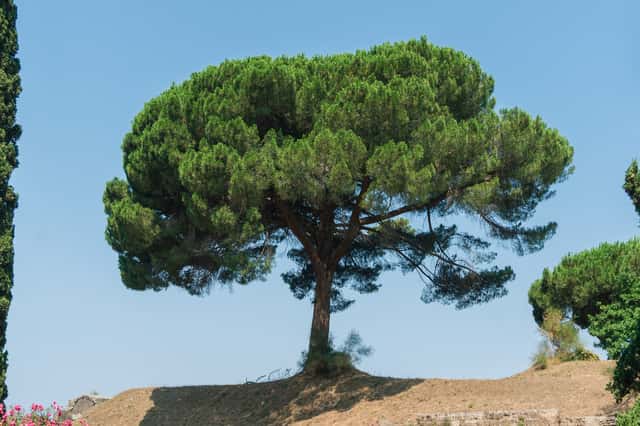
Stone Pine (Pinus pinea) is a easy-care plant from the Pinaceae family. Pinus pinea, the stone pine, is a large Mediterranean conifer famous for its broad, umbrella-shaped crown and for the edible pine nuts (pinoli) held in its rounded cones. It has stiff, dark green paired needles and reddish, fissured bark, and can reach 20 to 25 metres over a long, slow life. Its dis...
Stone Pine grows up to 25.0m, spread of 1200cm, watering every 28 days, -12°C – 40°C. It is not suitable for indoor environments and not safe for pets.
Unlike many tropical plants, Stone Pine tolerates watering mistakes. Best for beginners. Without precautions, ingestion can cause irritation in pets. Keep out of reach of cats and dogs.
How to Care for Stone Pine?
TLDR: Stone Pine needs Direct sun, watering every 28 days, and temperatures between -12-40°C with 40-70% humidity.
How Often Should You Water Stone Pine?
Water regularly for the first few years while it establishes, then only during prolonged drought. Mature trees are highly drought-tolerant and dislike wet, heavy ground.
How Much Light Does Stone Pine Need?
Needs full sun, at least six to eight hours a day; it will not grow well in shade.
What Is the Best Soil for Stone Pine?
Plant in well-drained sandy or loamy soil, including poor and chalky ground. It benefits from natural mycorrhizal fungi and resents waterlogged sites.
What Pot Should You Use for Stone Pine?
Young trees can be grown in a large, deep container with excellent drainage, but they are vigorous and eventually need planting out; it is not suited to long-term indoor culture.
What Is Stone Pine and Where Does It Come From?
Pinus pinea, the stone pine, is a large Mediterranean conifer famous for its broad, umbrella-shaped crown and for the edible pine nuts (pinoli) held in its rounded cones. It has stiff, dark green paired needles and reddish, fissured bark, and can reach 20 to 25 metres over a long, slow life. Its distinctive silhouette is a hallmark of the Italian and Iberian landscape.
How Big Does Stone Pine Grow?
TLDR: Stone Pine can reach up to 25.0m tall with Slow growth rate.
Max height
25.0m
Spread
12.0m
Growth rate
Slow
Foliage
Evergreen
Warning: Toxic Plant
This plant can be toxic if ingested. Keep out of reach of:
Plant Uses
Edible
Can be consumed
Ornamental
Great for decoration
Aromatic
Pleasant fragrance
Medicinal Uses
- Resin and needles traditionally used for respiratory and rheumatic complaints
Culinary Uses
- Seeds (pine nuts / pinoli) eaten raw, roasted or in cooking
- Used in pesto, confectionery and desserts
Is your plant showing symptoms?
Click on the symptom to discover possible causes:
What Diseases Commonly Affect Stone Pine?
TLDR: Stone Pine is susceptible to 5 known diseases. Monitor regularly for early detection.
Rust
Rust is a common fungal disease caused by fungi in the order Pucciniales that affects a wide variety of plants. The disease gets its name from the characteristic orange, yellow, or reddish-brown pustules that appear on leaves, resembling metal rust. This obligate fungal parasite requires living plants to survive and can cause significant economic losses in agricultural crops.
Dieback (Dead Wood)
This is an environmental condition where the woody parts of the plant dry out and die. It is often caused by extreme frost, prolonged water deficiency, or physical damage. Since it is non-infectious, it does not spread to other plants, but the weakened sections can provide an entry point for fungal pathogens.
Root Rot
Root rot is a serious fungal disease that affects the root system of plants, causing them to decay and die. It is primarily caused by overwatering, poor drainage, or soil-borne fungi such as Pythium, Phytophthora, Rhizoctonia, and Fusarium. The disease thrives in waterlogged conditions where roots are deprived of oxygen, making them susceptible to fungal infection.
Aphids
Aphids are small, soft-bodied, pear-shaped insects (1/16 to 1/8 inch long) that feed by sucking nutrient-rich sap from plants. They reproduce rapidly and can quickly weaken plants, causing distorted growth and transmitting plant viruses. Aphids come in various colors including green, black, red, yellow, brown, and gray. They secrete honeydew, a sticky substance that attracts ants and encourages sooty mold growth.
Meaning & Symbolism
An emblem of the Mediterranean and of Rome, long associated with endurance and eternity.
Compare with similar plants
| Attribute | Difficulty | Light | Watering | Pet Safe |
|---|---|---|---|---|
| Field Maple | Easy | Bright indirect | 14d | ✓ |
| Silver Birch | Easy | Direct sun | 14d | ✓ |
| Common Blanketflower | Easy | Direct sun | 10d | ✓ |
| Cushion Bush | Easy | Direct sun | 14d | ✓ |





