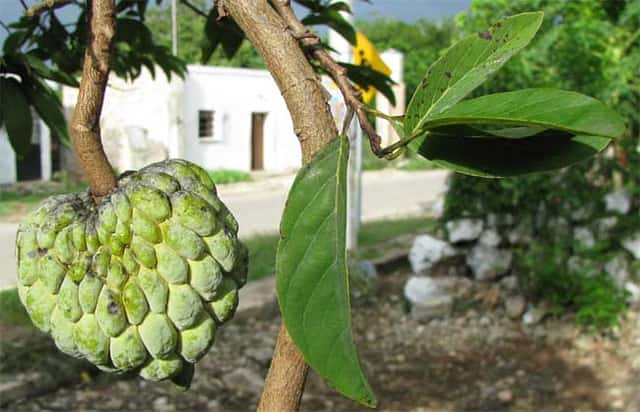
Annonaceae
Sugar-apple: Edible Plant
Annona squamosa
Requires full sun and well-drained soil. It must be protected from frost and cold winds, with regular watering during the growth and fruiting phases.
Every 4 days
Direct sun
10° - 35°C
60% - 80%
Categories
What is Sugar-apple?
Sugar-apple (Annona squamosa) is a medium-care plant from the Annonaceae family. Annona squamosa, commonly known as sugar-apple or sweetsop, is a small tropical fruit tree. Its fruits are famous for their sweet, creamy white pulp, protected by a green skin composed of protruding scales. It is a plant that thrives in heat and humidity, losing its leaves during periods of drought...
Sugar-apple grows up to 8.0m, spread of 450cm, watering every 4 days, 10°C – 35°C, 60–80% humidity. It is not suitable for indoor environments and not safe for pets.
Without precautions, ingestion can cause irritation in pets. Keep out of reach of cats and dogs.
How to Care for Sugar-apple?
TLDR: Sugar-apple needs Direct sun, watering every 4 days, and temperatures between 10-35°C with 60-80% humidity.
How Often Should You Water Sugar-apple?
Water deeply when the top of the soil is dry, but drastically reduce frequency during winter or when the plant loses its leaves.
How Much Light Does Sugar-apple Need?
For abundant fruit production, the plant needs at least 6 to 8 hours of direct sunlight daily.
What Is the Best Soil for Sugar-apple?
Use a mixture of potting soil, sand, and organic compost to ensure proper drainage and nutrition.
What Pot Should You Use for Sugar-apple?
Large ceramic or cement pots with excellent drainage for developing seedlings.
Care Schedule
Fertilize
Every 90 days
What Is Sugar-apple and Where Does It Come From?
Annona squamosa, commonly known as sugar-apple or sweetsop, is a small tropical fruit tree. Its fruits are famous for their sweet, creamy white pulp, protected by a green skin composed of protruding scales. It is a plant that thrives in heat and humidity, losing its leaves during periods of drought or intense cold.
How to Propagate Sugar-apple?
Sowing
- Use fresh seeds for a higher success rate
- Avoid waterlogging the soil during germination
- 1 Seed preparation
Remove the pulp from the seeds and soak them in warm water for 24 hours to break dormancy.
- 2 Planting
Sow in a light substrate rich in organic matter at a depth of about 2 cm.
- 3 Germination
Keep the soil moist and in a warm place until the seedlings emerge.
Materials needed:
Grafting
- Keep cutting tools sterilized
- Grafting ensures fruits with the same characteristics as the mother plant
- 1 Rootstock selection
Choose a young and vigorous Annona squamosa or Annona reticulata plant.
- 2 Cutting and Joining
Perform a cleft graft on the rootstock and insert the scion from the desired plant, ensuring cambium contact.
- 3 Protection
Seal the union with grafting tape and cover with a plastic bag to maintain humidity.
Materials needed:
How Big Does Sugar-apple Grow?
TLDR: Sugar-apple can reach up to 8.0m tall with Medium growth rate.
Max height
8.0m
Spread
4.5m
Growth rate
Medium
Foliage
Deciduous
Warning: Toxic Plant
This plant can be toxic if ingested. Keep out of reach of:
Plant Uses
Edible
Can be consumed
Medicinal
Medicinal properties
Ornamental
Great for decoration
Medicinal Uses
- Leaf infusion to aid digestion
- Insecticidal properties of ground seeds (external use)
- Anti-inflammatory action of the leaves
Culinary Uses
- Fresh consumption
- Juices and smoothies
- Ice cream and popsicles
- Creamy desserts
Is your plant showing symptoms?
Click on the symptom to discover possible causes:
What Diseases Commonly Affect Sugar-apple?
TLDR: Sugar-apple is susceptible to 9 known diseases. Monitor regularly for early detection.
Anthracnose
Anthracnose is a fungal disease caused by fungi in the genus Colletotrichum that affects many plants, including vegetables, fruits, and trees. The disease thrives in cool, wet conditions, causing dark, sunken lesions on leaves, stems, flowers, and fruits.
Leaf Spot
Leaf spot is a common fungal disease caused by various pathogens including Alternaria, Ascochyta, Colletotrichum, Septoria, and Venturia. It primarily affects leaves, causing discolored spots that can lead to premature leaf drop if left untreated.
Powdery Mildew
Powdery mildew is a common fungal disease caused by various fungi species including Erysiphe, Podosphaera, Oïdium, and Leveillula. It affects over 10,000 plant species worldwide. The disease thrives in warm, dry climates with high humidity and appears as a distinctive white powdery coating on plant surfaces.
Root Rot
Root rot is a serious fungal disease that affects the root system of plants, causing them to decay and die. It is primarily caused by overwatering, poor drainage, or soil-borne fungi such as Pythium, Phytophthora, Rhizoctonia, and Fusarium. The disease thrives in waterlogged conditions where roots are deprived of oxygen, making them susceptible to fungal infection.
Meaning & Symbolism
Represents fertility, the sweetness of life, and hospitality in tropical regions.
Compare with similar plants
| Attribute | Difficulty | Light | Watering | Pet Safe |
|---|---|---|---|---|
| Dark Fieldcap | Medium | Low light | 2d | ⚠️ |
| Azalea | Medium | Partial shade | 3d | ⚠️ |
| Muriel's Bamboo | Medium | Partial shade | 3d | ✓ |
| Bougainvillea | Medium | Direct sun | 7d | ⚠️ |




