Poaceae
Sugarcane: Edible Plant
Saccharum officinarum
Prefers full sun and fertile, deep, well-drained soil kept consistently moist. It is a fast-growing plant with a high demand for nutrients, requiring regular fertilization—especially with nitrogen and potassium—during the growing season. It does not tolerate frost or prolonged waterlogging and needs ample space to develop its clumps.
Every 4 days
Direct sun
15° - 38°C
60% - 85%
Categories
What is Sugarcane?
Sugarcane (Saccharum officinarum) is a medium-care plant from the Poaceae family. Sugarcane (Saccharum officinarum) is a large, perennial grass native to Southeast Asia and New Guinea, cultivated for millennia for its succulent stalks rich in sucrose. It forms vigorous clumps with erect, jointed, and fibrous stalks that can exceed 13 to 20 feet (4 to 6 meters) in height, covered...
Sugarcane grows up to 6.0m, spread of 150cm, watering every 4 days, 15°C – 38°C, 60–85% humidity. It is not suitable for indoor environments and safe for pets.
Unlike many popular species, Sugarcane is safe to keep around pets.
How to Care for Sugarcane?
TLDR: Sugarcane needs Direct sun, watering every 4 days, and temperatures between 15-38°C with 60-85% humidity.
How Often Should You Water Sugarcane?
Keep the soil consistently moist without waterlogging. Water deeply 2 to 3 times a week, increasing frequency during sprouting and warmer months; reduce watering during the stalk maturation period close to harvest.
How Much Light Does Sugarcane Need?
Requires full, direct sun for at least 6 to 8 hours daily—it will not thrive in shade. The more light it receives, the higher the sugar accumulation in the stalks.
What Is the Best Soil for Sugarcane?
Grows best in fertile, deep soil rich in organic matter and well-drained, with a pH between 5.5 and 8.0 (ideal range around 6.5). It tolerates sandy to clay soils as long as they are well-prepared and fertilized.
What Pot Should You Use for Sugarcane?
When grown in a pot during its juvenile stage or as an ornamental plant, use large, deep containers with good drainage—the plant only reaches its full size when planted directly in the ground.
Care Schedule
Fertilize
Every 14 days
Repot
Every 365 days
What Is Sugarcane and Where Does It Come From?
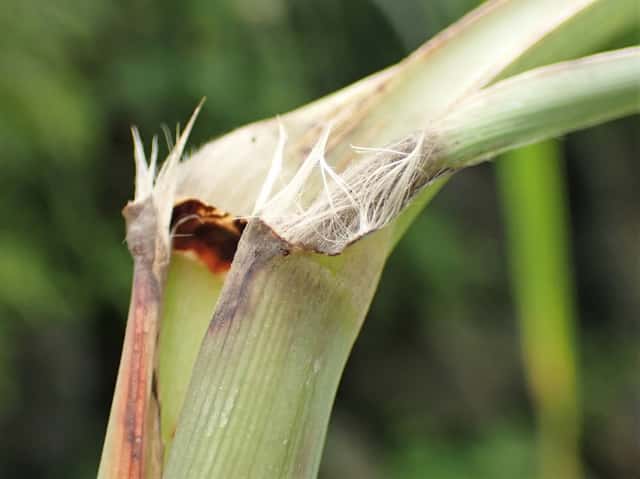
Sugarcane (Saccharum officinarum) is a large, perennial grass native to Southeast Asia and New Guinea, cultivated for millennia for its succulent stalks rich in sucrose. It forms vigorous clumps with erect, jointed, and fibrous stalks that can exceed 13 to 20 feet (4 to 6 meters) in height, covered by long, narrow, and sharp-edged leaves. It is the world's primary source of sugar and one of the most important agricultural crops on the planet, also used in the production of ethanol, rum, molasses, and unrefined cane sugar. It blooms only when days shorten, producing a silvery, feathery inflorescence known as an "arrow."
How to Propagate Sugarcane?
Stem cuttings (setts)
- Use freshly cut setts, avoiding desiccation before planting.
- Avoid waterlogged soil, which promotes rotting of the cuttings.
- 1 Selection
Choose mature and healthy stalks, 8 to 12 months old, free from diseases and pests.
- 2 Cutting the setts
Cut the stalk into setts (cuttings) containing 2 to 3 buds (nodes) each, approximately 8 to 12 inches (20 to 30 cm) long.
- 3 Planting
Lay the setts horizontally in furrows 8 to 12 inches deep, covering with 1 to 2 inches of soil, with the buds facing the sides.
- 4 Irrigation
Water regularly until sprouting, which usually occurs within 2 to 4 weeks.
Materials needed:
How Big Does Sugarcane Grow?
TLDR: Sugarcane can reach up to 6.0m tall with Fast growth rate.
Max height
6.0m
Spread
1.5m
Growth rate
Fast
Foliage
Evergreen
Plant Uses
Edible
Can be consumed
Medicinal
Medicinal properties
Ornamental
Great for decoration
Medicinal Uses
- Traditional relief for sore throats
- Diuretic action
- Popular use for urinary tract infections
- Leaf ashes traditionally used for eye irritations
Culinary Uses
- Production of refined and brown sugar
- Extraction of sugarcane juice
- Manufacture of rum and unrefined cane sugar (panela/jaggery)
- Production of molasses and fuel ethanol
Is your plant showing symptoms?
Click on the symptom to discover possible causes:
What Diseases Commonly Affect Sugarcane?
TLDR: Sugarcane is susceptible to 8 known diseases. Monitor regularly for early detection.
Mosaic Virus
Mosaic virus is a group of plant viruses that cause mottled, patchy patterns on leaves and can affect a wide variety of plants. The virus creates characteristic yellow, white, and green mosaic patterns, often accompanied by stunted growth and deformed plant parts. This highly contagious disease spreads rapidly through insect vectors and contaminated tools.
Rust
Rust is a common fungal disease caused by fungi in the order Pucciniales that affects a wide variety of plants. The disease gets its name from the characteristic orange, yellow, or reddish-brown pustules that appear on leaves, resembling metal rust. This obligate fungal parasite requires living plants to survive and can cause significant economic losses in agricultural crops.
Bacterial Blight
Bacterial blight is a serious plant disease caused by pathogenic bacteria that enters plants through wounds or natural openings. It spreads rapidly in warm, wet conditions and can cause significant damage to leaves, stems, and flowers. The bacteria are transmitted by water splash, contaminated tools, and insects.
Cercospora Leaf Spot
Cercospora leaf spot is a common fungal disease caused by Cercospora species that affects many plant types, particularly beets, roses, and leafy vegetables. The disease thrives in warm, humid conditions and can cause significant defoliation, reducing plant vigor and yield. It spreads rapidly through water splash, wind, and contaminated tools.
Meaning & Symbolism
A symbol of sweetness, abundance, and prosperity, sugarcane is deeply linked to agricultural traditions and popular culture, featuring in seasonal festivals, traditional beverage preparation, and spiritual rituals as offerings to deities.
Compare with similar plants
| Attribute | Difficulty | Light | Watering | Pet Safe |
|---|---|---|---|---|
| Dark Fieldcap | Medium | Low light | 2d | ⚠️ |
| Azalea | Medium | Partial shade | 3d | ⚠️ |
| Muriel's Bamboo | Medium | Partial shade | 3d | ✓ |
| Bougainvillea | Medium | Direct sun | 7d | ⚠️ |




