Asteraceae
Sunflower: Edible Plant
Helianthus
Grow in full sun (6-8 hours daily) with well-drained, fertile soil (pH 6.0-7.0); water regularly during germination and early growth, tapering off once established since the plant is drought-tolerant.
Every 7 days
Direct sun
10° - 35°C
30% - 50%
Categories
What is Sunflower?
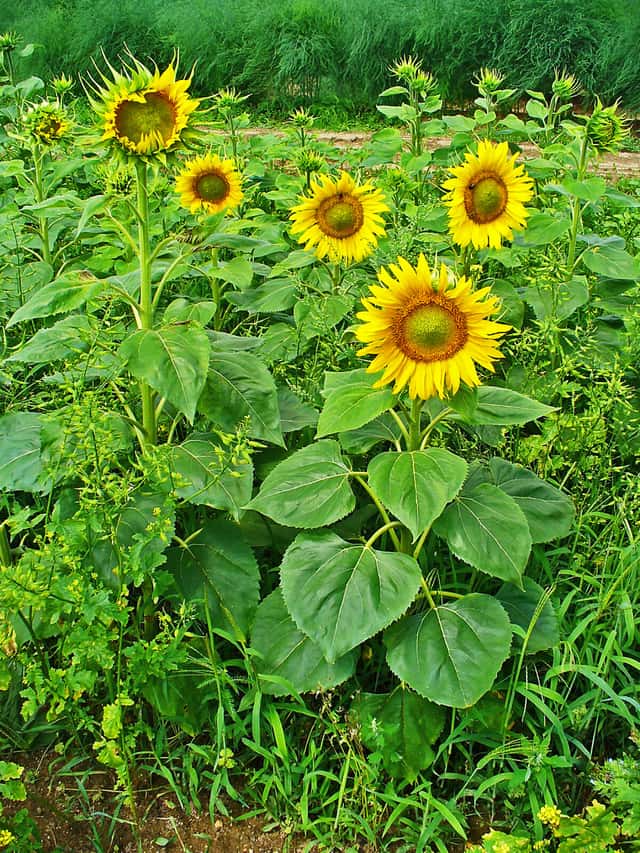
Sunflower (Helianthus) is a easy-care plant from the Asteraceae family. Helianthus is a genus of roughly 70 flowering plant species in the family Asteraceae, native mainly to North America. Its best-known and most widely cultivated species, Helianthus annuus (common sunflower), is a fast-growing annual that can reach several meters in height, producing a large yellow fl...
Sunflower grows up to 3.0m, spread of 60cm, watering every 7 days, 10°C – 35°C, 30–50% humidity. It is not suitable for indoor environments and safe for pets.
Unlike many tropical plants, Sunflower tolerates watering mistakes. Best for beginners. Unlike many popular species, Sunflower is safe to keep around pets.
How to Care for Sunflower?
TLDR: Sunflower needs Direct sun, watering every 7 days, and temperatures between 10-35°C with 30-50% humidity.
How Often Should You Water Sunflower?
Keep the soil lightly moist during germination; once established, water only when the top few centimeters of soil feel dry, as overwatering can lead to root rot.
How Much Light Does Sunflower Need?
Needs at least 6 to 8 hours of direct sunlight daily; partial shade results in weaker stems and reduced flowering.
What Is the Best Soil for Sunflower?
Prefers well-drained soil rich in organic matter, with a slightly acidic to neutral pH (6.0-7.0); amend with compost to improve structure and fertility.
What Pot Should You Use for Sunflower?
For container growing (dwarf varieties), use a large, deep pot with good drainage, as the plant develops a sturdy taproot.
Care Schedule
Fertilize
Every 14 days
What Is Sunflower and Where Does It Come From?
Helianthus is a genus of roughly 70 flowering plant species in the family Asteraceae, native mainly to North America. Its best-known and most widely cultivated species, Helianthus annuus (common sunflower), is a fast-growing annual that can reach several meters in height, producing a large yellow flower head that displays heliotropism (tracking the sun) while young. It is grown worldwide for its edible seeds, oil, and ornamental value.
How to Propagate Sunflower?
Direct seed sowing
Sow directly in the final location whenever possible, since sunflowers do not transplant well.
- 1 Sow seeds about 2.5 cm deep
- 2 Space seeds 45 cm apart
- 3 Keep soil moist until germination
- 4 Transplant young seedlings carefully, as they dislike root disturbance
Materials needed:
How Big Does Sunflower Grow?
TLDR: Sunflower can reach up to 3.0m tall with Fast growth rate.
Max height
3.0m
Spread
60cm
Growth rate
Fast
Foliage
Deciduous
Plant Uses
Ornamental
Great for decoration
Edible
Can be consumed
Culinary Uses
- Seeds eaten raw or roasted as a snack
- Oil pressed from seeds used for cooking
- Seeds used in baking and confectionery
Is your plant showing symptoms?
Click on the symptom to discover possible causes:
What Diseases Commonly Affect Sunflower?
TLDR: Sunflower is susceptible to 5 known diseases. Monitor regularly for early detection.
Downy Mildew
Downy mildew is a fungal-like disease caused by oomycetes (water molds) that thrives in cool, wet conditions. It affects a wide range of plants, causing yellowing leaves with fuzzy white-gray growth underneath, leading to defoliation and reduced yields if left untreated.
Powdery Mildew
Powdery mildew is a common fungal disease caused by various fungi species including Erysiphe, Podosphaera, Oïdium, and Leveillula. It affects over 10,000 plant species worldwide. The disease thrives in warm, dry climates with high humidity and appears as a distinctive white powdery coating on plant surfaces.
Rust
Rust is a common fungal disease caused by fungi in the order Pucciniales that affects a wide variety of plants. The disease gets its name from the characteristic orange, yellow, or reddish-brown pustules that appear on leaves, resembling metal rust. This obligate fungal parasite requires living plants to survive and can cause significant economic losses in agricultural crops.
White Mold
White mold (Sclerotinia sclerotiorum) is a devastating fungal disease affecting over 400 plant species worldwide. The fungus produces black, seed-like structures (sclerotia) that can survive in soil for 5 or more years. The disease is favored by cool, moist weather (50-68°F/10-20°C), especially during flowering.
Meaning & Symbolism
A symbol of adoration, loyalty, and unwavering faith; also represents resilience, unity, and hope, and is the national flower of Ukraine.
Compare with similar plants
| Attribute | Difficulty | Light | Watering | Pet Safe |
|---|---|---|---|---|
| Field Maple | Easy | Bright indirect | 14d | ✓ |
| Silver Birch | Easy | Direct sun | 14d | ✓ |
| Common Blanketflower | Easy | Direct sun | 10d | ✓ |
| Cushion Bush | Easy | Direct sun | 14d | ✓ |





