Gesneriaceae
Sunset bells: Pet-Safe Plant
Chrysothemis pulchella
Prefers bright filtered light, without direct midday sun, and a moist but well-drained substrate, watered every 5-7 days during the growing season. It needs high humidity (60-80%) and temperatures between 65 and 82°F; below 60°F, it may enter dormancy. Fertilize at half strength from March to October and repot every year or when it doubles in size.
Every 6 days
Partial shade
18° - 28°C
60% - 80%
Categories
What is Sunset bells?
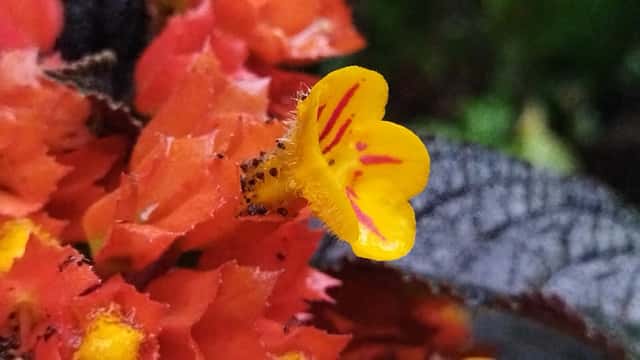
Sunset bells (Chrysothemis pulchella) is a medium-care plant from the Gesneriaceae family. Chrysothemis pulchella is a tropical perennial plant from the Gesneriaceae family, related to African violets and gloxinias. It is known for its velvety copper-toned foliage and its tubular yellow flowers with red stripes or spots, surrounded by a very showy and long-lasting orange-red calyx, althou...
Sunset bells grows up to 45cm, spread of 30cm, watering every 6 days, 18°C – 28°C, 60–80% humidity. It is suitable for indoor environments and safe for pets.
Unlike many popular species, Sunset bells is safe to keep around pets. Without adequate drainage, root rot can develop within 12 days.
How to Care for Sunset bells?
TLDR: Sunset bells needs Partial shade, watering every 6 days, and temperatures between 18-28°C with 60-80% humidity.
How Often Should You Water Sunset bells?
Water every 5-7 days during growth to keep the substrate always slightly moist without waterlogging. Significantly reduce watering if the plant enters dormancy.
How Much Light Does Sunset bells Need?
Bright indirect light or partial shade with some soft morning sun. Strong midday sun burns the velvety leaves.
What Is the Best Soil for Sunset bells?
Use a loose, moist, and well-drained substrate, slightly acidic to neutral (pH 5.6-7.5), rich in organic matter.
What Pot Should You Use for Sunset bells?
Pot with drainage holes, moderate in size; clay or plastic work well if the substrate drains properly. Repot every year into a slightly larger container.
Care Schedule
Repot
Every 365 days
What Is Sunset bells and Where Does It Come From?
Chrysothemis pulchella is a tropical perennial plant from the Gesneriaceae family, related to African violets and gloxinias. It is known for its velvety copper-toned foliage and its tubular yellow flowers with red stripes or spots, surrounded by a very showy and long-lasting orange-red calyx, although each corolla lasts only a few days. It grows from tubers, so it may lose leaves and stems during cold seasons and sprout again when the heat returns. It reaches about 12-18 inches in height when grown indoors.
How to Propagate Sunset bells?
Stem cuttings
Keep the substrate moist and the environment warm; roots appear in one or two weeks.
- 1 Cut a 4-6 inch cutting with at least one pair of leaves.
- 2 Remove the lower leaves and, if desired, dip the base in rooting hormone.
- 3 Plant it in a light, moist substrate.
- 4 Keep it in a warm place with indirect light and high humidity.
Materials needed:
Tuber division
Perform the division in spring and check that each tuber has visible buds.
- 1 In spring, remove the plant from the pot.
- 2 Separate the tubers, ensuring each one has buds.
- 3 Plant them in fresh, moist substrate.
- 4 Water sparingly until they sprout.
Materials needed:
How Big Does Sunset bells Grow?
TLDR: Sunset bells can reach up to 45cm tall with Medium growth rate.
Max height
45cm
Spread
30cm
Foliage
Deciduous
Plant Uses
Ornamental
Great for decoration
Is your plant showing symptoms?
Click on the symptom to discover possible causes:
What Diseases Commonly Affect Sunset bells?
TLDR: Sunset bells is susceptible to 3 known diseases. Monitor regularly for early detection.
Mealybugs
Mealybugs are small, soft-bodied insects covered with a white, waxy, cottony material. They are common pests of houseplants and outdoor plants in mild climates. These sap-sucking insects feed on plant tissue, causing damage, stunted growth, and can lead to plant death if left untreated. They produce sticky honeydew which attracts sooty mold.
Whiteflies
Whiteflies are small, soft-bodied, winged insects closely related to aphids and mealybugs. They are moth-like in appearance, about 1/16 inch long, triangular in shape, and gray-white in color. These sap-sucking pests feed on plant tissue, causing yellowing, stunted growth, and wilting. They also excrete honeydew, which attracts ants and promotes sooty mold growth. Whiteflies can transmit serious plant viruses.
Root Rot
Root rot is a serious fungal disease that affects the root system of plants, causing them to decay and die. It is primarily caused by overwatering, poor drainage, or soil-borne fungi such as Pythium, Phytophthora, Rhizoctonia, and Fusarium. The disease thrives in waterlogged conditions where roots are deprived of oxygen, making them susceptible to fungal infection.
Compare with similar plants
| Attribute | Difficulty | Light | Watering | Pet Safe |
|---|---|---|---|---|
| Dark Fieldcap | Medium | Low light | 2d | ⚠️ |
| Azalea | Medium | Partial shade | 3d | ⚠️ |
| Muriel's Bamboo | Medium | Partial shade | 3d | ✓ |
| Bougainvillea | Medium | Direct sun | 7d | ⚠️ |




