Brassicaceae
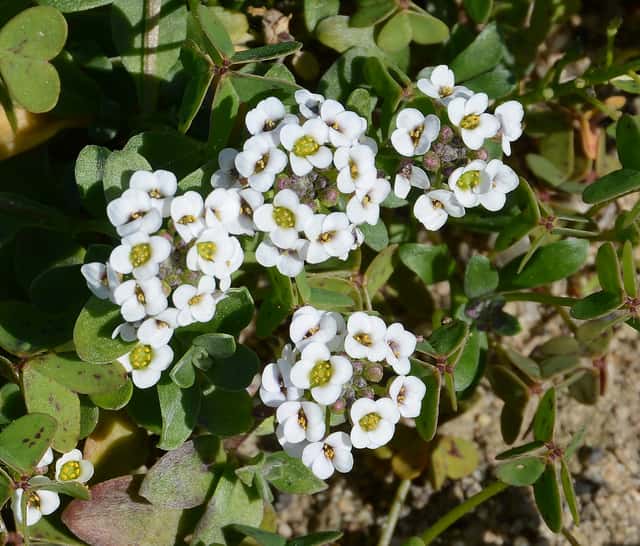
Sweet Alyssum: Ground Cover Plant
Lobularia maritima
Low-maintenance plant with fast growth. Prefers full sun and well-drained soil. Requires regular watering during establishment, becoming moderately drought-tolerant after full development. Easy to grow from seed. Avoid waterlogged soils to prevent root rot.
Every 7 days
Direct sun
-2° - 35°C
% - %
Categories
What is Sweet Alyssum?
Sweet Alyssum (Lobularia maritima) is a easy-care plant from the Brassicaceae family. Small annual herbaceous plant native to the Mediterranean, member of the Brassicaceae family. Cultivated as an ornamental for its profusion of tiny aromatic flowers in white, pink, purple, and lavender tones. Ideal for borders, containers, and ground cover in gardens. Blooms copiously during spring...
Sweet Alyssum grows up to 30cm, spread of 30cm, watering every 7 days, -2°C – 35°C. It is suitable for indoor environments and safe for pets.
Unlike many tropical plants, Sweet Alyssum tolerates watering mistakes. Best for beginners. Unlike many popular species, Sweet Alyssum is safe to keep around pets. Without adequate drainage, root rot can develop within 14 days.
How to Care for Sweet Alyssum?
TLDR: Sweet Alyssum needs Direct sun, watering every 7 days, and temperatures between -2-35°C with 40-70% humidity.
How Often Should You Water Sweet Alyssum?
Water regularly during establishment, keeping soil evenly moist but not waterlogged. Once established, reduce watering frequency. Provide approximately 1 inch of water weekly during dry seasons.
How Much Light Does Sweet Alyssum Need?
Plant in a location with full sun for best flowering. In very hot climates, tolerates partial shade during the hottest parts of the day.
What Is the Best Soil for Sweet Alyssum?
Prefer well-draining soil of moderate fertility. Adaptable to sandy, loamy, and even slightly rocky soils, as long as drainage is adequate. Avoid heavy, waterlogged soils.
What Pot Should You Use for Sweet Alyssum?
Hanging baskets or window boxes for cascading display; large containers for massed plantings; fast-draining potting mix recommended
What Is Sweet Alyssum and Where Does It Come From?
Small annual herbaceous plant native to the Mediterranean, member of the Brassicaceae family. Cultivated as an ornamental for its profusion of tiny aromatic flowers in white, pink, purple, and lavender tones. Ideal for borders, containers, and ground cover in gardens. Blooms copiously during spring and summer, with a sweet fragrance reminiscent of honey and new-mown hay, attracting bees and butterflies.
How Big Does Sweet Alyssum Grow?
TLDR: Sweet Alyssum can reach up to 30cm tall with Fast growth rate.
Max height
30cm
Spread
30cm
Growth rate
Fast
Foliage
Evergreen
Plant Uses
Ornamental
Great for decoration
Ground Cover
Soil coverage
Aromatic
Pleasant fragrance
Edible
Can be consumed
Medicinal
Medicinal properties
Culinary Uses
- Young leaves in salads
- Flowers as edible garnish
Is your plant showing symptoms?
Click on the symptom to discover possible causes:
What Diseases Commonly Affect Sweet Alyssum?
TLDR: Sweet Alyssum is susceptible to 6 known diseases. Monitor regularly for early detection.
Downy Mildew
Downy mildew is a fungal-like disease caused by oomycetes (water molds) that thrives in cool, wet conditions. It affects a wide range of plants, causing yellowing leaves with fuzzy white-gray growth underneath, leading to defoliation and reduced yields if left untreated.
White Mold
White mold (Sclerotinia sclerotiorum) is a devastating fungal disease affecting over 400 plant species worldwide. The fungus produces black, seed-like structures (sclerotia) that can survive in soil for 5 or more years. The disease is favored by cool, moist weather (50-68°F/10-20°C), especially during flowering.
Root Rot
Root rot is a serious fungal disease that affects the root system of plants, causing them to decay and die. It is primarily caused by overwatering, poor drainage, or soil-borne fungi such as Pythium, Phytophthora, Rhizoctonia, and Fusarium. The disease thrives in waterlogged conditions where roots are deprived of oxygen, making them susceptible to fungal infection.
Damping Off
Damping off is a soil-borne fungal disease that affects seeds and young seedlings, causing rotting of stem and root tissues at and below the soil line. It is caused by several fungi including Pythium, Rhizoctonia, Fusarium, and Phytophthora. The disease thrives in cold, wet conditions with poor air circulation.
Meaning & Symbolism
Elegance, delicacy, grace, sweetness
Compare with similar plants
| Attribute | Difficulty | Light | Watering | Pet Safe |
|---|---|---|---|---|
| Field Maple | Easy | Bright indirect | 14d | ✓ |
| Silver Birch | Easy | Direct sun | 14d | ✓ |
| Common Blanketflower | Easy | Direct sun | 10d | ✓ |
| Cushion Bush | Easy | Direct sun | 14d | ✓ |
Choose & Compare
Sources & References
- How to Grow Sweet Alyssum (Lobularia maritima) | Gardener's Path
- Sweet Alyssum, Lobularia maritima – Wisconsin Horticulture
- Lobularia maritima (Alyssum, Sweet Alyssum) | North Carolina Extension Gardener Plant Toolbox
- Lobularia maritima - Missouri Botanical Garden Plant Finder
- Lobularia maritima Sweet Alyssum - PFAF Plant Database
- Lobularia maritima - Wikimedia Commons
- Is Sweet Alyssum Toxic to Cats or Dogs? - BioLens Pet Guard
- Alisso – Wikipédia português





