Ranunculaceae
Sweet Autumn Clematis (Clematis terniflora) Care Guide
Clematis terniflora
Give it full sun to partial shade and well-drained, humus-rich soil with a sturdy structure to climb. Water deeply about once a week during the growing season, keeping the root zone cool and mulched. Prune hard after flowering or in early spring to control its aggressive growth, and deadhead spent flowers where possible to reduce self-seeding.
Every 7 days
Bright indirect
° - °C
% - %
Categories
What is Sweet Autumn Clematis?
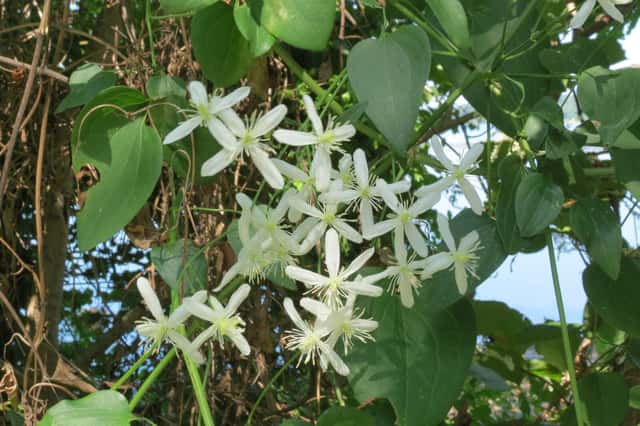
Sweet Autumn Clematis (Clematis terniflora) is a easy-care plant from the Ranunculaceae family. Clematis terniflora, commonly called sweet autumn clematis, is a vigorous, deciduous, twining vine native to Japan and China. It produces a profusion of small, star-shaped, fragrant white flowers in dense terminal panicles from late summer into fall, followed by decorative silvery, plume-like seed h...
Sweet Autumn Clematis grows up to 9.0m, spread of 900cm, watering every 7 days. It is not suitable for indoor environments and not safe for pets.
Unlike many tropical plants, Sweet Autumn Clematis tolerates watering mistakes. Best for beginners. Without precautions, ingestion can cause irritation in pets. Keep out of reach of cats and dogs.
How to Care for Sweet Autumn Clematis?
TLDR: Sweet Autumn Clematis needs Bright indirect, watering every 7 days, and temperatures between 15-30°C with 40-70% humidity.
How Often Should You Water Sweet Autumn Clematis?
Water deeply (~2.5cm/week) during active growth, letting the topsoil dry slightly between waterings; avoid waterlogged soil, which encourages root rot.
How Much Light Does Sweet Autumn Clematis Need?
Thrives in full sun (6+ hours) for the heaviest bloom, but tolerates partial shade; keep the roots shaded and cool with mulch or low companion plants.
What Is the Best Soil for Sweet Autumn Clematis?
Plant in well-drained, humus-rich loam or clay loam; it tolerates chalky, slightly alkaline soils but will not tolerate constantly soggy ground.
What Pot Should You Use for Sweet Autumn Clematis?
Best planted directly in the ground against a trellis, fence or arbor; if containerized, use a large (40L+/10gal+) pot with drainage holes and a tall support, and monitor closely since it can quickly outgrow a container.
What Is Sweet Autumn Clematis and Where Does It Come From?
Clematis terniflora, commonly called sweet autumn clematis, is a vigorous, deciduous, twining vine native to Japan and China. It produces a profusion of small, star-shaped, fragrant white flowers in dense terminal panicles from late summer into fall, followed by decorative silvery, plume-like seed heads. While prized for its fast cover and late-season bloom, it self-seeds prolifically and has escaped cultivation to become invasive across parts of the eastern and midwestern United States, where it smothers native vegetation, shrubs and even mature trees.
How to Propagate Sweet Autumn Clematis?
Semi-ripe stem cuttings
Take several cuttings at once since less than half typically root successfully; always wear gloves when handling the sap.
- 1 Select a healthy, semi-ripe stem that has just begun to harden and cut a section with 2-3 nodes, wearing gloves to avoid skin irritation from the sap.
- 2 Make the cut just below a node and trim leaves to leave one or two at the top.
- 3 Dip the cut end in rooting hormone and insert it into a moist, well-draining propagation mix.
- 4 Keep in bright, indirect light with high humidity (cover with a plastic bag or propagator lid) until roots form.
Materials needed:
Simple layering
This is the most reliable method for this species and requires little intervention, but patience is needed as rooting can take a full season or more.
- 1 Choose a low, flexible stem still attached to the parent plant.
- 2 Bury a section of the stem a few centimeters deep in soil, leaving the growing tip exposed.
- 3 Pin the buried section down and keep the soil consistently moist.
- 4 Once new growth and roots appear at the buried node, cut it free from the parent plant to create an independent vine.
Materials needed:
Seed sowing
Because this species self-seeds aggressively and is considered invasive in many regions, deliberate propagation by seed is discouraged - remove spent flower heads to limit spread instead.
- 1 Collect the fluffy, plume-tailed achenes once they turn brown and dry in fall.
- 2 Sow seeds shallowly in a well-draining seed mix, as germination can be slow and erratic.
- 3 Keep the mix consistently moist and in a cool spot; germination may take several months.
- 4 Transplant seedlings once they have several true leaves.
Materials needed:
How Big Does Sweet Autumn Clematis Grow?
TLDR: Sweet Autumn Clematis can reach up to 9.0m tall with Fast growth rate.
Max height
9.0m
Spread
9.0m
Growth rate
Fast
Foliage
Deciduous
Warning: Toxic Plant
This plant can be toxic if ingested. Keep out of reach of:
Plant Uses
Ornamental
Great for decoration
Ground Cover
Soil coverage
Is your plant showing symptoms?
Click on the symptom to discover possible causes:
What Diseases Commonly Affect Sweet Autumn Clematis?
TLDR: Sweet Autumn Clematis is susceptible to 8 known diseases. Monitor regularly for early detection.
Powdery Mildew
Powdery mildew is a common fungal disease caused by various fungi species including Erysiphe, Podosphaera, Oïdium, and Leveillula. It affects over 10,000 plant species worldwide. The disease thrives in warm, dry climates with high humidity and appears as a distinctive white powdery coating on plant surfaces.
Leaf Spot
Leaf spot is a common fungal disease caused by various pathogens including Alternaria, Ascochyta, Colletotrichum, Septoria, and Venturia. It primarily affects leaves, causing discolored spots that can lead to premature leaf drop if left untreated.
Rust
Rust is a common fungal disease caused by fungi in the order Pucciniales that affects a wide variety of plants. The disease gets its name from the characteristic orange, yellow, or reddish-brown pustules that appear on leaves, resembling metal rust. This obligate fungal parasite requires living plants to survive and can cause significant economic losses in agricultural crops.
Aphids
Aphids are small, soft-bodied, pear-shaped insects (1/16 to 1/8 inch long) that feed by sucking nutrient-rich sap from plants. They reproduce rapidly and can quickly weaken plants, causing distorted growth and transmitting plant viruses. Aphids come in various colors including green, black, red, yellow, brown, and gray. They secrete honeydew, a sticky substance that attracts ants and encourages sooty mold growth.
Fun Facts
Its fluffy, silvery seed heads persist into winter and have earned it folk names like 'old man's beard'.
The flowers are lightly fragrant, unlike many other clematis species.
It was introduced to the US from Japan and China as an ornamental and has since naturalized across much of the eastern half of the country.
Without a structure to climb, it will sprawl as a dense groundcover instead of a vine.
Frequently asked questions
Is Clematis terniflora toxic?
Is sweet autumn clematis invasive?
How often should I water sweet autumn clematis?
How much sun does it need?
How do I control its spread?
Compare with similar plants
| Attribute | Difficulty | Light | Watering | Pet Safe |
|---|---|---|---|---|
| Field Maple | Easy | Bright indirect | 14d | ✓ |
| Silver Birch | Easy | Direct sun | 14d | ✓ |
| Common Blanketflower | Easy | Direct sun | 10d | ✓ |
| Cushion Bush | Easy | Direct sun | 14d | ✓ |
Choose & Compare
Sources & References
- NC State Extension - Clematis terniflora
- Missouri Botanical Garden Plant Finder - Clematis terniflora
- Invasive Plant Atlas of the US - Clematis terniflora
- Tennessee Invasive Plant Council - Clematis terniflora
- ASPCA - Toxic and Non-Toxic Plants: Clematis
- Epic Gardening - Clematis Wilt Disease
- Epic Gardening - 5 Common Clematis Diseases
- Plants For A Future - Clematis terniflora
- Plantiary - Sweet Autumn Clematis Care Guide
- Empress of Dirt - How to Grow Clematis from Cuttings





