Passifloraceae
Sweet Granadilla: Edible Plant
Passiflora ligularis
Give it at least 6 to 8 hours of sun, a sturdy trellis, and a loose, fertile, well-drained soil rich in organic matter. Keep the soil lightly moist without waterlogging, and protect it from frost. Watch for fungal diseases in humid, poorly drained conditions.
Every 4 days
Bright indirect
15° - 25°C
% - %
Categories
What is Sweet Granadilla?
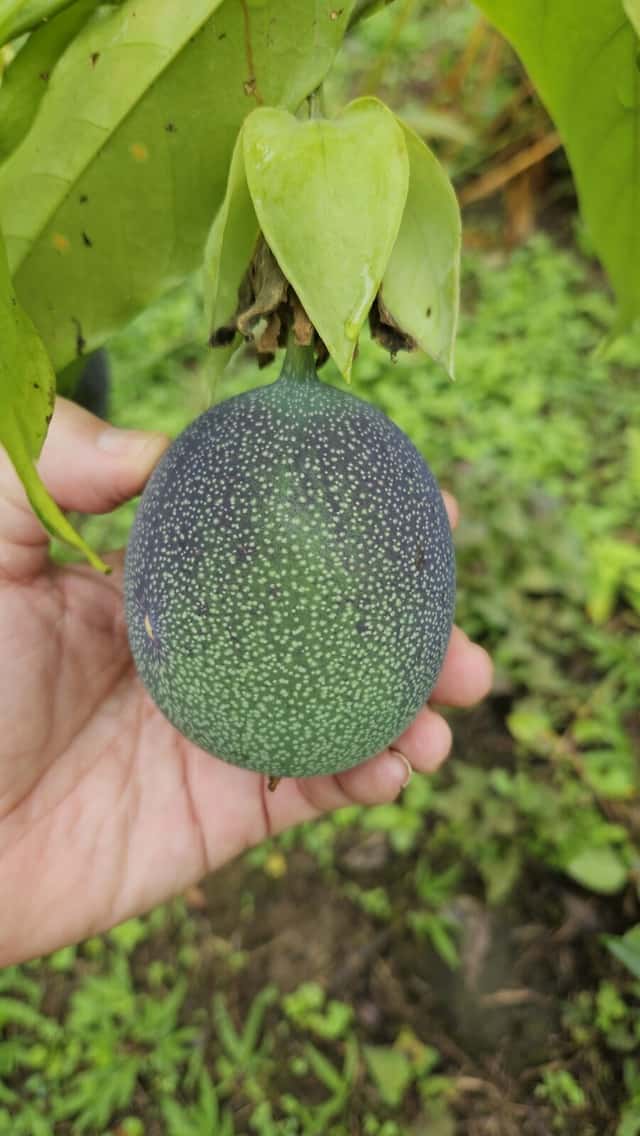
Sweet Granadilla (Passiflora ligularis) is a medium-care plant from the Passifloraceae family. Evergreen climbing vine native to the Andes of South America, with stems up to 5 m long that cling by coiling tendrils. It bears white flowers, sometimes tinged with pink or violet, and orange-yellow fruits with a sweet, perfumed, translucent pulp. It flowers year-round and does best in warm, humid,...
Sweet Granadilla grows up to 5.0m, watering every 4 days, 15°C – 25°C. It is not suitable for indoor environments and safe for pets.
Unlike many popular species, Sweet Granadilla is safe to keep around pets.
How to Care for Sweet Granadilla?
TLDR: Sweet Granadilla needs Bright indirect, watering every 4 days, and temperatures between 15-25°C with 40-70% humidity.
How Often Should You Water Sweet Granadilla?
Water regularly, especially in the growing season and dry months, but let the soil dry slightly between waterings to prevent root rot.
How Much Light Does Sweet Granadilla Need?
Needs about 8 hours of daily sun for good fruiting. Tolerates light dappled shade, and ideal temperatures are 15 to 25 C.
What Is the Best Soil for Sweet Granadilla?
Prefers deep, loose, fertile, humus-rich soil with excellent drainage and a pH of about 6 to 7.
What Pot Should You Use for Sweet Granadilla?
Not well suited to pots. If container grown, use a very large, deep pot with drainage holes and a strong trellis.
Care Schedule
Fertilize
Every 14 days
Misting
Every 3 days
Rotate
Every 7 days
Repot
Every 365 days
What Is Sweet Granadilla and Where Does It Come From?
Evergreen climbing vine native to the Andes of South America, with stems up to 5 m long that cling by coiling tendrils. It bears white flowers, sometimes tinged with pink or violet, and orange-yellow fruits with a sweet, perfumed, translucent pulp. It flowers year-round and does best in warm, humid, mountain climates.
How to Propagate Sweet Granadilla?
Seed
- Fresh seeds germinate best.
- 1 Sowing
Sow fresh seeds at a shallow depth of 1 to 2 cm.
- 2 Warmth and moisture
Keep the substrate moist at 20 to 30 C until seeds germinate in about 15 days.
Materials needed:
Cuttings
- Young shoots root readily.
- 1 Take cuttings
Cut young shoots with a few nodes.
- 2 Root
Insert in neutral to slightly acid compost and keep moist until rooted.
Materials needed:
How Big Does Sweet Granadilla Grow?
TLDR: Sweet Granadilla can reach up to 5.0m tall with Fast growth rate.
Max height
5.0m
Growth rate
Fast
Foliage
Evergreen
Plant Uses
Edible
Can be consumed
Culinary Uses
- Fresh pulp eaten raw with the seeds
- Pulp used in juices and beverages
Is your plant showing symptoms?
Click on the symptom to discover possible causes:
What Diseases Commonly Affect Sweet Granadilla?
TLDR: Sweet Granadilla is susceptible to 8 known diseases. Monitor regularly for early detection.
Anthracnose
Anthracnose is a fungal disease caused by fungi in the genus Colletotrichum that affects many plants, including vegetables, fruits, and trees. The disease thrives in cool, wet conditions, causing dark, sunken lesions on leaves, stems, flowers, and fruits.
Fusarium Wilt
Fusarium wilt is a serious fungal disease caused by the soil-borne fungus Fusarium oxysporum. The fungus invades roots and blocks the water-conducting vessels (xylem) of the plant, causing progressive wilting and eventual death. Host-specific forms of the pathogen exist that attack different plant species.
Gray Mold (Botrytis Blight)
Gray mold, caused by the fungus Botrytis cinerea, is a widespread necrotrophic pathogen affecting over 1,400 plant species. It thrives in cool, humid conditions and attacks weakened or aging plant tissues, causing soft rot and characteristic gray fuzzy growth.
Root-Knot Nematodes
Root-knot nematodes (Meloidogyne species) are microscopic roundworms that parasitize plant roots, causing characteristic galls or knots. These soil-borne pests are among the most economically damaging plant pathogens worldwide, affecting a wide range of ornamental and edible plants. The nematodes inject enzymes into root cells, causing abnormal swelling and disrupting water and nutrient uptake.
Compare with similar plants
| Attribute | Difficulty | Light | Watering | Pet Safe |
|---|---|---|---|---|
| Dark Fieldcap | Medium | Low light | 2d | ⚠️ |
| Azalea | Medium | Partial shade | 3d | ⚠️ |
| Muriel's Bamboo | Medium | Partial shade | 3d | ✓ |
| Bougainvillea | Medium | Direct sun | 7d | ⚠️ |




