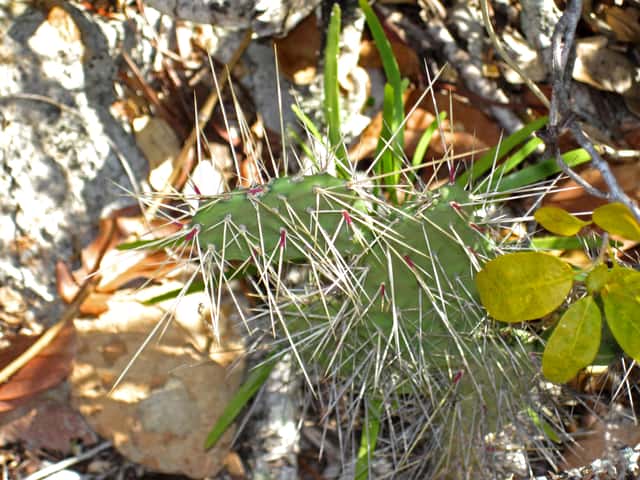
Cactaceae
Sweet Prickly Pear (Opuntia dillenii): How to Grow and Care
Opuntia dillenii
An extremely low-maintenance plant: requires full sun, sparse watering (every 3 weeks), and well-draining soil. Avoid overwatering to prevent root rot. Protect from frost in colder regions.
Every 21 days
Direct sun
-4° - 40°C
20% - 50%
Categories
What is Sweet Prickly Pear?
Sweet Prickly Pear (Opuntia dillenii) is a easy-care plant from the Cactaceae family. Opuntia dillenii, commonly known as the Sweet Prickly Pear, is a robust cactus native to the Caribbean and coastal Americas. Its oval, spine-covered pads produce vibrant yellow flowers in spring and summer, followed by edible reddish-purple fruits. Exceptionally drought-tolerant and heat-resistant,...
Sweet Prickly Pear grows up to 1.5m, spread of 150cm, watering every 21 days, -4°C – 40°C, 20–50% humidity. It is suitable for indoor environments and safe for pets.
Unlike many tropical plants, Sweet Prickly Pear tolerates watering mistakes. Best for beginners. Unlike many popular species, Sweet Prickly Pear is safe to keep around pets. Without adequate drainage, root rot can develop within 42 days.
How to Care for Sweet Prickly Pear?
TLDR: Sweet Prickly Pear needs Direct sun, watering every 21 days, and temperatures between -4-40°C with 20-50% humidity.
How Often Should You Water Sweet Prickly Pear?
Water every 3 weeks during the growing season (spring–summer) and reduce to once a month in winter. Always allow the soil to dry out completely between waterings. Never let the plant sit in waterlogged soil.
How Much Light Does Sweet Prickly Pear Need?
Requires full sun — at least 6 to 8 hours of direct sunlight per day. Indoors, place in the brightest window available, ideally south- or west-facing.
What Is the Best Soil for Sweet Prickly Pear?
Use a cactus and succulent potting mix with excellent drainage. Add perlite or coarse sand to improve water flow. Ideal pH is 6.0–7.5.
What Pot Should You Use for Sweet Prickly Pear?
Terracotta or ceramic pot with drainage holes. Avoid plastic pots that retain moisture. For outdoor growing, use raised beds with sandy soil.
Care Schedule
Fertilize
Every 90 days
What Is Sweet Prickly Pear and Where Does It Come From?
Opuntia dillenii, commonly known as the Sweet Prickly Pear, is a robust cactus native to the Caribbean and coastal Americas. Its oval, spine-covered pads produce vibrant yellow flowers in spring and summer, followed by edible reddish-purple fruits. Exceptionally drought-tolerant and heat-resistant, it thrives in poor, sandy soils with minimal care.
How to Propagate Sweet Prickly Pear?
Pad Cutting
Do not water immediately after planting. Allowing the cut to callous is essential to prevent rot.
- 1 Select a healthy, mature pad (cladode)
- 2 Cut with a sterilized pruning tool while wearing thick gloves
- 3 Allow the cut end to callous in a dry, ventilated spot for 3–7 days
- 4 Plant in dry cactus mix and wait 3–6 weeks before the first watering
Materials needed:
Seed Propagation
Germination may take 1–3 months. Maintain temperatures above 20°C (68°F).
- 1 Extract seeds from ripe fruit and rinse thoroughly
- 2 Allow seeds to dry for 24 hours
- 3 Sow in slightly moist cactus mix
- 4 Keep in a warm location with indirect light until germination
Materials needed:
How Big Does Sweet Prickly Pear Grow?
TLDR: Sweet Prickly Pear can reach up to 1.5m tall with Medium growth rate.
Max height
1.5m
Spread
1.5m
Growth rate
Medium
Foliage
Evergreen
Plant Uses
Ornamental
Great for decoration
Edible
Can be consumed
Medicinal
Medicinal properties
Medicinal Uses
- Used in Caribbean traditional medicine to treat inflammation, minor burns, and type 2 diabetes
- Crushed pads are applied topically as a natural anti-inflammatory
Culinary Uses
- Fruits are eaten raw or made into jelly, syrup, and juice
- Young pads (nopales) can be cooked and eaten in soups and salads
Is your plant showing symptoms?
Click on the symptom to discover possible causes:
What Diseases Commonly Affect Sweet Prickly Pear?
TLDR: Sweet Prickly Pear is susceptible to 12 known diseases. Monitor regularly for early detection.
Root Rot
Root rot is a serious fungal disease that affects the root system of plants, causing them to decay and die. It is primarily caused by overwatering, poor drainage, or soil-borne fungi such as Pythium, Phytophthora, Rhizoctonia, and Fusarium. The disease thrives in waterlogged conditions where roots are deprived of oxygen, making them susceptible to fungal infection.
Fusarium Wilt
Fusarium wilt is a serious fungal disease caused by the soil-borne fungus Fusarium oxysporum. The fungus invades roots and blocks the water-conducting vessels (xylem) of the plant, causing progressive wilting and eventual death. Host-specific forms of the pathogen exist that attack different plant species.
Leaf Spot
Leaf spot is a common fungal disease caused by various pathogens including Alternaria, Ascochyta, Colletotrichum, Septoria, and Venturia. It primarily affects leaves, causing discolored spots that can lead to premature leaf drop if left untreated.
Phytophthora Root Rot
Disease caused by fungus-like organisms (oomycetes) that live in soil and can survive for years. It affects roots, stem, and crown of plants, being especially severe in waterlogged or poorly drained soils. It is the second most common cause of root rot in trees and shrubs.
Meaning & Symbolism
Symbol of resilience and adaptation in arid environments; associated with survival and strength in Caribbean and American cultures.
Fun Facts
Sweet Prickly Pear fruits are rich in antioxidants and vitamin C, widely used in Caribbean beverages and jams
Opuntia dillenii shows high resistance to the carmine cochineal (Dactylopius opuntiae), making it preferred in forage cultivation
Under ideal conditions, it can live for decades and reach up to 1.5m in height and spread
Its bright yellow flowers attract bees and hummingbirds, playing an important role in local pollination
Frequently asked questions
How often should I water Sweet Prickly Pear?
Is Sweet Prickly Pear toxic to pets?
Can I grow Sweet Prickly Pear indoors?
Why are my cactus pads turning soft or yellow?
How do I propagate Sweet Prickly Pear?
Compare with similar plants
| Attribute | Difficulty | Light | Watering | Pet Safe |
|---|---|---|---|---|
| Field Maple | Easy | Bright indirect | 14d | ✓ |
| Silver Birch | Easy | Direct sun | 14d | ✓ |
| Common Blanketflower | Easy | Direct sun | 10d | ✓ |
| Cushion Bush | Easy | Direct sun | 14d | ✓ |





