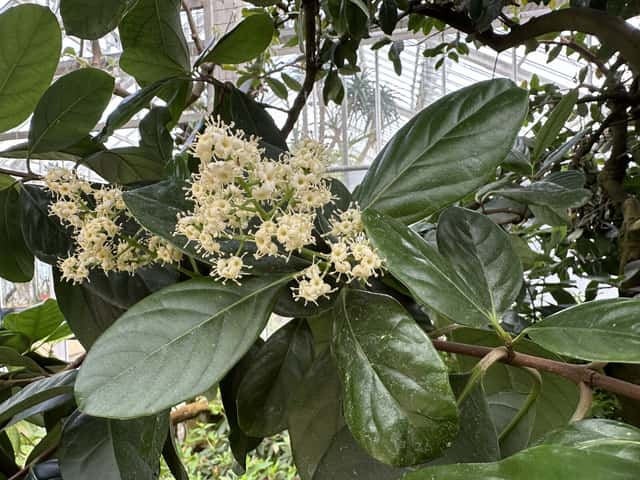
Adoxaceae
Sweet Viburnum (Viburnum odoratissimum)
Viburnum odoratissimum
Plant Sweet Viburnum in full sun to partial shade in well-draining, fertile soil. Water regularly while establishing, then taper off since mature plants tolerate short dry spells. Feed lightly in spring and again in midsummer, and shear once or twice a year to maintain a dense hedge form. It is largely pest- and disease-free when given good air circulation.
Every 7 days
Bright indirect
10° - 35°C
40% - 60%
Categories
What is Sweet Viburnum?
Sweet Viburnum (Viburnum odoratissimum) is a easy-care plant from the Adoxaceae family. Sweet Viburnum (Viburnum odoratissimum) is a large, fast-growing evergreen shrub prized across warm climates for its dense, glossy foliage and its ability to form an impenetrable privacy hedge in just a few seasons. Native to East and Southeast Asia, it produces broad, leathery, deep-green leaves an...
Sweet Viburnum grows up to 6.0m, spread of 600cm, watering every 7 days, 10°C – 35°C, 40–60% humidity. It is not suitable for indoor environments and safe for pets.
Unlike many tropical plants, Sweet Viburnum tolerates watering mistakes. Best for beginners. Unlike many popular species, Sweet Viburnum is safe to keep around pets.
How to Care for Sweet Viburnum?
TLDR: Sweet Viburnum needs Bright indirect, watering every 7 days, and temperatures between 10-35°C with 40-60% humidity.
How Often Should You Water Sweet Viburnum?
Water deeply once or twice a week during the first year to establish a strong root system; established plants only need supplemental water during extended dry spells.
How Much Light Does Sweet Viburnum Need?
Grows best in full sun to partial shade — more sun produces denser foliage and better flowering, but afternoon shade is appreciated in the hottest climates.
What Is the Best Soil for Sweet Viburnum?
Prefers rich, well-draining loam with a slightly acidic to neutral pH (6.0-7.5); tolerates sandy or clay soils as long as drainage is adequate.
What Pot Should You Use for Sweet Viburnum?
Not typically container-grown long term; when potted for establishment, use a large, well-draining nursery pot before transplanting into the ground.
Care Schedule
Fertilize
Every 120 days
What Is Sweet Viburnum and Where Does It Come From?
Sweet Viburnum (Viburnum odoratissimum) is a large, fast-growing evergreen shrub prized across warm climates for its dense, glossy foliage and its ability to form an impenetrable privacy hedge in just a few seasons. Native to East and Southeast Asia, it produces broad, leathery, deep-green leaves and, in late spring to early summer, showy conical clusters of small white flowers with a sweet, honey-like fragrance that gives the plant its name. The flowers are followed by small red fruits that ripen to black. Left unpruned, Sweet Viburnum can reach 4-6 m tall and wide, but it takes shearing extremely well and is one of the most popular screening and hedging shrubs in subtropical and warm-temperate landscapes.
How to Propagate Sweet Viburnum?
Semi-hardwood stem cutting
Wounding the base and keeping consistent moisture greatly improves rooting success; avoid direct hot sun while cuttings are rooting.
- 1 Take an 8-10 in (20-25 cm) angled cutting from a healthy semi-hardwood stem with several leaf nodes
- 2 Strip the leaves from the lower half and wound the base lightly
- 3 Dip the cut end in rooting hormone
- 4 Insert into a moist, well-draining propagation mix
- 5 Keep under intermittent mist or a humidity dome in bright, indirect light until roots form
Materials needed:
How Big Does Sweet Viburnum Grow?
TLDR: Sweet Viburnum can reach up to 6.0m tall with Fast growth rate.
Max height
6.0m
Spread
6.0m
Growth rate
Fast
Foliage
Evergreen
Plant Uses
Ornamental
Great for decoration
Aromatic
Pleasant fragrance
Medicinal Uses
- Bark used in traditional folk remedies in parts of Asia for minor skin ailments (not medically validated)
Is your plant showing symptoms?
Click on the symptom to discover possible causes:
What Diseases Commonly Affect Sweet Viburnum?
TLDR: Sweet Viburnum is susceptible to 10 known diseases. Monitor regularly for early detection.
Downy Mildew
Downy mildew is a fungal-like disease caused by oomycetes (water molds) that thrives in cool, wet conditions. It affects a wide range of plants, causing yellowing leaves with fuzzy white-gray growth underneath, leading to defoliation and reduced yields if left untreated.
Powdery Mildew
Powdery mildew is a common fungal disease caused by various fungi species including Erysiphe, Podosphaera, Oïdium, and Leveillula. It affects over 10,000 plant species worldwide. The disease thrives in warm, dry climates with high humidity and appears as a distinctive white powdery coating on plant surfaces.
Leaf Spot
Leaf spot is a common fungal disease caused by various pathogens including Alternaria, Ascochyta, Colletotrichum, Septoria, and Venturia. It primarily affects leaves, causing discolored spots that can lead to premature leaf drop if left untreated.
Anthracnose
Anthracnose is a fungal disease caused by fungi in the genus Colletotrichum that affects many plants, including vegetables, fruits, and trees. The disease thrives in cool, wet conditions, causing dark, sunken lesions on leaves, stems, flowers, and fruits.
Meaning & Symbolism
In many Asian gardening traditions, Viburnum shrubs are planted as living screens that symbolize protection, privacy, and steadfastness — a boundary that shelters the home while still offering fragrance and beauty.
Fun Facts
The species name odoratissimum means "most fragrant" in Latin, referring to its sweetly scented flower clusters.
It is one of the most widely planted hedging shrubs in the southeastern United States and subtropical Asia.
Its small fruits ripen from red to black and are attractive to birds.
Despite the fragrant flowers, the plant is largely free of serious pest problems when grown with good air circulation.
Frequently asked questions
How fast does Sweet Viburnum grow?
Is Sweet Viburnum toxic to cats or dogs?
How often should I prune Sweet Viburnum?
Can Sweet Viburnum tolerate shade?
What is the best way to propagate Sweet Viburnum?
Compare with similar plants
| Attribute | Difficulty | Light | Watering | Pet Safe |
|---|---|---|---|---|
| Field Maple | Easy | Bright indirect | 14d | ✓ |
| Silver Birch | Easy | Direct sun | 14d | ✓ |
| Common Blanketflower | Easy | Direct sun | 10d | ✓ |
| Cushion Bush | Easy | Direct sun | 14d | ✓ |
Choose & Compare
Sources & References
- Viburnum odoratissimum (Sweet Viburnum) - Gardenia.net
- NC State Extension Plant Toolbox - Viburnum odoratissimum
- Sweet Viburnum Growing Conditions - Gardening Know How
- Viburnum Diseases & Insect Pests - Clemson HGIC
- Fact Sheet ST-659 Viburnum odoratissimum - UF/IFAS
- Is Sweet viburnum Safe for Your Pets? - PictureThis
- Viburnum Plant Cuttings - Gardening Know How





