Violaceae
Sweet Violet: Ground Cover Plant
Viola
Grow Viola in humus-rich, well-drained soil in partial shade, keeping the soil evenly moist but never soggy. Deadhead spent blooms to encourage reflowering and divide clumps every few years to keep plants vigorous.
Every 4 days
Partial shade
° - °C
% - %
Categories
What is Sweet Violet?
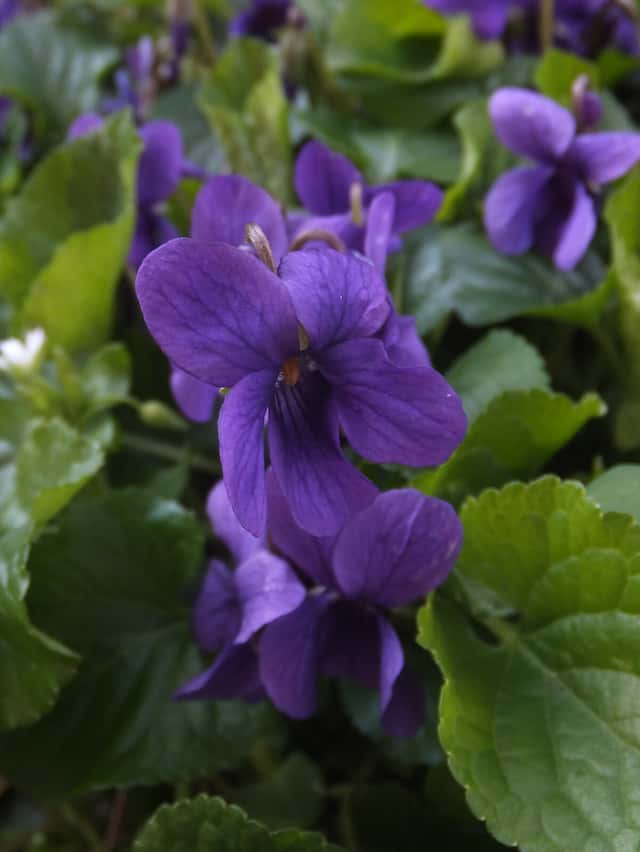
Sweet Violet (Viola) is a easy-care plant from the Violaceae family. Sweet Violet (Viola) is a low, spreading perennial prized for its heart-shaped leaves and small, deeply fragrant purple, blue, or white flowers that open in early spring. Native to Europe and temperate Asia, it forms neat rosettes that creep gently by runners, making it a classic choice for shaded b...
Sweet Violet grows up to 15cm, spread of 15cm, watering every 4 days. It is suitable for indoor environments and safe for pets.
Unlike many tropical plants, Sweet Violet tolerates watering mistakes. Best for beginners. Unlike many popular species, Sweet Violet is safe to keep around pets. Without adequate drainage, root rot can develop within 8 days.
How to Care for Sweet Violet?
TLDR: Sweet Violet needs Partial shade, watering every 4 days, and temperatures between 15-30°C with 40-70% humidity.
How Often Should You Water Sweet Violet?
Water regularly so the soil stays lightly moist; let the top of the soil dry slightly between waterings and reduce frequency in cool weather. Violets are sensitive to soggy soil, so good drainage is essential to avoid root rot.
How Much Light Does Sweet Violet Need?
Thrives in dappled or partial shade with a few hours of gentle morning sun; avoid hot, direct afternoon sun, which scorches the leaves and reduces flowering.
What Is the Best Soil for Sweet Violet?
Prefers loamy, well-drained soil enriched with organic matter; tolerates a range of pH from slightly acidic to neutral as long as drainage is good.
What Pot Should You Use for Sweet Violet?
Shallow terracotta pots or wide containers with good drainage holes, allowing the spreading rosettes room to fill the surface.
What Is Sweet Violet and Where Does It Come From?
Sweet Violet (Viola) is a low, spreading perennial prized for its heart-shaped leaves and small, deeply fragrant purple, blue, or white flowers that open in early spring. Native to Europe and temperate Asia, it forms neat rosettes that creep gently by runners, making it a classic choice for shaded borders, woodland gardens, and containers. Both flowers and leaves are edible and have been used since antiquity for perfume, confectionery, and folk medicine.
How to Propagate Sweet Violet?
Clump Division
Keep newly divided plants consistently moist for the first few weeks until they re-establish.
- 1 Lift an established clump in early fall or spring
- 2 Gently pull or cut the rootstock into sections, each with leaves and roots attached
- 3 Replant divisions immediately at the same depth in prepared soil
- 4 Water thoroughly after planting to settle the roots
Materials needed:
Seed Sowing
Fresh seed germinates far better than stored seed; a period of cold stratification improves results.
- 1 Collect ripe seed pods in summer
- 2 Sow seeds shallowly in trays of moist seed compost
- 3 Keep in a cool, shaded spot and maintain even moisture
- 4 Transplant seedlings once they have several true leaves
Materials needed:
How Big Does Sweet Violet Grow?
TLDR: Sweet Violet can reach up to 15cm tall with Medium growth rate.
Max height
15cm
Spread
15cm
Growth rate
Medium
Foliage
Semi-evergreen
Plant Uses
Ornamental
Great for decoration
Edible
Can be consumed
Medicinal
Medicinal properties
Aromatic
Pleasant fragrance
Ground Cover
Soil coverage
Medicinal Uses
- Traditionally used as a mild expectorant and anti-inflammatory in herbal teas for coughs and colds
- Historically used in folk remedies to soothe headaches and calm nerves
Culinary Uses
- Fresh flowers used to garnish salads and desserts
- Petals candied with sugar for cake and pastry decoration
- Flowers infused into syrups, vinegars, and violet-flavored confections
Is your plant showing symptoms?
Click on the symptom to discover possible causes:
What Diseases Commonly Affect Sweet Violet?
TLDR: Sweet Violet is susceptible to 8 known diseases. Monitor regularly for early detection.
Powdery Mildew
Powdery mildew is a common fungal disease caused by various fungi species including Erysiphe, Podosphaera, Oïdium, and Leveillula. It affects over 10,000 plant species worldwide. The disease thrives in warm, dry climates with high humidity and appears as a distinctive white powdery coating on plant surfaces.
Root Rot
Root rot is a serious fungal disease that affects the root system of plants, causing them to decay and die. It is primarily caused by overwatering, poor drainage, or soil-borne fungi such as Pythium, Phytophthora, Rhizoctonia, and Fusarium. The disease thrives in waterlogged conditions where roots are deprived of oxygen, making them susceptible to fungal infection.
Aphids
Aphids are small, soft-bodied, pear-shaped insects (1/16 to 1/8 inch long) that feed by sucking nutrient-rich sap from plants. They reproduce rapidly and can quickly weaken plants, causing distorted growth and transmitting plant viruses. Aphids come in various colors including green, black, red, yellow, brown, and gray. They secrete honeydew, a sticky substance that attracts ants and encourages sooty mold growth.
Spider Mites
Spider mites are tiny arachnids (less than 1/20 inch long) related to spiders and ticks that feed on plant sap. They thrive in hot, dry conditions and can cause significant damage to ornamental and vegetable plants. During severe infestations, crop losses can reach 14% or higher as these pests disrupt vital plant processes including photosynthesis, carbon dioxide absorption, and transpiration.
Meaning & Symbolism
A timeless symbol of innocence, humility, modesty, fidelity, and remembrance. In Greek mythology the name is linked to "ion", tied to the story of the infant Ion (son of Apollo) nourished on a bed of violets, and violets were traditionally strewn at funerals as a token of loyalty and quiet grief.
Compare with similar plants
| Attribute | Difficulty | Light | Watering | Pet Safe |
|---|---|---|---|---|
| Field Maple | Easy | Bright indirect | 14d | ✓ |
| Silver Birch | Easy | Direct sun | 14d | ✓ |
| Common Blanketflower | Easy | Direct sun | 10d | ✓ |
| Cushion Bush | Easy | Direct sun | 14d | ✓ |





