Asteraceae
Sweet wormwood (Artemisia annua)
Artemisia annua
Grow in full sun in light, well-drained, poor soil. Water regularly only while seedlings establish; after that it handles dry spells well. No fertilizer needed. Cut flower stems before the seeds ripen if you don't want it to self-seed all over the garden.
Every 10 days
Direct sun
0° - 35°C
% - %
Categories
What is Sweet wormwood?
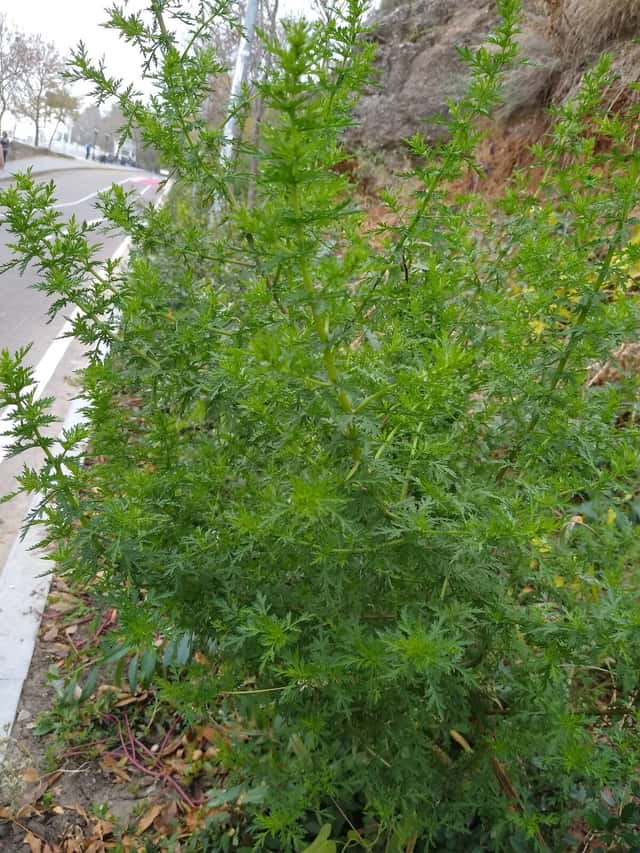
Sweet wormwood (Artemisia annua) is a easy-care plant from the Asteraceae family. Sweet wormwood (Artemisia annua) is a fast-growing aromatic annual herb in the daisy family (Asteraceae), native to temperate Asia and naturalized in many parts of the world. A single upright stem can pass 2 m, carrying bright green, finely divided, fern-like leaves with a strong sweet scent. In lat...
Sweet wormwood grows up to 2.0m, spread of 100cm, watering every 10 days, 0°C – 35°C. It is not suitable for indoor environments and safe for pets.
Unlike many tropical plants, Sweet wormwood tolerates watering mistakes. Best for beginners. Unlike many popular species, Sweet wormwood is safe to keep around pets.
How to Care for Sweet wormwood?
TLDR: Sweet wormwood needs Direct sun, watering every 10 days, and temperatures between 0-35°C with 40-70% humidity.
How Often Should You Water Sweet wormwood?
Keep the soil lightly moist for the first few weeks after planting. After that, water only when the soil is dry a few centimetres down, roughly every 10 days in hot weather. Waterlogged soil leads to root rot.
How Much Light Does Sweet wormwood Need?
Full sun, at least 6 hours a day. It tolerates partial shade but grows leggier and less fragrant.
What Is the Best Soil for Sweet wormwood?
Sandy or loamy, well-drained soil of low to medium fertility, pH 6 to 8. Avoid heavy clay that stays wet.
What Pot Should You Use for Sweet wormwood?
Best in the ground. In a container, use a large, deep pot (40 L or more) with drainage holes, as the plant grows tall.
What Is Sweet wormwood and Where Does It Come From?
Sweet wormwood (Artemisia annua) is a fast-growing aromatic annual herb in the daisy family (Asteraceae), native to temperate Asia and naturalized in many parts of the world. A single upright stem can pass 2 m, carrying bright green, finely divided, fern-like leaves with a strong sweet scent. In late summer it produces loose panicles of tiny yellow-green flowers. It is the source of artemisinin, the basis of modern malaria drugs.
How to Propagate Sweet wormwood?
Sowing
The seeds are tiny: mix them with a little sand to sow evenly. The plant also self-seeds freely.
- 1 Scatter the seeds on moist compost without covering them, as they need light to germinate
- 2 Keep the compost moist in a bright, warm spot
- 3 Transplant seedlings at about 5 cm, after the last frost
- 4 Space plants about 60 cm apart
Materials needed:
How Big Does Sweet wormwood Grow?
TLDR: Sweet wormwood can reach up to 2.0m tall with Fast growth rate.
Max height
2.0m
Spread
1.0m
Growth rate
Fast
Foliage
Deciduous
Plant Uses
Medicinal
Medicinal properties
Aromatic
Pleasant fragrance
Ornamental
Great for decoration
Medicinal Uses
- Source of artemisinin, used in WHO-recommended malaria medicines
- Used in traditional Chinese medicine for fevers
- Not a substitute for medical care: the tea does not contain a reliable dose of artemisinin
Culinary Uses
- The essential oil from the leaves has been used to flavour spirits such as vermouth
Is your plant showing symptoms?
Click on the symptom to discover possible causes:
What Diseases Commonly Affect Sweet wormwood?
TLDR: Sweet wormwood is susceptible to 4 known diseases. Monitor regularly for early detection.
Root Rot
Root rot is a serious fungal disease that affects the root system of plants, causing them to decay and die. It is primarily caused by overwatering, poor drainage, or soil-borne fungi such as Pythium, Phytophthora, Rhizoctonia, and Fusarium. The disease thrives in waterlogged conditions where roots are deprived of oxygen, making them susceptible to fungal infection.
Powdery Mildew
Powdery mildew is a common fungal disease caused by various fungi species including Erysiphe, Podosphaera, Oïdium, and Leveillula. It affects over 10,000 plant species worldwide. The disease thrives in warm, dry climates with high humidity and appears as a distinctive white powdery coating on plant surfaces.
Aphids
Aphids are small, soft-bodied, pear-shaped insects (1/16 to 1/8 inch long) that feed by sucking nutrient-rich sap from plants. They reproduce rapidly and can quickly weaken plants, causing distorted growth and transmitting plant viruses. Aphids come in various colors including green, black, red, yellow, brown, and gray. They secrete honeydew, a sticky substance that attracts ants and encourages sooty mold growth.
Spider Mites
Spider mites are tiny arachnids (less than 1/20 inch long) related to spiders and ticks that feed on plant sap. They thrive in hot, dry conditions and can cause significant damage to ornamental and vegetable plants. During severe infestations, crop losses can reach 14% or higher as these pests disrupt vital plant processes including photosynthesis, carbon dioxide absorption, and transpiration.
Meaning & Symbolism
In traditional Chinese medicine, qing hao has been used against fevers for more than 2,000 years. In 2015, Chinese scientist Tu Youyou won the Nobel Prize for discovering artemisinin in this plant.
Fun Facts
The discovery of artemisinin in this plant won the 2015 Nobel Prize in Medicine.
Its seeds are less than 1 mm across.
In China it has been used as a growing medium for the mould used in wine brewing.
Frequently asked questions
Does sweet wormwood come back every year?
Can I drink sweet wormwood tea to treat malaria?
Why is my sweet wormwood wilting?
Can I grow it in a pot?
Compare with similar plants
| Attribute | Difficulty | Light | Watering | Pet Safe |
|---|---|---|---|---|
| Field Maple | Easy | Bright indirect | 14d | ✓ |
| Iberian Houseleek | Easy | Direct sun | 14d | ✓ |
| Silver Birch | Easy | Direct sun | 14d | ✓ |
| Common Blanketflower | Easy | Direct sun | 10d | ✓ |





