Altingiaceae
Sweetgum: The Spectacular Autumn Color Tree
Liquidambar styraciflua
Sweetgum is relatively easy to care for when planted in the right location. It thrives in full sun with acidic, well-drained soil. Once established, it is moderately drought-tolerant and requires minimal maintenance. Pruning should be limited to removing dead or crossing branches.
Every 10 days
Direct sun
-20° - 38°C
40% - 70%
Categories
What is Sweetgum?
Sweetgum (Liquidambar styraciflua) is a medium-care plant from the Altingiaceae family. Sweetgum (Liquidambar styraciflua) is a majestic deciduous tree native to eastern North America. Celebrated for its spectacular autumn foliage in shades of red, orange, yellow, and purple, it is one of the most admired ornamental trees in parks and gardens. It can reach up to 80 feet tall and produc...
Sweetgum grows up to 24.4m, spread of 1524cm, watering every 10 days, -20°C – 38°C, 40–70% humidity. It is not suitable for indoor environments and safe for pets.
Unlike many popular species, Sweetgum is safe to keep around pets.
How to Care for Sweetgum?
TLDR: Sweetgum needs Direct sun, watering every 10 days, and temperatures between -20-38°C with 40-70% humidity.
How Often Should You Water Sweetgum?
Water regularly during the first 2-3 years of establishment, every 7-14 days during dry periods. Mature trees tolerate drought but benefit from occasional deep watering in summer. Avoid waterlogged soil, which can cause root rot.
How Much Light Does Sweetgum Need?
Plant in full sun (minimum 6 hours of direct sunlight daily). Full sun exposure is essential for healthy growth and also intensifies the spectacular fall foliage colors.
What Is the Best Soil for Sweetgum?
Prefers acidic to neutral soil (pH 5.0-6.5), fertile and well-drained. Tolerates clay, silt, and sandy soils. Avoid alkaline soils, which can cause iron chlorosis. Amend soil with organic matter at planting to improve structure.
What Pot Should You Use for Sweetgum?
Not suitable for container growing. Sweetgum is a large tree appropriate only for in-ground planting in spacious gardens and parks.
Care Schedule
Fertilize
Every 90 days
What Is Sweetgum and Where Does It Come From?
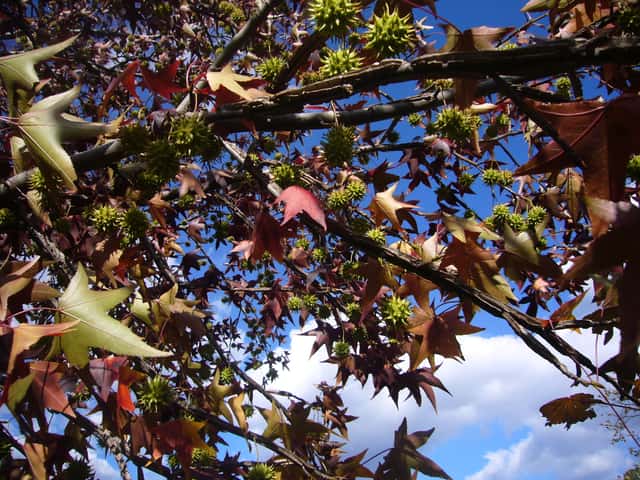
Sweetgum (Liquidambar styraciflua) is a majestic deciduous tree native to eastern North America. Celebrated for its spectacular autumn foliage in shades of red, orange, yellow, and purple, it is one of the most admired ornamental trees in parks and gardens. It can reach up to 80 feet tall and produces distinctive spiky seed pods known as "gumballs."
How to Propagate Sweetgum?
Seed Propagation
Cold stratification is essential to break seed dormancy. Use sterilized growing medium to prevent fungal issues.
- 1 Collect mature seeds from the spiky capsules in autumn
- 2 Cold-stratify seeds (34-41°F / 1-5°C) for 30-60 days
- 3 Sow in well-drained, moist seed-starting mix in spring
- 4 Keep in a warm location with good light
- 5 Transplant seedlings when they reach 6-8 inches tall
Materials needed:
Hardwood Cutting
Hardwood cuttings are difficult to root in this species. Seed propagation is more reliable for best results.
- 1 Collect hardwood cuttings in winter, 6-8 inches long
- 2 Apply rooting hormone to the base of the cuttings
- 3 Plant in well-drained, moist medium
- 4 Keep in a sheltered location protected from extreme cold
- 5 Transplant after full rooting in spring
Materials needed:
How Big Does Sweetgum Grow?
TLDR: Sweetgum can reach up to 24.4m tall with Fast growth rate.
Max height
24.4m
Spread
15.2m
Growth rate
Fast
Foliage
Deciduous
Plant Uses
Ornamental
Great for decoration
Medicinal
Medicinal properties
Medicinal Uses
- Sweetgum resin has been used in folk medicine to treat wounds, inflammation, and as an expectorant
- Bark extracts have been used in traditional remedies to relieve respiratory issues
Is your plant showing symptoms?
Click on the symptom to discover possible causes:
What Diseases Commonly Affect Sweetgum?
TLDR: Sweetgum is susceptible to 8 known diseases. Monitor regularly for early detection.
Anthracnose
Anthracnose is a fungal disease caused by fungi in the genus Colletotrichum that affects many plants, including vegetables, fruits, and trees. The disease thrives in cool, wet conditions, causing dark, sunken lesions on leaves, stems, flowers, and fruits.
Leaf Spot
Leaf spot is a common fungal disease caused by various pathogens including Alternaria, Ascochyta, Colletotrichum, Septoria, and Venturia. It primarily affects leaves, causing discolored spots that can lead to premature leaf drop if left untreated.
Canker
Canker is a disease caused by various fungi and bacteria that create necrotic, sunken areas on bark of branches, stems, and trunks. Pathogens enter through wounds and natural openings, especially when plants are stressed. Canker can gradually weaken or kill branches by disrupting water and nutrient flow.
Root Rot
Root rot is a serious fungal disease that affects the root system of plants, causing them to decay and die. It is primarily caused by overwatering, poor drainage, or soil-borne fungi such as Pythium, Phytophthora, Rhizoctonia, and Fusarium. The disease thrives in waterlogged conditions where roots are deprived of oxygen, making them susceptible to fungal infection.
Meaning & Symbolism
Sweetgum symbolizes the fleeting beauty of autumn and transformation. Its multicolored leaves represent the richness of seasonal change and the ability to reinvent oneself with elegance.
Fun Facts
Sweetgum can live over 150 years under ideal conditions in the wild
The aromatic resin of this tree was used by Native Americans and colonists to make chewing gum and incense
Sweetgum leaves have 5-7 star-shaped lobes, giving the tree its distinctive appearance
It is one of the few native North American deciduous trees that displays such varied and intense autumn color
Frequently asked questions
When does Sweetgum lose its leaves?
How often should I water a Sweetgum tree?
Can Sweetgum be planted near a house?
Are the Sweetgum spiky balls dangerous?
How fast does Sweetgum grow?
Compare with similar plants
| Attribute | Difficulty | Light | Watering | Pet Safe |
|---|---|---|---|---|
| Dark Fieldcap | Medium | Low light | 2d | ⚠️ |
| Azalea | Medium | Partial shade | 3d | ⚠️ |
| Muriel's Bamboo | Medium | Partial shade | 3d | ✓ |
| Bougainvillea | Medium | Direct sun | 7d | ⚠️ |



