Thelypteridaceae
Swordfern: Medicinal Uses & Care Tips
Macrothelypteris torresiana
A hardy and fast-growing fern that requires a shaded to partial-shade environment, high air humidity, and soil that is always slightly moist. It is tolerant of common pests but sensitive to waterlogged substrate, which can cause root rot.
Every 3 days
Partial shade
15° - 32°C
60% - 90%
Categories
What is Swordfern?
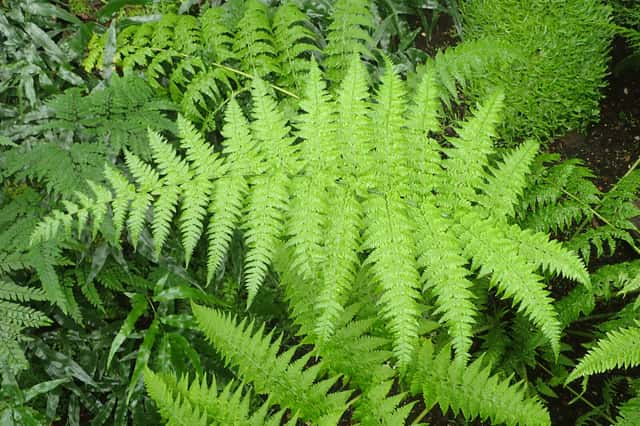
Swordfern (Macrothelypteris torresiana) is a medium-care plant from the Thelypteridaceae family. Macrothelypteris torresiana is a large fern in the Thelypteridaceae family, native to tropical and subtropical regions of Asia and Africa (including Madagascar and Mauritius). Its bi- to tripinnate fronds, featuring a soft texture and lacy appearance, can reach about 90 cm in length, forming dense a...
Swordfern grows up to 90cm, watering every 3 days, 15°C – 32°C, 60–90% humidity. It is suitable for indoor environments and safe for pets.
Unlike many popular species, Swordfern is safe to keep around pets. Without adequate drainage, root rot can develop within 7 days.
How to Care for Swordfern?
TLDR: Swordfern needs Partial shade, watering every 3 days, and temperatures between 15-32°C with 60-90% humidity.
How Often Should You Water Swordfern?
Keep the substrate constantly moist but never waterlogged — water when the top layer of soil begins to feel dry to the touch, generally every 2-3 days in indoor environments. Avoid saucers with standing water, as excess moisture promotes root rot.
How Much Light Does Swordfern Need?
Prefers filtered or indirect light and partial shade, such as under a tree canopy or near windows without direct sun. Intense direct sunlight burns and dries out the fronds; too little light results in weak and sparse growth.
What Is the Best Soil for Swordfern?
Use a substrate rich in organic matter and well-drained — a mix of potting soil, coconut fiber or peat moss, and perlite works well. A slightly acidic to neutral pH (around 5.5 to 7.0) is ideal.
What Pot Should You Use for Swordfern?
Prefer unglazed clay or ceramic pots, which help regulate substrate moisture, with multiple drainage holes. In dry climates, a tray with pebbles and water (without touching the base of the pot) helps raise the air humidity around the plant.
Care Schedule
Fertilize
Every 35 days
Misting
Every 2 days
Repot
Every 550 days
What Is Swordfern and Where Does It Come From?
Macrothelypteris torresiana is a large fern in the Thelypteridaceae family, native to tropical and subtropical regions of Asia and Africa (including Madagascar and Mauritius). Its bi- to tripinnate fronds, featuring a soft texture and lacy appearance, can reach about 90 cm in length, forming dense and striking clumps. It reproduces via spores released from sori protected by C-shaped indusia, as well as spreading through creeping rhizomes. Introduced as an ornamental plant in various parts of the Americas, it is now considered an invasive species in several regions, including Brazil (listed by the Horus Institute), where it colonizes riparian forests, forest edges, and humid, shaded areas.
How to Propagate Swordfern?
How Big Does Swordfern Grow?
TLDR: Swordfern can reach up to 90cm tall with Fast growth rate.
Max height
90cm
Growth rate
Fast
Foliage
Evergreen
Plant Uses
Ornamental
Great for decoration
Medicinal
Medicinal properties
Medicinal Uses
- Aerial parts used in traditional Chinese, Indian, and Pakistani medicine to treat fever, pain, inflammation, and chronic skin wounds
- In Chinese folk medicine, it is employed in the treatment of edema associated with kidney and bladder problems
- Pharmacological studies (in vitro/in vivo) indicate hepatoprotective, renoprotective, antitumor, and anti-inflammatory potential — use is still experimental, without proof for self-medication
Is your plant showing symptoms?
Click on the symptom to discover possible causes:
What Diseases Commonly Affect Swordfern?
TLDR: Swordfern is susceptible to 4 known diseases. Monitor regularly for early detection.
Root Rot
Root rot is a serious fungal disease that affects the root system of plants, causing them to decay and die. It is primarily caused by overwatering, poor drainage, or soil-borne fungi such as Pythium, Phytophthora, Rhizoctonia, and Fusarium. The disease thrives in waterlogged conditions where roots are deprived of oxygen, making them susceptible to fungal infection.
Spider Mites
Spider mites are tiny arachnids (less than 1/20 inch long) related to spiders and ticks that feed on plant sap. They thrive in hot, dry conditions and can cause significant damage to ornamental and vegetable plants. During severe infestations, crop losses can reach 14% or higher as these pests disrupt vital plant processes including photosynthesis, carbon dioxide absorption, and transpiration.
Aphids
Aphids are small, soft-bodied, pear-shaped insects (1/16 to 1/8 inch long) that feed by sucking nutrient-rich sap from plants. They reproduce rapidly and can quickly weaken plants, causing distorted growth and transmitting plant viruses. Aphids come in various colors including green, black, red, yellow, brown, and gray. They secrete honeydew, a sticky substance that attracts ants and encourages sooty mold growth.
Mealybugs
Mealybugs are small, soft-bodied insects covered with a white, waxy, cottony material. They are common pests of houseplants and outdoor plants in mild climates. These sap-sucking insects feed on plant tissue, causing damage, stunted growth, and can lead to plant death if left untreated. They produce sticky honeydew which attracts sooty mold.
Meaning & Symbolism
Like many ferns, it symbolizes resilience, humility, and a connection to primeval forests — a group of plants that covered the Earth before the emergence of flowers. In Brazil, where it has naturalized and is now considered invasive, it also serves as a reminder of how exotic ornamental species can escape cultivation and alter native riparian forests and wetlands.
Compare with similar plants
| Attribute | Difficulty | Light | Watering | Pet Safe |
|---|---|---|---|---|
| Dark Fieldcap | Medium | Low light | 2d | ⚠️ |
| Azalea | Medium | Partial shade | 3d | ⚠️ |
| Muriel's Bamboo | Medium | Partial shade | 3d | ✓ |
| Bougainvillea | Medium | Direct sun | 7d | ⚠️ |
Choose & Compare
Sources & References
- Macrothelypteris torresiana - Wikipedia
- What is a Mariana Maiden Fern? Complete Guide - Greg App
- How To Grow Macrothelypteris torresiana - EarthOne
- Torres Fern, or Mariana Maiden Fern - Backyard Nature
- Hepatoprotective activity of Macrothelypteris torresiana (Gaudich.) aerial parts against CCl4-induced hepatotoxicity in rodents - PMC
- Macrothelypteris torresiana (invasora) - Arquiflora




