Solanaceae
Tall nightshade: Fast Growing
Solanum chenopodioides
Grows readily in average to poor soil with minimal care; provide full sun to partial shade and let soil dry between waterings. Keep away from children, pets, and livestock due to toxic foliage and unripe berries.
Every 7 days
Bright indirect
0° - 35°C
40% - 70%
Categories
What is Tall nightshade?
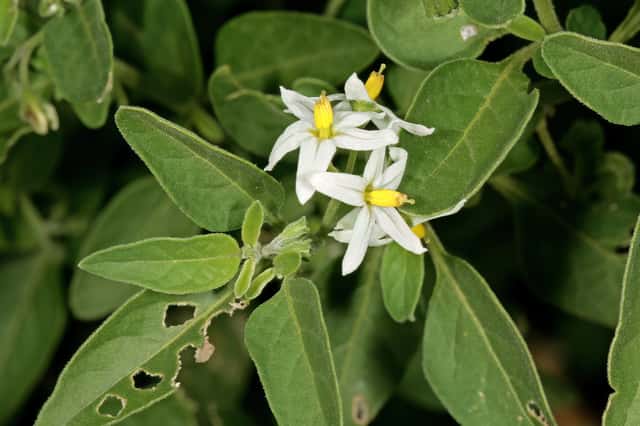
Tall nightshade (Solanum chenopodioides) is a easy-care plant from the Solanaceae family. Tall nightshade (Solanum chenopodioides) is a weedy, sprawling perennial subshrub in the nightshade family, native to South America and now naturalized in disturbed ground, coastal scrub, and gardens across mild-climate regions worldwide. It bears small star-shaped white flowers followed by round be...
Tall nightshade grows up to 2.0m, spread of 100cm, watering every 7 days, 0°C – 35°C, 40–70% humidity. It is not suitable for indoor environments and not safe for pets.
Unlike many tropical plants, Tall nightshade tolerates watering mistakes. Best for beginners. Without precautions, ingestion can cause irritation in pets. Keep out of reach of cats and dogs.
How to Care for Tall nightshade?
TLDR: Tall nightshade needs Bright indirect, watering every 7 days, and temperatures between 0-35°C with 40-70% humidity.
How Often Should You Water Tall nightshade?
Water moderately, allowing the top of the soil to dry out between waterings; established plants tolerate short dry spells.
How Much Light Does Tall nightshade Need?
Thrives in full sun to partial shade; flowers and fruits best with several hours of bright light daily.
What Is the Best Soil for Tall nightshade?
Adapts to most well-draining soils; performs best in loamy, moderately fertile, well-draining soil.
Care Schedule
Fertilize
Every 14 days
Misting
Every 3 days
Rotate
Every 7 days
Repot
Every 365 days
What Is Tall nightshade and Where Does It Come From?
Tall nightshade (Solanum chenopodioides) is a weedy, sprawling perennial subshrub in the nightshade family, native to South America and now naturalized in disturbed ground, coastal scrub, and gardens across mild-climate regions worldwide. It bears small star-shaped white flowers followed by round berries that ripen from green to dark purple-black. As with other Solanum species, its leaves and unripe berries contain solanine and related glycoalkaloids, making the whole plant toxic if eaten.
How Big Does Tall nightshade Grow?
TLDR: Tall nightshade can reach up to 2.0m tall with Fast growth rate.
Max height
2.0m
Spread
1.0m
Growth rate
Fast
Foliage
Semi-evergreen
Warning: Toxic Plant
This plant can be toxic if ingested. Keep out of reach of:
Plant Uses
Ornamental
Great for decoration
Is your plant showing symptoms?
Click on the symptom to discover possible causes:
What Diseases Commonly Affect Tall nightshade?
TLDR: Tall nightshade is susceptible to 7 known diseases. Monitor regularly for early detection.
Powdery Mildew
Powdery mildew is a common fungal disease caused by various fungi species including Erysiphe, Podosphaera, Oïdium, and Leveillula. It affects over 10,000 plant species worldwide. The disease thrives in warm, dry climates with high humidity and appears as a distinctive white powdery coating on plant surfaces.
Root Rot
Root rot is a serious fungal disease that affects the root system of plants, causing them to decay and die. It is primarily caused by overwatering, poor drainage, or soil-borne fungi such as Pythium, Phytophthora, Rhizoctonia, and Fusarium. The disease thrives in waterlogged conditions where roots are deprived of oxygen, making them susceptible to fungal infection.
Leaf Spot
Leaf spot is a common fungal disease caused by various pathogens including Alternaria, Ascochyta, Colletotrichum, Septoria, and Venturia. It primarily affects leaves, causing discolored spots that can lead to premature leaf drop if left untreated.
Whiteflies
Whiteflies are small, soft-bodied, winged insects closely related to aphids and mealybugs. They are moth-like in appearance, about 1/16 inch long, triangular in shape, and gray-white in color. These sap-sucking pests feed on plant tissue, causing yellowing, stunted growth, and wilting. They also excrete honeydew, which attracts ants and promotes sooty mold growth. Whiteflies can transmit serious plant viruses.
Compare with similar plants
| Attribute | Difficulty | Light | Watering | Pet Safe |
|---|---|---|---|---|
| Field Maple | Easy | Bright indirect | 14d | ✓ |
| Silver Birch | Easy | Direct sun | 14d | ✓ |
| Common Blanketflower | Easy | Direct sun | 10d | ✓ |
| Cushion Bush | Easy | Direct sun | 14d | ✓ |





