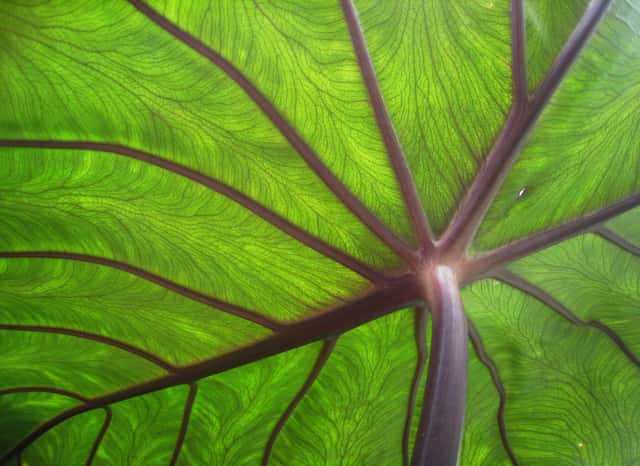
Araceae
Taro: Edible Plant
Colocasia esculenta
Taro thrives in warm, humid conditions with consistently moist to wet soil. It requires bright indirect light, regular watering (never let soil dry out), high humidity, and temperatures above 10°C. Feed every 3 weeks during growing season with balanced fertilizer.
Every 3 days
Partial shade
10° - 35°C
60% - 85%
Categories
What is Taro?
Taro (Colocasia esculenta) is a medium-care plant from the Araceae family. Colocasia esculenta, commonly known as Taro or Elephant Ear, is a tropical perennial plant prized for its dramatic heart-shaped leaves that can reach up to 60cm in length. Native to Southeast Asia, it is one of the oldest cultivated plants in the world, grown both as an ornamental foliage plant and...
Taro grows up to 1.8m, spread of 180cm, watering every 3 days, 10°C – 35°C, 60–85% humidity. It is suitable for indoor environments and not safe for pets.
Without precautions, ingestion can cause irritation in pets. Keep out of reach of cats and dogs. Without adequate drainage, root rot can develop within 7 days.
How to Care for Taro?
TLDR: Taro needs Partial shade, watering every 3 days, and temperatures between 10-35°C with 60-85% humidity.
How Often Should You Water Taro?
Keep soil consistently moist to wet at all times. Taro loves water and can even grow in up to 15cm of standing water. Never allow the soil to dry out completely. Reduce watering slightly in winter but maintain dampness.
How Much Light Does Taro Need?
Provide bright, indirect light for best results. Taro tolerates partial shade and will thrive in dappled sunlight. Avoid direct harsh sunlight which can bleach and scorch the leaves. Too little light causes leggy growth.
What Is the Best Soil for Taro?
Use rich, organic, well-draining soil with plenty of organic matter. A mix of potting soil with added peat and perlite works well. Maintain soil pH between 5.5-6.5 for optimal nutrient uptake.
What Pot Should You Use for Taro?
Use large containers (at least 30cm diameter) with drainage holes. Plastic or glazed ceramic pots retain moisture well, which taro prefers. Self-watering pots work excellently for this moisture-loving plant.
Care Schedule
Fertilize
Every 21 days
Misting
Every 3 days
Rotate
Every 14 days
Repot
Every 365 days
What Is Taro and Where Does It Come From?
Colocasia esculenta, commonly known as Taro or Elephant Ear, is a tropical perennial plant prized for its dramatic heart-shaped leaves that can reach up to 60cm in length. Native to Southeast Asia, it is one of the oldest cultivated plants in the world, grown both as an ornamental foliage plant and as a food crop for its edible corms. The plant produces large, velvety green leaves on long succulent stems, creating a lush tropical appearance.
How to Propagate Taro?
Division
- Best done in spring when growth resumes
- Larger divisions establish faster
- Handle with gloves - sap can irritate skin
- 1 Wait until plant has 3-4 leaves on offsets
- 2 Carefully excavate around the pup/offset
- 3 Cut the offset from the mother plant with a clean sharp knife
- 4 Ensure each division has roots and at least one growth eye
- 5 Allow cut surfaces to dry for 1-2 days
- 6 Plant in moist, rich soil at same depth as before
- 7 Keep warm (21-27°C) and consistently moist
Materials needed:
How Big Does Taro Grow?
TLDR: Taro can reach up to 1.8m tall with Fast growth rate.
Max height
1.8m
Spread
1.8m
Growth rate
Fast
Foliage
Evergreen
Warning: Toxic Plant
This plant can be toxic if ingested. Keep out of reach of:
Plant Uses
Ornamental
Great for decoration
Edible
Can be consumed
Medicinal Uses
- Traditional anti-inflammatory for skin irritations
- Wound healing applications
- Digestive aid when properly prepared
Culinary Uses
- Corms cooked as root vegetable (must be thoroughly cooked)
- Leaves cooked as greens (poi in Hawaii)
- Chips and flour from dried corms
- Taro bubble tea and desserts
Is your plant showing symptoms?
Click on the symptom to discover possible causes:
What Diseases Commonly Affect Taro?
TLDR: Taro is susceptible to 17 known diseases. Monitor regularly for early detection.
Phytophthora Blight
Devastating fungal disease caused by Phytophthora species (primarily P. capsici and P. infestans), famously responsible for the Irish Potato Famine in the 1840s. Affects all plant parts including roots, stems, leaves, and fruits in warm, wet conditions. The pathogen is technically an oomycete (water mold) that thrives in saturated soils and can survive in soil for 5+ years.
Phytophthora Root Rot
Disease caused by fungus-like organisms (oomycetes) that live in soil and can survive for years. It affects roots, stem, and crown of plants, being especially severe in waterlogged or poorly drained soils. It is the second most common cause of root rot in trees and shrubs.
Root Rot
Root rot is a serious fungal disease that affects the root system of plants, causing them to decay and die. It is primarily caused by overwatering, poor drainage, or soil-borne fungi such as Pythium, Phytophthora, Rhizoctonia, and Fusarium. The disease thrives in waterlogged conditions where roots are deprived of oxygen, making them susceptible to fungal infection.
Spider Mites
Spider mites are tiny arachnids (less than 1/20 inch long) related to spiders and ticks that feed on plant sap. They thrive in hot, dry conditions and can cause significant damage to ornamental and vegetable plants. During severe infestations, crop losses can reach 14% or higher as these pests disrupt vital plant processes including photosynthesis, carbon dioxide absorption, and transpiration.
Meaning & Symbolism
Symbol of life, abundance, fertility, prosperity, and spiritual connection. In Hawaiian culture, taro (kalo) is considered sacred and the ancestor of the Hawaiian people, representing the bond between humans and the land.
Compare with similar plants
| Attribute | Difficulty | Light | Watering | Pet Safe |
|---|---|---|---|---|
| Dark Fieldcap | Medium | Low light | 2d | ⚠️ |
| Azalea | Medium | Partial shade | 3d | ⚠️ |
| Muriel's Bamboo | Medium | Partial shade | 3d | ✓ |
| Bougainvillea | Medium | Direct sun | 7d | ⚠️ |




