Salicaceae
Tea-leaved Willow (Salix phylicifolia)
Salix phylicifolia
A low-maintenance, cold-hardy shrub best suited to consistently moist soil in full sun. Once established in the right spot it needs little more than an occasional prune after flowering and protection from prolonged drought.
Every 7 days
Bright indirect
-40° - 30°C
% - %
Categories
What is Tea-leaved Willow?
Tea-leaved Willow (Salix phylicifolia) is a easy-care plant from the Salicaceae family. The tea-leaved willow (Salix phylicifolia) is a hardy deciduous shrub native to the boreal and montane regions of northern Europe, including Scotland, Ireland, and Fennoscandia. It grows along streambanks, in ditches, and in flushed upland ground, usually on moist, base-rich soils, from near sea lev...
Tea-leaved Willow grows up to 4.0m, spread of 250cm, watering every 7 days, -40°C – 30°C. It is not suitable for indoor environments and not safe for pets.
Unlike many tropical plants, Tea-leaved Willow tolerates watering mistakes. Best for beginners. Without precautions, ingestion can cause irritation in pets. Keep out of reach of cats and dogs.
How to Care for Tea-leaved Willow?
TLDR: Tea-leaved Willow needs Bright indirect, watering every 7 days, and temperatures between -40-30°C with 40-70% humidity.
How Often Should You Water Tea-leaved Willow?
Keep the soil consistently moist; this species naturally grows on streambanks and in boggy ground, so it does not tolerate prolonged drought. Water deeply during dry spells, especially for newly planted specimens.
How Much Light Does Tea-leaved Willow Need?
Grows best in full sun, which encourages the strongest stem colour and most abundant catkins. Tolerates light shade but flowering and growth habit are best in an open, sunny position.
What Is the Best Soil for Tea-leaved Willow?
Adapts to sand, loam, clay, or chalky soils as long as moisture is reliable; thrives in base-rich, humus-rich ground. Good drainage is preferred, but it tolerates seasonally wet or boggy conditions far better than most shrubs.
What Pot Should You Use for Tea-leaved Willow?
Not typically grown as a potted houseplant; this is an outdoor landscape shrub. If container growing is necessary while young, use a large, deep pot with excellent drainage to accommodate its vigorous root system, and plant out within 1-2 years.
What Is Tea-leaved Willow and Where Does It Come From?
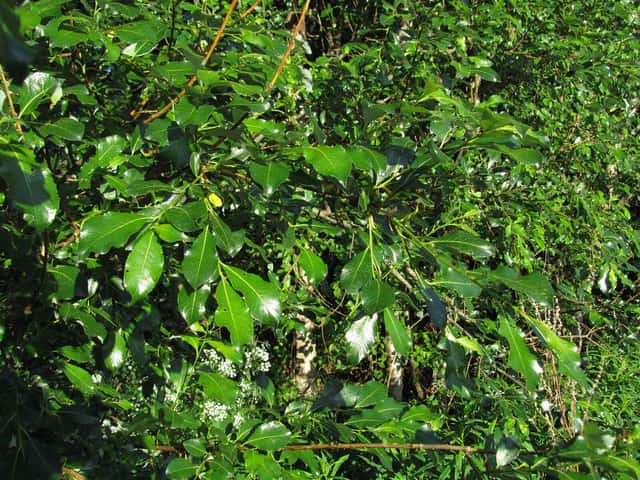
The tea-leaved willow (Salix phylicifolia) is a hardy deciduous shrub native to the boreal and montane regions of northern Europe, including Scotland, Ireland, and Fennoscandia. It grows along streambanks, in ditches, and in flushed upland ground, usually on moist, base-rich soils, from near sea level up to over 1,000 metres in altitude. The shrub reaches 2.5 to 4 metres in height with a bushy, spreading habit, smooth reddish-brown young stems, and thin, glossy dark green leaves with greyish undersides that resemble tea leaves, giving the species its common name. Like most willows, it is dioecious, with male and female catkins borne on separate plants; the yellow male catkins and greener female catkins appear on bare stems in early spring before the leaves unfurl, providing an important early nectar source for pollinators. Its bark is rich in salicin and related phenolic compounds that have been studied for antibacterial, antiviral, and antioxidant activity, continuing a long tradition of willow bark use in folk medicine for pain and fever relief.
How to Propagate Tea-leaved Willow?
Hardwood stem cutting
Willow cuttings root so readily that rooting hormone is rarely needed; standing cuttings in a jar of water for a week before potting also works well and even produces natural rooting compounds that can help other cuttings.
- 1 Cut a healthy, pencil-thick dormant stem about 20-25 cm long in late winter
- 2 Remove any side shoots and insert two-thirds of the cutting into moist soil or a container of damp compost
- 3 Keep the soil consistently moist and place in a sheltered, partly shaded spot
- 4 Roots typically form within 2-4 weeks; transplant once a strong root system develops
Materials needed:
Water rooting
Willow rooting hormone released into the water can be reused to help root other cuttings.
- 1 Take a dormant hardwood cutting 20-30 cm long
- 2 Place the cut end in a jar of water in a bright, cool spot
- 3 Change the water every few days
- 4 Pot up in soil once roots reach 2-3 cm long
Materials needed:
How Big Does Tea-leaved Willow Grow?
TLDR: Tea-leaved Willow can reach up to 4.0m tall with Medium growth rate.
Max height
4.0m
Spread
2.5m
Growth rate
Medium
Foliage
Deciduous
Warning: Toxic Plant
This plant can be toxic if ingested. Keep out of reach of:
Plant Uses
Ornamental
Great for decoration
Medicinal
Medicinal properties
Medicinal Uses
- Bark decoction traditionally used as a folk remedy for fever and mild pain relief (salicin content)
- Bark extracts studied for antibacterial and antioxidant properties
Is your plant showing symptoms?
Click on the symptom to discover possible causes:
What Diseases Commonly Affect Tea-leaved Willow?
TLDR: Tea-leaved Willow is susceptible to 8 known diseases. Monitor regularly for early detection.
Rust
Rust is a common fungal disease caused by fungi in the order Pucciniales that affects a wide variety of plants. The disease gets its name from the characteristic orange, yellow, or reddish-brown pustules that appear on leaves, resembling metal rust. This obligate fungal parasite requires living plants to survive and can cause significant economic losses in agricultural crops.
Anthracnose
Anthracnose is a fungal disease caused by fungi in the genus Colletotrichum that affects many plants, including vegetables, fruits, and trees. The disease thrives in cool, wet conditions, causing dark, sunken lesions on leaves, stems, flowers, and fruits.
Leaf Spot
Leaf spot is a common fungal disease caused by various pathogens including Alternaria, Ascochyta, Colletotrichum, Septoria, and Venturia. It primarily affects leaves, causing discolored spots that can lead to premature leaf drop if left untreated.
Canker
Canker is a disease caused by various fungi and bacteria that create necrotic, sunken areas on bark of branches, stems, and trunks. Pathogens enter through wounds and natural openings, especially when plants are stressed. Canker can gradually weaken or kill branches by disrupting water and nutrient flow.
Meaning & Symbolism
In northern European and Celtic folklore, willows are associated with healing, resilience, and renewal, growing back readily from cut stems and thriving in the wettest, harshest ground where little else survives.
Fun Facts
The common name comes from its thin, glossy leaves, which resemble tea leaves in shape and texture.
It is dioecious, meaning individual plants are either male or female, each producing differently coloured catkins.
Its bark contains salicin, the same class of compound from which aspirin was originally derived.
It can grow at altitudes over 1,000 metres in the Scottish Highlands, making it one of the hardier native willows.
Frequently asked questions
How much water does a tea-leaved willow need?
Is Salix phylicifolia easy to grow?
Can I propagate tea-leaved willow from cuttings?
Is tea-leaved willow toxic to pets?
What is tea-leaved willow used for besides ornamental planting?
Compare with similar plants
| Attribute | Difficulty | Light | Watering | Pet Safe |
|---|---|---|---|---|
| Field Maple | Easy | Bright indirect | 14d | ✓ |
| Silver Birch | Easy | Direct sun | 14d | ✓ |
| Common Blanketflower | Easy | Direct sun | 10d | ✓ |
| Cushion Bush | Easy | Direct sun | 14d | ✓ |





