Bromeliaceae
Teata Bromeliad: Complete Care Guide
Aechmea bracteata
Easy to grow and slow-growing. Prefers bright indirect light, sparing substrate watering, and a central tank kept topped up with clean water.
Every 12 days
Bright indirect
° - °C
% - %
Categories
What is Teata Bromeliad?
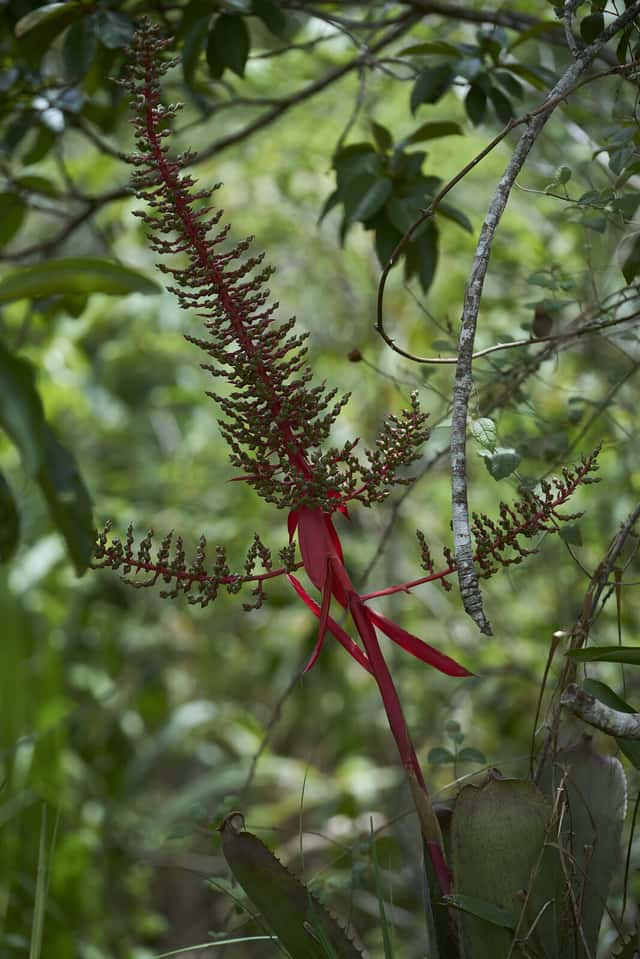
Teata Bromeliad (Aechmea bracteata) is a easy-care plant from the Bromeliaceae family. The Teata Bromeliad (Aechmea bracteata) is an epiphytic bromeliad native to Central America, belonging to the Bromeliaceae family. It forms a rosette of rigid, spiny leaves that create a central "tank" for water collection. Its inflorescence is striking, with bracts in shades of pink, orange, and gr...
Teata Bromeliad grows up to 1.5m, spread of 60cm, watering every 12 days. It is suitable for indoor environments and safe for pets.
Unlike many tropical plants, Teata Bromeliad tolerates watering mistakes. Best for beginners. Unlike many popular species, Teata Bromeliad is safe to keep around pets. Without adequate drainage, root rot can develop within 24 days.
How to Care for Teata Bromeliad?
TLDR: Teata Bromeliad needs Bright indirect, watering every 12 days, and temperatures between 15-30°C with 40-70% humidity.
How Often Should You Water Teata Bromeliad?
Water the substrate only when quite dry, as the plant is sensitive to excess moisture at the roots. Keep the central tank (rosette) filled with a little water, flushing it regularly to prevent debris buildup and pests.
How Much Light Does Teata Bromeliad Need?
Prefers bright indirect or dappled light; avoid intense direct sun, which can scorch the leaves.
What Is the Best Soil for Teata Bromeliad?
Use a well-draining, organic-rich mix with coco coir, pine bark, and perlite or vermiculite to prevent waterlogging.
What Pot Should You Use for Teata Bromeliad?
Porous terracotta/clay pot with good drainage, suited to epiphytic culture or a light substrate mix.
What Is Teata Bromeliad and Where Does It Come From?
The Teata Bromeliad (Aechmea bracteata) is an epiphytic bromeliad native to Central America, belonging to the Bromeliaceae family. It forms a rosette of rigid, spiny leaves that create a central "tank" for water collection. Its inflorescence is striking, with bracts in shades of pink, orange, and green.
How to Propagate Teata Bromeliad?
Offset (pup) division
Use sterilized tools to avoid contamination and avoid overwatering while the pup roots.
- 1 Wait for the offset (pup) to reach about a third the size of the parent plant
- 2 Cut the pup away from the base with a clean, sharp knife
- 3 Plant in well-draining substrate and keep lightly moist until rooted
Materials needed:
How Big Does Teata Bromeliad Grow?
TLDR: Teata Bromeliad can reach up to 1.5m tall with Slow growth rate.
Max height
1.5m
Spread
60cm
Growth rate
Slow
Foliage
Evergreen
Plant Uses
Ornamental
Great for decoration
Is your plant showing symptoms?
Click on the symptom to discover possible causes:
What Diseases Commonly Affect Teata Bromeliad?
TLDR: Teata Bromeliad is susceptible to 5 known diseases. Monitor regularly for early detection.
Scale Insects
Scale insects are small sap-sucking pests that appear as brown, shell-like bumps on plant stems and leaves. There are over 25 species, divided into armored (hard) and unarmored (soft) scales. They feed by piercing plant tissue and extracting sap, which weakens the plant and can lead to yellowing, stunted growth, and even death if left untreated. They also excrete honeydew, which attracts ants and promotes sooty mold growth.
Mealybugs
Mealybugs are small, soft-bodied insects covered with a white, waxy, cottony material. They are common pests of houseplants and outdoor plants in mild climates. These sap-sucking insects feed on plant tissue, causing damage, stunted growth, and can lead to plant death if left untreated. They produce sticky honeydew which attracts sooty mold.
Root Rot
Root rot is a serious fungal disease that affects the root system of plants, causing them to decay and die. It is primarily caused by overwatering, poor drainage, or soil-borne fungi such as Pythium, Phytophthora, Rhizoctonia, and Fusarium. The disease thrives in waterlogged conditions where roots are deprived of oxygen, making them susceptible to fungal infection.
Crown Rot
Crown rot is a serious fungal disease that attacks the crown (base) of the plant where the stem meets the soil. It is caused by various fungal pathogens including Phytophthora, Fusarium, and Rhizoctonia. The disease thrives in waterlogged conditions and can quickly spread to kill the entire plant if not addressed promptly.
Meaning & Symbolism
Symbolizes hospitality and exotic beauty, tied to the resilience of plants that thrive without soil.
Fun Facts
It is an epiphyte that grows attached to trees in the wild, without needing soil.
The flower stalk can raise the plant's overall height to about 1.5 m.
Frequently asked questions
How often should I water Aechmea bracteata?
Is Aechmea bracteata toxic to cats and dogs?
Why are my bromeliad leaves rotting?
Compare with similar plants
| Attribute | Difficulty | Light | Watering | Pet Safe |
|---|---|---|---|---|
| Field Maple | Easy | Bright indirect | 14d | ✓ |
| Silver Birch | Easy | Direct sun | 14d | ✓ |
| Common Blanketflower | Easy | Direct sun | 10d | ✓ |
| Cushion Bush | Easy | Direct sun | 14d | ✓ |





