Anacardiaceae
Terebinth - Complete Care Guide
Pistacia terebinthus
A tough, drought-tolerant plant ideal for Mediterranean-style gardens. Needs full sun, well-drained alkaline soil, and only moderate watering until established.
Every 14 days
Direct sun
-12° - 40°C
30% - 60%
Categories
What is Terebinth?
Terebinth (Pistacia terebinthus) is a easy-care plant from the Anacardiaceae family. The terebinth (Pistacia terebinthus) is a deciduous shrub or small tree in the Anacardiaceae family, native to the Mediterranean region. It thrives in rocky, calcareous soils and produces an aromatic resin historically harvested as "Chios turpentine". Reddish-purple flowers appear in spring, followe...
Terebinth grows up to 9.0m, spread of 600cm, watering every 14 days, -12°C – 40°C, 30–60% humidity. It is not suitable for indoor environments and safe for pets.
Unlike many tropical plants, Terebinth tolerates watering mistakes. Best for beginners. Unlike many popular species, Terebinth is safe to keep around pets.
How to Care for Terebinth?
TLDR: Terebinth needs Direct sun, watering every 14 days, and temperatures between -12-40°C with 30-60% humidity.
How Often Should You Water Terebinth?
Water deeply but infrequently, letting the soil dry out between waterings. Once established, it tolerates extended dry periods well.
How Much Light Does Terebinth Need?
Requires full sun for most of the day; cannot tolerate shade.
What Is the Best Soil for Terebinth?
Prefers sandy to loamy, well-drained, alkaline soils; tolerates very alkaline, calcareous ground.
What Pot Should You Use for Terebinth?
A large terracotta pot with generous drainage holes, suitable only for young specimens before permanent in-ground planting.
Care Schedule
Fertilize
Every 365 days
Repot
Every 900 days
What Is Terebinth and Where Does It Come From?
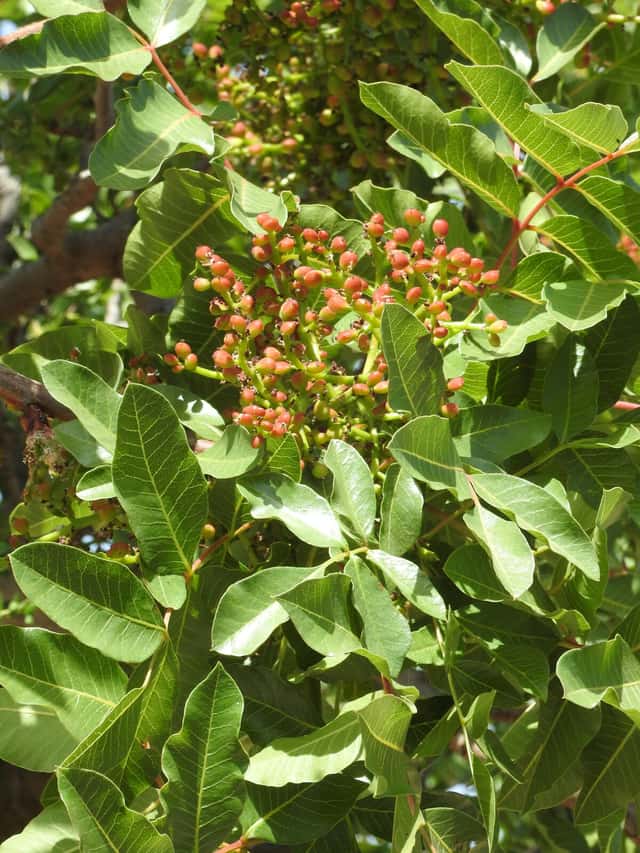
The terebinth (Pistacia terebinthus) is a deciduous shrub or small tree in the Anacardiaceae family, native to the Mediterranean region. It thrives in rocky, calcareous soils and produces an aromatic resin historically harvested as "Chios turpentine". Reddish-purple flowers appear in spring, followed by small globose fruits that ripen from red to dark brown.
How to Propagate Terebinth?
Seed propagation
Germination is variable and can take several months; be patient and avoid waterlogging the substrate.
- 1 Soak seeds in warm water for 3-4 days, or in alkalized water for 16 hours
- 2 Cold stratify for about 2 months to speed up germination
- 3 Sow in a cold frame or greenhouse in late winter
- 4 Keep the substrate lightly moist until germination, which can be slow and uneven
Materials needed:
Semi-hardwood cutting
Use clean, sharp tools and avoid excess moisture to prevent rot.
- 1 Take 10-15 cm semi-hardwood cuttings in July, with at least two nodes
- 2 Apply rooting hormone to the cut base
- 3 Plant in a sandy, well-draining substrate
- 4 Keep in a shaded, humid spot until roots form
Materials needed:
How Big Does Terebinth Grow?
TLDR: Terebinth can reach up to 9.0m tall with Slow growth rate.
Max height
9.0m
Spread
6.0m
Growth rate
Slow
Foliage
Deciduous
Plant Uses
Ornamental
Great for decoration
Edible
Can be consumed
Medicinal
Medicinal properties
Aromatic
Pleasant fragrance
Medicinal Uses
- Resin with antiseptic and expectorant properties
- Traditionally used for chronic bronchial and urinary infections
- Applied externally for arthritis and skin conditions
Culinary Uses
- Raw or cooked seeds, sweeter and oilier than almonds
- Young leaves cooked as a vegetable
- Immature fruits pickled as a relish
Is your plant showing symptoms?
Click on the symptom to discover possible causes:
What Diseases Commonly Affect Terebinth?
TLDR: Terebinth is susceptible to 4 known diseases. Monitor regularly for early detection.
Verticillium Wilt
Verticillium wilt is a soil-borne fungal disease caused primarily by the fungi Verticillium dahliae and V. albo-atrum. These pathogens infect plant roots and grow within the vascular tissues, blocking water and nutrient transport, resulting in wilting and eventual plant death. The disease affects over 350 plant species including vegetables, fruits, ornamental flowers, and trees. The fungi can survive in soil for more than 10 years as resistant structures called microsclerotia.
Aphids
Aphids are small, soft-bodied, pear-shaped insects (1/16 to 1/8 inch long) that feed by sucking nutrient-rich sap from plants. They reproduce rapidly and can quickly weaken plants, causing distorted growth and transmitting plant viruses. Aphids come in various colors including green, black, red, yellow, brown, and gray. They secrete honeydew, a sticky substance that attracts ants and encourages sooty mold growth.
Scale Insects
Scale insects are small sap-sucking pests that appear as brown, shell-like bumps on plant stems and leaves. There are over 25 species, divided into armored (hard) and unarmored (soft) scales. They feed by piercing plant tissue and extracting sap, which weakens the plant and can lead to yellowing, stunted growth, and even death if left untreated. They also excrete honeydew, which attracts ants and promotes sooty mold growth.
Caterpillars
Caterpillars are the larval stage of moths and butterflies that feed voraciously on plant foliage, stems, flowers, and fruits. Common species include cabbage loopers, tomato hornworms, armyworms, and cutworms. These pests can cause extensive damage by consuming large amounts of plant tissue in a short time. They vary in size from small (1/4 inch) to large (5 inches), with colors ranging from green to brown, often featuring stripes or spots. Caterpillars are highly mobile and can quickly spread throughout gardens, making them one of the most destructive common pests.
Meaning & Symbolism
Long associated with sacred groves and endurance in Mediterranean and biblical tradition, the terebinth symbolizes resilience and permanence in harsh, rocky terrain.
Fun Facts
Terebinth resin, known as "Chios turpentine", is one of the oldest aromatic resins used by humans.
It is the traditional rootstock used for grafting pistachio trees (Pistacia vera).
Insect galls on its leaves are shaped like goat horns, giving rise to the Spanish name "cornicabra".
It is a dioecious plant, meaning individual trees are either male or female.
Frequently asked questions
Is terebinth toxic to pets?
How often should I water terebinth?
What soil does terebinth prefer?
Can terebinth be grown in a pot?
How do you propagate terebinth?
Compare with similar plants
| Attribute | Difficulty | Light | Watering | Pet Safe |
|---|---|---|---|---|
| Field Maple | Easy | Bright indirect | 14d | ✓ |
| Silver Birch | Easy | Direct sun | 14d | ✓ |
| Common Blanketflower | Easy | Direct sun | 10d | ✓ |
| Cushion Bush | Easy | Direct sun | 14d | ✓ |





