Iridaceae
Tiger Flower: Edible Plant
Tigridia
Tigridia requires full sun, well-draining fertile soil, and regular but moderately controlled watering – it is sensitive to waterlogged soil and bulb rot. In warmer regions (zones 7-10), it can overwinter in the ground; elsewhere, the bulbs are dug up in the fall and stored in a dry, cool place until spring.
Every 4 days
Bright indirect
10° - 30°C
40% - 60%
Categories
What is Tiger Flower?
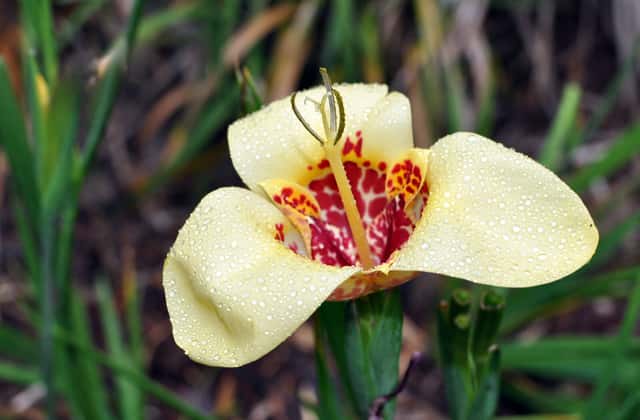
Tiger Flower (Tigridia) is a medium-care plant from the Iridaceae family. Tigridia pavonia is a striking summer bulb from the Iris family (Iridaceae), native to Mexico and Central America. It is characterized by showy, brightly colored flowers with distinctive spotted centers resembling a tiger's or peacock's eye. Each individual flower blooms for only one day, but the pl...
Tiger Flower grows up to 60cm, spread of 45cm, watering every 4 days, 10°C – 30°C, 40–60% humidity. It is not suitable for indoor environments and safe for pets.
Unlike many popular species, Tiger Flower is safe to keep around pets.
How to Care for Tiger Flower?
TLDR: Tiger Flower needs Bright indirect, watering every 4 days, and temperatures between 10-30°C with 40-60% humidity.
How Often Should You Water Tiger Flower?
Water regularly during the growing season to keep the soil moist, but never wet or waterlogged. Allow the top layer of soil to dry out slightly between waterings – overwatered soil quickly leads to bulb rot.
How Much Light Does Tiger Flower Need?
Requires full sun, ideally 6-8 hours of direct light daily for abundant flowering. In hotter regions, it can tolerate partial shade during the hottest afternoons.
What Is the Best Soil for Tiger Flower?
It thrives best in fertile, light, sandy-loam soil with excellent drainage and a pH between 5.5 and 7.5. Heavy, poorly draining soil leads to bulb rot.
What Pot Should You Use for Tiger Flower?
If grown in a container, choose a deeper pot (at least 20-25 cm) with good drainage holes and a well-draining substrate to prevent waterlogging of the bulbs.
Care Schedule
Fertilize
Every 21 days
What Is Tiger Flower and Where Does It Come From?
Tigridia pavonia is a striking summer bulb from the Iris family (Iridaceae), native to Mexico and Central America. It is characterized by showy, brightly colored flowers with distinctive spotted centers resembling a tiger's or peacock's eye. Each individual flower blooms for only one day, but the plant continuously produces new flowers over 2-4 weeks in summer. The leaves are sword-shaped, pleated, with prominent longitudinal veins, and they die back in the fall.
How to Propagate Tiger Flower?
How Big Does Tiger Flower Grow?
TLDR: Tiger Flower can reach up to 60cm tall with Medium growth rate.
Max height
60cm
Spread
45cm
Growth rate
Medium
Foliage
Deciduous
Plant Uses
Ornamental
Great for decoration
Edible
Can be consumed
Medicinal
Medicinal properties
Medicinal Uses
- Historically, the bulbs were traditionally used to support fertility, but this use is not clinically verified in modern times.
Culinary Uses
- Baked or boiled bulbs have a taste similar to sweet potatoes and were occasionally consumed in Mexico; raw bulbs cause a burning sensation in the mouth and are not eaten raw.
Is your plant showing symptoms?
Click on the symptom to discover possible causes:
What Diseases Commonly Affect Tiger Flower?
TLDR: Tiger Flower is susceptible to 8 known diseases. Monitor regularly for early detection.
Root Rot
Root rot is a serious fungal disease that affects the root system of plants, causing them to decay and die. It is primarily caused by overwatering, poor drainage, or soil-borne fungi such as Pythium, Phytophthora, Rhizoctonia, and Fusarium. The disease thrives in waterlogged conditions where roots are deprived of oxygen, making them susceptible to fungal infection.
Overwatering
Overwatering occurs when plants receive too much water, depriving roots of oxygen and causing root rot. This environmental stress is one of the most common causes of houseplant death, as waterlogged soil prevents roots from breathing and functioning properly.
Gray Mold (Botrytis Blight)
Gray mold, caused by the fungus Botrytis cinerea, is a widespread necrotrophic pathogen affecting over 1,400 plant species. It thrives in cool, humid conditions and attacks weakened or aging plant tissues, causing soft rot and characteristic gray fuzzy growth.
Fusarium Wilt
Fusarium wilt is a serious fungal disease caused by the soil-borne fungus Fusarium oxysporum. The fungus invades roots and blocks the water-conducting vessels (xylem) of the plant, causing progressive wilting and eventual death. Host-specific forms of the pathogen exist that attack different plant species.
Meaning & Symbolism
Thanks to its original Aztec name 'oceloxochitl' (jaguar flower), Tigridia is associated with strength and the wild beauty of nature in Mexican culture. Due to its ephemeral, single-day flower beauty, it also symbolizes the fleeting nature and uniqueness of a moment.
Compare with similar plants
| Attribute | Difficulty | Light | Watering | Pet Safe |
|---|---|---|---|---|
| Dark Fieldcap | Medium | Low light | 2d | ⚠️ |
| Azalea | Medium | Partial shade | 3d | ⚠️ |
| Muriel's Bamboo | Medium | Partial shade | 3d | ✓ |
| Bougainvillea | Medium | Direct sun | 7d | ⚠️ |




