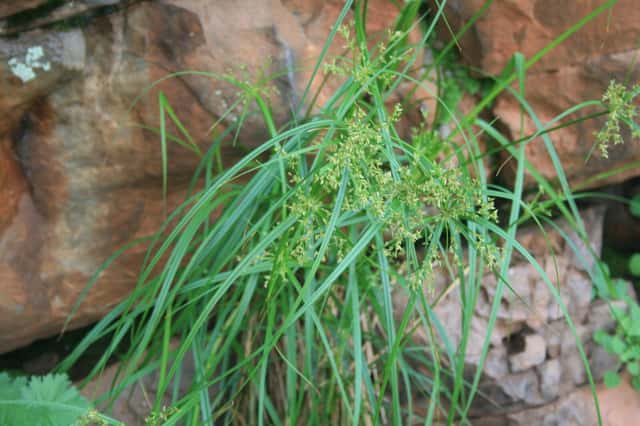
Cyperaceae
Tiger Nut (Cyperus esculentus)
Cyperus esculentus
Give tiger nut full sun and consistently moist, sandy-loam soil; it is not drought tolerant and will go dormant if it dries out. It grows fast, is easy to keep alive, and needs almost no disease management - its biggest challenge is containing its spread, not keeping it healthy.
Every 3 days
Bright indirect
-5° - °C
30% - 50%
Categories
What is Tiger Nut?
Tiger Nut (Cyperus esculentus) is a easy-care plant from the Cyperaceae family. Tiger nut (Cyperus esculentus) is a low-growing perennial sedge in the papyrus family, grown worldwide for its small, sweet, nutty-flavored underground tubers - the base of Spain's popular horchata de chufa drink. The same plant is also known as yellow nutsedge, one of the world's most persistent ag...
Tiger Nut grows up to 90cm, watering every 3 days, 30–50% humidity. It is not suitable for indoor environments and safe for pets.
Unlike many tropical plants, Tiger Nut tolerates watering mistakes. Best for beginners. Unlike many popular species, Tiger Nut is safe to keep around pets.
How to Care for Tiger Nut?
TLDR: Tiger Nut needs Bright indirect, watering every 3 days, and temperatures between -5-30°C with 30-50% humidity.
How Often Should You Water Tiger Nut?
Keep the soil evenly moist at all times during the growing season; never let it dry out completely, but avoid standing water.
How Much Light Does Tiger Nut Need?
Provide at least 6-8 hours of direct sun daily; it tolerates partial shade but grows and tuberizes best in full sun.
What Is the Best Soil for Tiger Nut?
Use loose, sandy or sandy-loam soil with a pH of 5.5-7.5; it tolerates poor soil but produces the best tuber harvest in soil enriched with organic matter.
What Pot Should You Use for Tiger Nut?
A wide, deep container (at least 30 cm deep) with drainage holes, ideally lined or placed on a hard surface to contain spreading rhizomes and prevent escape into surrounding beds or lawn.
Care Schedule
Fertilize
Every 30 days
What Is Tiger Nut and Where Does It Come From?
Tiger nut (Cyperus esculentus) is a low-growing perennial sedge in the papyrus family, grown worldwide for its small, sweet, nutty-flavored underground tubers - the base of Spain's popular horchata de chufa drink. The same plant is also known as yellow nutsedge, one of the world's most persistent agricultural weeds: left unmanaged, its rhizomes and tubers spread rapidly and can be extremely difficult to eradicate from lawns and cropland. Grow it deliberately in a contained bed or large pot for its edible harvest, never in open ground near vegetable beds you want to keep nutsedge-free.
How to Propagate Tiger Nut?
Tuber Division
Handle tubers carefully to avoid damage; each tuber only needs to be firm and undamaged to sprout, roots are not required at planting time.
- 1 Dig up an established clump in spring or early summer
- 2 Separate the small tubers from the root mass
- 3 Plant tubers about 5-8 cm deep in moist, loose soil
- 4 Keep soil consistently damp until sprouts emerge
Materials needed:
Seed Sowing
Seed germination is notoriously unreliable; tuber division is the far more dependable method.
- 1 Surface-sow seeds on moist soil in spring once temperatures reach around 18C
- 2 Keep the growing medium consistently moist
- 3 Thin seedlings once they reach a few centimeters tall
Materials needed:
How Big Does Tiger Nut Grow?
TLDR: Tiger Nut can reach up to 90cm tall with Fast growth rate.
Max height
90cm
Growth rate
Fast
Foliage
Deciduous
Plant Uses
Edible
Can be consumed
Culinary Uses
- Horchata de chufa (tiger nut milk)
- Eaten raw or roasted as a snack
- Ground into gluten-free flour
- Roasted as a coffee substitute
Is your plant showing symptoms?
Click on the symptom to discover possible causes:
What Diseases Commonly Affect Tiger Nut?
TLDR: Tiger Nut is susceptible to 2 known diseases. Monitor regularly for early detection.
Root Rot
Root rot is a serious fungal disease that affects the root system of plants, causing them to decay and die. It is primarily caused by overwatering, poor drainage, or soil-borne fungi such as Pythium, Phytophthora, Rhizoctonia, and Fusarium. The disease thrives in waterlogged conditions where roots are deprived of oxygen, making them susceptible to fungal infection.
Root-Knot Nematodes
Root-knot nematodes (Meloidogyne species) are microscopic roundworms that parasitize plant roots, causing characteristic galls or knots. These soil-borne pests are among the most economically damaging plant pathogens worldwide, affecting a wide range of ornamental and edible plants. The nematodes inject enzymes into root cells, causing abnormal swelling and disrupting water and nutrient uptake.
Fun Facts
A single tiger nut plant can produce several hundred to several thousand tubers in one growing season.
Horchata de chufa, made from tiger nut tubers, is a traditional drink of Valencia, Spain, with its own protected Denominacion de Origen.
Despite the name, tiger nut is not a nut at all - it's an edible tuber from a sedge, related to papyrus, not to tree nuts.
Yellow nutsedge is listed as a noxious weed in California, Colorado, Hawaii, Oregon, and Washington.
Frequently asked questions
Is tiger nut the same plant as yellow nutsedge?
Is Cyperus esculentus toxic to pets?
How do I stop tiger nut from spreading?
What diseases affect tiger nut?
Compare with similar plants
| Attribute | Difficulty | Light | Watering | Pet Safe |
|---|---|---|---|---|
| Field Maple | Easy | Bright indirect | 14d | ✓ |
| Silver Birch | Easy | Direct sun | 14d | ✓ |
| Common Blanketflower | Easy | Direct sun | 10d | ✓ |
| Cushion Bush | Easy | Direct sun | 14d | ✓ |
Choose & Compare
Sources & References
- Cyperus esculentus - NC State Extension Gardener Plant Toolbox
- Cyperus Esculentus Plant Care & Growing Basics - PlantIn
- Yellow Nutsedge (Cyperus Esculentus) Care Guide - Plantiary
- Cyperus esculentus - PFAF Plant Database
- Cyperus esculentus - Wikipedia
- Chufa (Cyperus esculentus var. sativus) - Cultivariable
- A Tuber Rot of Cyperus esculentus Caused by Rosellinia necatrix
- Yellow nutsedge - Invasive Plant Atlas of the United States





