Malvaceae
Tree Mallow (Malva arborea) Care Guide
Malva arborea
Tree mallow is an easy, fast-growing plant for sunny, well-drained, sandy sites. Water regularly while establishing, then let it rely mostly on rainfall - it copes well with drought and salt spray. Cut it back hard in early spring to keep growth compact and prevent it becoming leggy.
Every 7 days
Bright indirect
° - °C
% - %
Categories
What is Tree Mallow?
Tree Mallow (Malva arborea) is a easy-care plant from the Malvaceae family. Malva arborea, commonly known as tree mallow, is a fast-growing biennial shrub native to the rocky coastlines of western Europe and the Mediterranean, from Ireland and Britain south to North Africa and east to Greece. Reaching 1-2 m in height on a thick, woody-based stem, it forms bold rosettes of l...
Tree Mallow grows up to 2.0m, spread of 75cm, watering every 7 days. It is not suitable for indoor environments and safe for pets.
Unlike many tropical plants, Tree Mallow tolerates watering mistakes. Best for beginners. Unlike many popular species, Tree Mallow is safe to keep around pets.
How to Care for Tree Mallow?
TLDR: Tree Mallow needs Bright indirect, watering every 7 days, and temperatures between 15-30°C with 40-70% humidity.
How Often Should You Water Tree Mallow?
Water about once a week during the first growing season to help roots establish; afterwards the plant tolerates dry spells well and only needs supplemental water in prolonged heat.
How Much Light Does Tree Mallow Need?
Give it full sun for the best flowering - at least 6 hours of direct light a day. It will grow in part shade but flowers less freely.
What Is the Best Soil for Tree Mallow?
Plant in light, sandy, free-draining soil. Avoid rich, heavily composted ground, which encourages leafy growth at the expense of flowers.
What Pot Should You Use for Tree Mallow?
Tree mallow is usually grown in the open ground, but if container growing, use a large, heavy pot with generous drainage holes and a sandy, free-draining mix to mimic its native coastal soils.
What Is Tree Mallow and Where Does It Come From?
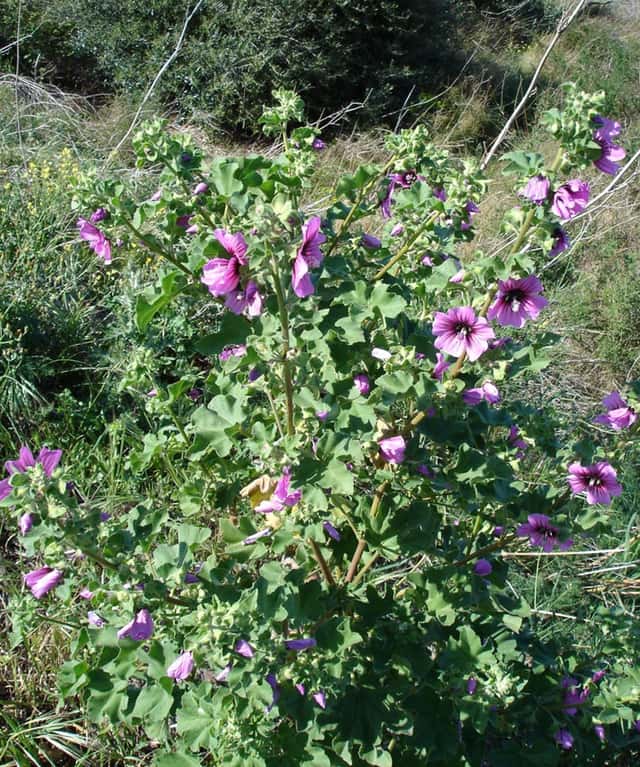
Malva arborea, commonly known as tree mallow, is a fast-growing biennial shrub native to the rocky coastlines of western Europe and the Mediterranean, from Ireland and Britain south to North Africa and east to Greece. Reaching 1-2 m in height on a thick, woody-based stem, it forms bold rosettes of large, velvety, palmately lobed leaves up to 18 cm across. From early summer into autumn it produces clusters of funnel-shaped, dark pink to purple flowers, 3-4 cm wide, that draw bees and other pollinators. Remarkably salt-tolerant, tree mallow thrives on wind-battered cliffs and small islands, excreting excess salt through glands on its leaves so it can survive direct sea spray. In some regions outside its native range it has become an aggressive coastal coloniser.
How to Propagate Tree Mallow?
Seed sowing
Tree mallow self-seeds readily once established, so let a few seed heads ripen if you want volunteer plants next year.
- 1 Sow seeds directly outdoors after the last frost, or start indoors 6-8 weeks earlier
- 2 Space seeds 45-60 cm apart in free-draining, sandy soil
- 3 Keep the soil lightly moist until germination
- 4 Thin seedlings once they have their first true leaves
Materials needed:
Softwood cuttings
Use a sharp, clean blade and root in a sheltered spot out of direct sun until new growth appears.
- 1 Take a 7.5-15 cm softwood cutting from a non-flowering shoot tip in spring or early summer
- 2 Cut cleanly just below a leaf node
- 3 Remove leaves from the lower half of the cutting and any flower buds
- 4 Insert into a free-draining cutting compost and keep humid until rooted
Materials needed:
How Big Does Tree Mallow Grow?
TLDR: Tree Mallow can reach up to 2.0m tall with Fast growth rate.
Max height
2.0m
Spread
75cm
Growth rate
Fast
Foliage
Deciduous
Plant Uses
Ornamental
Great for decoration
Edible
Can be consumed
Medicinal
Medicinal properties
Medicinal Uses
- Leaves steeped in hot water and used as a poultice for sprains
- Flowers traditionally used to soothe respiratory complaints
Culinary Uses
- Young leaves can be eaten raw or cooked in soups and stews
- Seeds are edible, traditionally called "petit pains" (little breads) in French
Is your plant showing symptoms?
Click on the symptom to discover possible causes:
What Diseases Commonly Affect Tree Mallow?
TLDR: Tree Mallow is susceptible to 4 known diseases. Monitor regularly for early detection.
Rust
Rust is a common fungal disease caused by fungi in the order Pucciniales that affects a wide variety of plants. The disease gets its name from the characteristic orange, yellow, or reddish-brown pustules that appear on leaves, resembling metal rust. This obligate fungal parasite requires living plants to survive and can cause significant economic losses in agricultural crops.
Root Rot
Root rot is a serious fungal disease that affects the root system of plants, causing them to decay and die. It is primarily caused by overwatering, poor drainage, or soil-borne fungi such as Pythium, Phytophthora, Rhizoctonia, and Fusarium. The disease thrives in waterlogged conditions where roots are deprived of oxygen, making them susceptible to fungal infection.
Leaf Spot
Leaf spot is a common fungal disease caused by various pathogens including Alternaria, Ascochyta, Colletotrichum, Septoria, and Venturia. It primarily affects leaves, causing discolored spots that can lead to premature leaf drop if left untreated.
Scale Insects
Scale insects are small sap-sucking pests that appear as brown, shell-like bumps on plant stems and leaves. There are over 25 species, divided into armored (hard) and unarmored (soft) scales. They feed by piercing plant tissue and extracting sap, which weakens the plant and can lead to yellowing, stunted growth, and even death if left untreated. They also excrete honeydew, which attracts ants and promotes sooty mold growth.
Meaning & Symbolism
In folk tradition, mallows symbolise love, healing and quiet resilience - fitting for a plant that thrives on storm-lashed cliffs where little else survives.
Fun Facts
Tree mallow can survive direct sea spray by excreting excess salt through glands on its leaves.
Its edible seeds are nicknamed "petit pains" (little breads) in French.
In some island ecosystems outside its native range, such as parts of Scotland and Australia, it has become an aggressive coastal invader.
Frequently asked questions
Is tree mallow (Malva arborea) toxic to cats or dogs?
How long does tree mallow live?
Why is my tree mallow getting rust spots?
Does tree mallow need a lot of water?
Can tree mallow grow near the sea?
Compare with similar plants
| Attribute | Difficulty | Light | Watering | Pet Safe |
|---|---|---|---|---|
| Field Maple | Easy | Bright indirect | 14d | ✓ |
| Silver Birch | Easy | Direct sun | 14d | ✓ |
| Common Blanketflower | Easy | Direct sun | 10d | ✓ |
| Cushion Bush | Easy | Direct sun | 14d | ✓ |
Choose & Compare
Sources & References
- Malva arborea - Wikipedia
- Malva arborea | NC State Extension Gardener Plant Toolbox
- Lavatera arborea - Missouri Botanical Garden Plant Finder
- Lavatera Are Susceptible To Fungal Issues - Horticulture.co.uk
- How to Care for a Tree Mallow - Week
- Malva arborea: Identification, Health Benefits, Uses - PlantIDs





