Iridaceae
Yellow Walking Iris (Trimezia gracilis): Complete Care Guide
Trimezia gracilis
Grows best in bright indirect light to partial shade, with regular watering that allows the topsoil to dry between waterings, and well-draining, organically rich soil. It is sensitive to overwatering, which can lead to root rot.
Every 9 days
Partial shade
10° - 29°C
40% - 70%
Categories
What is Yellow Walking Iris?
Yellow Walking Iris (Trimezia gracilis) is a medium-care plant from the Iridaceae family. Trimezia gracilis, commonly called yellow walking iris, is a rhizomatous perennial in the Iridaceae family, native to west-central and southeastern Brazil through Paraguay. It forms upright fans of sword-shaped leaves and produces short-lived yellow flowers marked with brown-purple blotches at the b...
Yellow Walking Iris grows up to 60cm, spread of 45cm, watering every 9 days, 10°C – 29°C, 40–70% humidity. It is suitable for indoor environments and safe for pets.
Unlike many popular species, Yellow Walking Iris is safe to keep around pets. Without adequate drainage, root rot can develop within 18 days.
How to Care for Yellow Walking Iris?
TLDR: Yellow Walking Iris needs Partial shade, watering every 9 days, and temperatures between 10-29°C with 40-70% humidity.
How Often Should You Water Yellow Walking Iris?
Water when the top couple inches of soil feel dry, roughly every 7-10 days. Never let the pot sit in standing water.
How Much Light Does Yellow Walking Iris Need?
Place in bright indirect light or partial shade (2-6 hours of direct sun). Low light will reduce or prevent flowering.
What Is the Best Soil for Yellow Walking Iris?
Use a light, well-draining mix such as potting soil amended with perlite or coarse sand for drainage.
What Pot Should You Use for Yellow Walking Iris?
Choose a pot with generous drainage holes; unglazed clay helps prevent excess moisture buildup.
Care Schedule
Fertilize
Every 42 days
Repot
Every 365 days
What Is Yellow Walking Iris and Where Does It Come From?
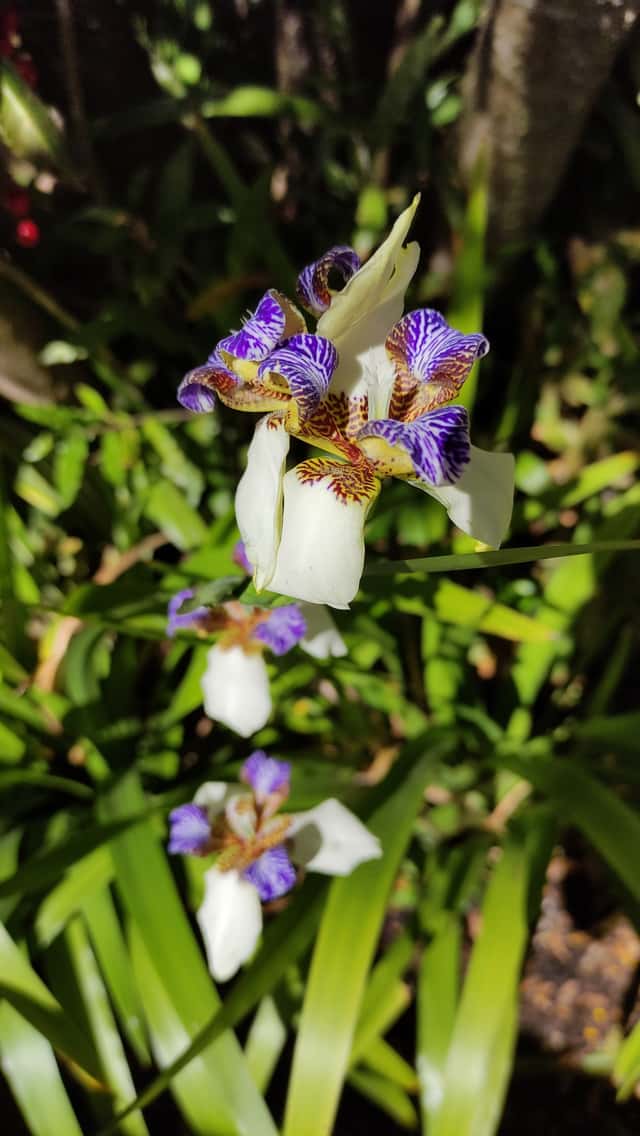
Trimezia gracilis, commonly called yellow walking iris, is a rhizomatous perennial in the Iridaceae family, native to west-central and southeastern Brazil through Paraguay. It forms upright fans of sword-shaped leaves and produces short-lived yellow flowers marked with brown-purple blotches at the base of the petals. Each bloom lasts only a day, but flowering continues from spring through fall. The common name refers to the plantlets that form at the tips of spent flower stalks, which root where they touch the ground, making the clump appear to "walk."
How to Propagate Yellow Walking Iris?
Rhizome division
Divide during repotting, ideally in spring, to speed up establishment.
- 1 Remove the clump from its pot and locate the rhizomes
- 2 Separate sections with healthy leaves and roots using a clean knife
- 3 Plant each division in well-draining soil
- 4 Keep lightly moist until established
Materials needed:
Flower-stalk plantlets
Plantlets often root on their own if the stalk is left to touch nearby soil.
- 1 Wait for plantlets to form at the tip of a spent flower stalk
- 2 Cut the stalk once the plantlet has visible roots, or let it touch the soil naturally
- 3 Plant the plantlet in well-draining soil
- 4 Keep moist until rooted
Materials needed:
How Big Does Yellow Walking Iris Grow?
TLDR: Yellow Walking Iris can reach up to 60cm tall with Medium growth rate.
Max height
60cm
Spread
45cm
Growth rate
Medium
Foliage
Evergreen
Plant Uses
Ornamental
Great for decoration
Is your plant showing symptoms?
Click on the symptom to discover possible causes:
What Diseases Commonly Affect Yellow Walking Iris?
TLDR: Yellow Walking Iris is susceptible to 3 known diseases. Monitor regularly for early detection.
Root Rot
Root rot is a serious fungal disease that affects the root system of plants, causing them to decay and die. It is primarily caused by overwatering, poor drainage, or soil-borne fungi such as Pythium, Phytophthora, Rhizoctonia, and Fusarium. The disease thrives in waterlogged conditions where roots are deprived of oxygen, making them susceptible to fungal infection.
Leaf Spot
Leaf spot is a common fungal disease caused by various pathogens including Alternaria, Ascochyta, Colletotrichum, Septoria, and Venturia. It primarily affects leaves, causing discolored spots that can lead to premature leaf drop if left untreated.
Overwatering
Overwatering occurs when plants receive too much water, depriving roots of oxygen and causing root rot. This environmental stress is one of the most common causes of houseplant death, as waterlogged soil prevents roots from breathing and functioning properly.
Fun Facts
Its "walking" name comes from plantlets that form at the tips of flower stalks and root wherever they touch the ground.
Each yellow flower lasts only one day, but the plant blooms continuously from spring through fall.
It is native to west-central and southeastern Brazil down to Paraguay.
Frequently asked questions
Is yellow walking iris toxic to cats and dogs?
Why isn't my yellow walking iris blooming?
How often should I water Trimezia gracilis?
How does yellow walking iris propagate itself?
Compare with similar plants
| Attribute | Difficulty | Light | Watering | Pet Safe |
|---|---|---|---|---|
| Dark Fieldcap | Medium | Low light | 2d | ⚠️ |
| Azalea | Medium | Partial shade | 3d | ⚠️ |
| Muriel's Bamboo | Medium | Partial shade | 3d | ✓ |
| Bougainvillea | Medium | Direct sun | 7d | ⚠️ |




