Montiaceae
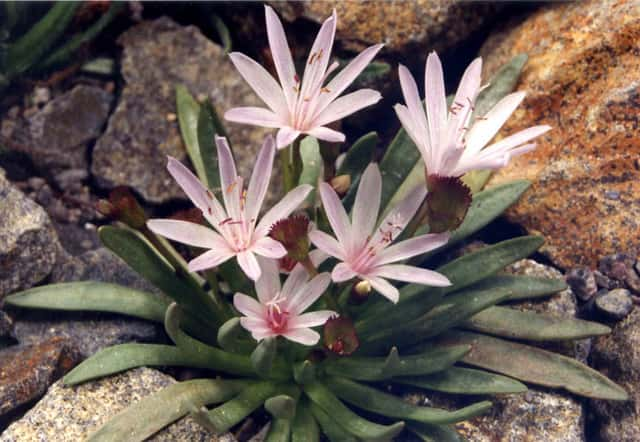
Truckee Lewisia (Lewisia longipetala)
Lewisia longipetala
A hard plant away from the mountains. It needs sun, gritty soil that dries fast and a cool climate. The garden hybrids are easier, but they too die in wet winter soil. Best in a rock garden, rock wall or alpine trough.
Every 10 days
Bright indirect
° - °C
% - %
Categories
What is Truckee lewisia?
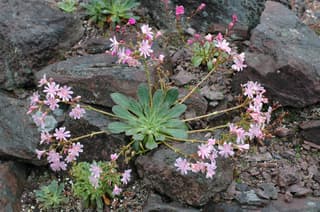
Truckee lewisia (Lewisia longipetala) is a hard-care plant from the Montiaceae family. Lewisia longipetala is a rare perennial in the family Montiaceae, found only in California's Sierra Nevada near Lake Tahoe, at fewer than 20 sites. It grows at 2,500 to 2,900 m on north-facing rocky talus where snow lingers into summer. It forms a low rosette of narrow, fleshy leaves 3 to 6 cm long...
Truckee lewisia grows up to watering every 10 days. It is not suitable for indoor environments and safe for pets.
Unlike easy-care plants, Truckee lewisia demands constant attention to humidity and light. Not recommended for beginners. Unlike many popular species, Truckee lewisia is safe to keep around pets.
How to Care for Truckee lewisia?
TLDR: Truckee lewisia needs Bright indirect, watering every 10 days, and temperatures between 15-30°C with 40-70% humidity.
How Often Should You Water Truckee lewisia?
In the wild it drinks snowmelt in spring and early summer. In the garden, water when the soil is dry, about every 10 days in the growing season, and barely at all in winter. Once established it tolerates drought; what kills it is water sitting around the crown.
How Much Light Does Truckee lewisia Need?
Full sun in cool climates. Where summers are hot, give it afternoon shade.
What Is the Best Soil for Truckee lewisia?
Lean soil with plenty of grit or coarse sand that drains at once. A gravel collar around the crown helps prevent rot. Plant it on its side, in a rock crevice or on a slope, so water does not sit in the rosette.
What Pot Should You Use for Truckee lewisia?
A shallow terracotta pot or stone trough with a large drainage hole and a gritty mix.
What Is Truckee lewisia and Where Does It Come From?
Lewisia longipetala is a rare perennial in the family Montiaceae, found only in California's Sierra Nevada near Lake Tahoe, at fewer than 20 sites. It grows at 2,500 to 2,900 m on north-facing rocky talus where snow lingers into summer. It forms a low rosette of narrow, fleshy leaves 3 to 6 cm long over a deep taproot. The pink flowers have about 8 petals, each 1 to 2 cm long. In gardens you will almost always find its hybrids with Lewisia cotyledon, such as 'Little Plum' and 'Little Peach'.
How to Propagate Truckee lewisia?
Offsets
The plant has a deep taproot and resents being moved once established. Only take side rosettes.
- 1 Carefully detach a side rosette with a little of its base
- 2 Let the cut dry for a day or two
- 3 Plant in a slightly moist mix of sand and grit
- 4 Keep in part shade until rooted
Materials needed:
Seed
Seed from hybrids will not come true.
- 1 Sow in autumn in a sandy mix
- 2 Top with a thin layer of grit
- 3 Leave the pot outdoors through winter cold
- 4 Expect germination in spring
Materials needed:
How Big Does Truckee lewisia Grow?
TLDR: Truckee lewisia can reach up to ?cm tall with Medium growth rate.
Plant Uses
Ornamental
Great for decoration
Is your plant showing symptoms?
Click on the symptom to discover possible causes:
What Diseases Commonly Affect Truckee lewisia?
TLDR: Truckee lewisia is susceptible to 5 known diseases. Monitor regularly for early detection.
Root Rot
Root rot is a serious fungal disease that affects the root system of plants, causing them to decay and die. It is primarily caused by overwatering, poor drainage, or soil-borne fungi such as Pythium, Phytophthora, Rhizoctonia, and Fusarium. The disease thrives in waterlogged conditions where roots are deprived of oxygen, making them susceptible to fungal infection.
Crown Rot
Crown rot is a serious fungal disease that attacks the crown (base) of the plant where the stem meets the soil. It is caused by various fungal pathogens including Phytophthora, Fusarium, and Rhizoctonia. The disease thrives in waterlogged conditions and can quickly spread to kill the entire plant if not addressed promptly.
Overwatering
Overwatering occurs when plants receive too much water, depriving roots of oxygen and causing root rot. This environmental stress is one of the most common causes of houseplant death, as waterlogged soil prevents roots from breathing and functioning properly.
Heat Stress
Heat stress occurs when plants are exposed to excessively high temperatures, typically above 85-90°F (29-32°C), causing physiological damage and compromising vital processes such as photosynthesis and transpiration.
Fun Facts
Each petal is tipped with a tiny resin gland.
In the wild the biggest plants grow where snow piles up deepest and melts last.
The genus Lewisia is named after Meriwether Lewis of the Lewis and Clark expedition.
Frequently asked questions
Why did my lewisia rot?
Can I grow it in a pot?
When does it flower?
Does it like full sun?
Compare with similar plants
| Attribute | Difficulty | Light | Watering | Pet Safe |
|---|---|---|---|---|
| Sticky false asphodel | Hard | Bright indirect | 1d | ✓ |
| Creeping bentgrass | Hard | Direct sun | 3d | ✓ |
| Walking Palm | Hard | Bright indirect | 3d | ✓ |
| Siskiyou Lewisia | Medium | Bright indirect | 10d | ✓ |
Choose & Compare
Sources & References
- Wikipedia - Lewisia longipetala
- CNPS Rare Plant Inventory - Lewisia longipetala
- Calflora - Lewisia longipetala
- Halford & Nowak 1996, Great Basin Naturalist - Distribution and ecology of Lewisia longipetala
- Perennials.com (Walters Gardens) - Lewisia longipetala 'Little Plum'
- Mountain Crest Gardens - Lewisia 'Little Plum'