Zingiberaceae
Turmeric: Aromatic Plant
Curcuma
In general, Curcuma species require bright filtered light, soil rich in organic matter with excellent drainage, and high humidity. During spring and summer, the active growth phase, the soil should be kept consistently moist; in the fall, the leaves naturally yellow and dry out, signaling the start of dormancy, at which point watering should be significantly reduced and the plant kept in a cool place until it resprouts the following spring.
Every 4 days
Partial shade
21° - 29°C
50% - 70%
Categories
What is Turmeric?
Turmeric (Curcuma) is a medium-care plant from the Zingiberaceae family. Turmeric is a genus of over one hundred species of rhizomatous herbs in the Zingiberaceae family (the same as ginger), native to South and Southeast Asia. Some species, such as Curcuma longa (the turmeric used in cooking and traditional medicine), are cultivated for their rhizomes; others, such as C...
Turmeric grows up to 1.2m, spread of 90cm, watering every 4 days, 21°C – 29°C, 50–70% humidity. It is suitable for indoor environments and safe for pets.
Unlike many popular species, Turmeric is safe to keep around pets. Without adequate drainage, root rot can develop within 8 days.
How to Care for Turmeric?
TLDR: Turmeric needs Partial shade, watering every 4 days, and temperatures between 21-29°C with 50-70% humidity.
How Often Should You Water Turmeric?
Water when the top few inches of the substrate are dry to the touch, keeping the soil moist but never waterlogged—excess water is the primary cause of rhizome rot. During dormancy (fall/winter), drastically reduce watering.
How Much Light Does Turmeric Need?
Prefers bright indirect light for several hours a day; direct midday sun can scorch the leaves, but excessive shade reduces flowering.
What Is the Best Soil for Turmeric?
Use a lightweight substrate rich in organic matter with excellent drainage (a mix of potting soil, compost, and sand or perlite), with a slightly acidic to neutral pH.
What Pot Should You Use for Turmeric?
Wide and relatively shallow pots with good drainage holes, as the rhizomes grow horizontally; porous materials like terracotta help prevent excess moisture.
Care Schedule
Fertilize
Every 14 days
Misting
Every 3 days
Rotate
Every 14 days
Repot
Every 365 days
What Is Turmeric and Where Does It Come From?
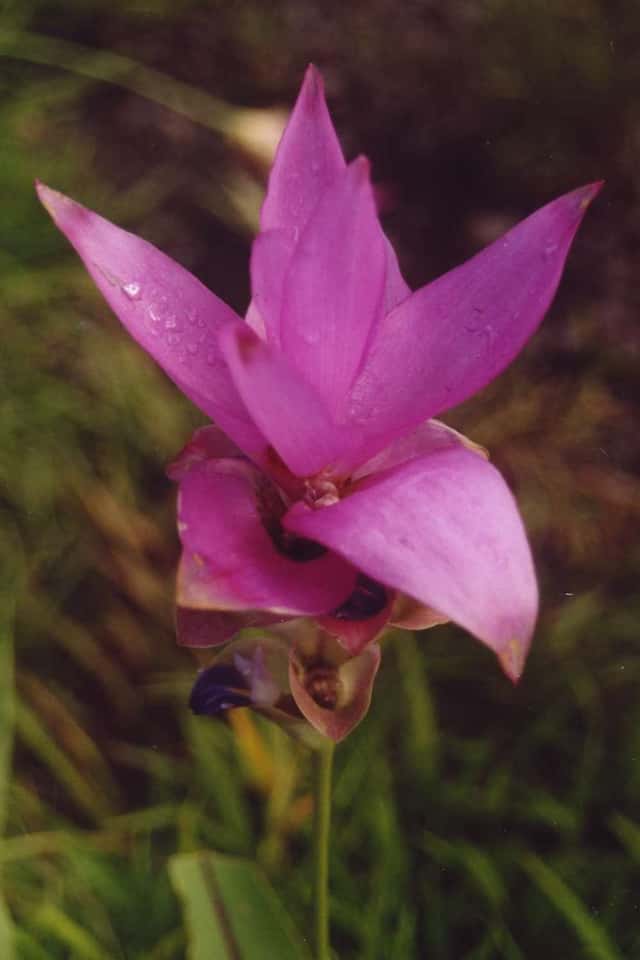
Turmeric is a genus of over one hundred species of rhizomatous herbs in the Zingiberaceae family (the same as ginger), native to South and Southeast Asia. Some species, such as Curcuma longa (the turmeric used in cooking and traditional medicine), are cultivated for their rhizomes; others, such as Curcuma alismatifolia (Siam tulip), are prized for their colorful, cone-shaped inflorescences. All share large, lanceolate foliage and a seasonal growth habit marked by a period of dormancy.
How to Propagate Turmeric?
Rhizome division
Avoid overwatering immediately after planting, as the rootless rhizome is still vulnerable to rot.
- 1 Dig up the clump in early spring before new growth begins
- 2 Carefully separate the rhizomes, ensuring each piece has at least one visible bud (eye)
- 3 Allow the cuts to callous in the shade for 24 hours
- 4 Plant each piece in a lightweight, well-draining substrate a few inches deep
- 5 Keep the soil slightly moist until the first sprouts appear
Materials needed:
How Big Does Turmeric Grow?
TLDR: Turmeric can reach up to 1.2m tall with Medium growth rate.
Max height
1.2m
Spread
90cm
Growth rate
Medium
Foliage
Deciduous
Plant Uses
Ornamental
Great for decoration
Edible
Can be consumed
Medicinal
Medicinal properties
Aromatic
Pleasant fragrance
Medicinal Uses
- Anti-inflammatory and antioxidant (Curcuma longa rhizome, rich in curcumin)
- Traditional use for digestion and wound healing
Culinary Uses
- Spice and natural coloring (turmeric powder)
- Used in teas and infusions
Is your plant showing symptoms?
Click on the symptom to discover possible causes:
What Diseases Commonly Affect Turmeric?
TLDR: Turmeric is susceptible to 11 known diseases. Monitor regularly for early detection.
Overwatering
Overwatering occurs when plants receive too much water, depriving roots of oxygen and causing root rot. This environmental stress is one of the most common causes of houseplant death, as waterlogged soil prevents roots from breathing and functioning properly.
Root Rot
Root rot is a serious fungal disease that affects the root system of plants, causing them to decay and die. It is primarily caused by overwatering, poor drainage, or soil-borne fungi such as Pythium, Phytophthora, Rhizoctonia, and Fusarium. The disease thrives in waterlogged conditions where roots are deprived of oxygen, making them susceptible to fungal infection.
Pythium Root Rot
Pythium root rot is a serious fungal disease caused by various Pythium species including P. aphanidermatum, P. ultimum, and P. irregulare. These water molds are present in practically all cultivated soils and attack plant roots under wet conditions, causing rapid wet rot that can extend into the stem. The disease is favored by poor drainage, overwatering, and specific temperatures depending on the species.
Fusarium Wilt
Fusarium wilt is a serious fungal disease caused by the soil-borne fungus Fusarium oxysporum. The fungus invades roots and blocks the water-conducting vessels (xylem) of the plant, causing progressive wilting and eventual death. Host-specific forms of the pathogen exist that attack different plant species.
Meaning & Symbolism
In Asian culture, turmeric is associated with purity, prosperity, and spiritual protection, being used in rituals and ceremonies; the Siam tulip is seen as a symbol of exotic elegance.
Compare with similar plants
| Attribute | Difficulty | Light | Watering | Pet Safe |
|---|---|---|---|---|
| Dark Fieldcap | Medium | Low light | 2d | ⚠️ |
| Azalea | Medium | Partial shade | 3d | ⚠️ |
| Muriel's Bamboo | Medium | Partial shade | 3d | ✓ |
| Bougainvillea | Medium | Direct sun | 7d | ⚠️ |




