Magnoliaceae
Umbrella Magnolia (Magnolia tripetala)
Magnolia tripetala
Part shade, rich soil that stays moist, and shelter from strong wind. It needs a cold winter and does not grow indoors.
Every 7 days
Partial shade
-29° - °C
% - %
Categories
What is Umbrella Magnolia?
Umbrella Magnolia (Magnolia tripetala) is a medium-care plant from the Magnoliaceae family. Umbrella magnolia is a small deciduous tree native to the eastern United States, where it grows in moist woods, ravines and stream banks in the Appalachians. It usually reaches 4.5 to 9 metres, sometimes up to 14, often with several trunks. Its leaves are huge, up to 60 cm long, and grow in clusters...
Umbrella Magnolia grows up to 13.7m, spread of 900cm, watering every 7 days. It is not suitable for indoor environments and safe for pets.
Unlike many popular species, Umbrella Magnolia is safe to keep around pets.
How to Care for Umbrella Magnolia?
TLDR: Umbrella Magnolia needs Partial shade, watering every 7 days, and temperatures between -29-30°C with 40-70% humidity.
How Often Should You Water Umbrella Magnolia?
Keep the soil evenly moist, especially in the first years: about once a week in dry weather, deeply. It doesn't like drying out or sitting in waterlogged soil. A layer of mulch helps hold moisture.
How Much Light Does Umbrella Magnolia Need?
Part shade is ideal, as in the woodland where it grows wild. It tolerates fairly deep shade, and full sun in cooler climates as long as the soil stays moist.
What Is the Best Soil for Umbrella Magnolia?
Deep soil rich in organic matter, acidic to neutral, moist but draining. Add leaf mould or compost when planting.
What Pot Should You Use for Umbrella Magnolia?
Best in the ground. A young tree can spend a year or two in a large, deep pot with a drainage hole, but it soon needs to be planted out.
What Is Umbrella Magnolia and Where Does It Come From?
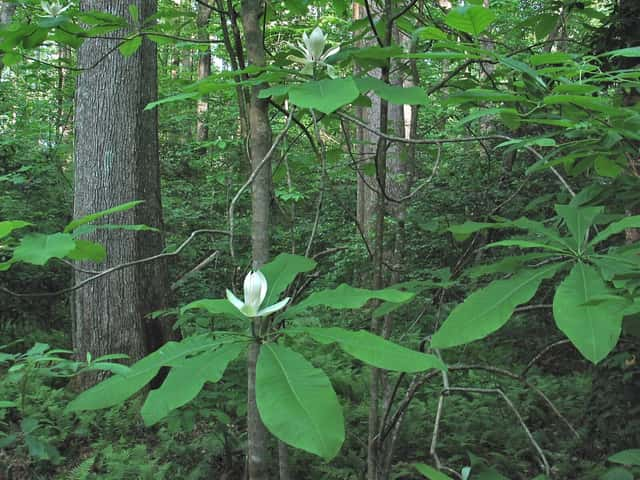
Umbrella magnolia is a small deciduous tree native to the eastern United States, where it grows in moist woods, ravines and stream banks in the Appalachians. It usually reaches 4.5 to 9 metres, sometimes up to 14, often with several trunks. Its leaves are huge, up to 60 cm long, and grow in clusters at the ends of the branches that spread out like the spokes of an umbrella. In late spring it opens large creamy-white flowers, up to 25 cm across, with a scent many people find unpleasant. In late summer it bears cone-like fruits that turn pinkish red and split to show red seeds, which birds eat. The wood is soft and brittle and smells bad when it breaks.
How to Propagate Umbrella Magnolia?
Seed
Never let the seeds dry out before sowing: they lose viability quickly.
- 1 Collect the red seeds from ripe fruit in autumn
- 2 Rub off the red coating and wash the seeds
- 3 Keep them in damp sand in the fridge for about 3 months, or sow outdoors in autumn
- 4 Sow 1 cm deep in spring in a moist, shaded spot
Materials needed:
Root cuttings
Take only a few roots from each tree, and keep the compost moist but not wet.
- 1 While the tree is dormant, uncover a young root near the trunk
- 2 Cut a 5-8 cm piece about as thick as a pencil
- 3 Lay it in a pot of moist compost and cover with 1-2 cm of compost
- 4 Keep in a cool, sheltered place until a shoot appears
Materials needed:
How Big Does Umbrella Magnolia Grow?
TLDR: Umbrella Magnolia can reach up to 13.7m tall with Medium growth rate.
Max height
13.7m
Spread
9.0m
Growth rate
Medium
Foliage
Deciduous
Plant Uses
Ornamental
Great for decoration
Is your plant showing symptoms?
Click on the symptom to discover possible causes:
What Diseases Commonly Affect Umbrella Magnolia?
TLDR: Umbrella Magnolia is susceptible to 2 known diseases. Monitor regularly for early detection.
Scale Insects
Scale insects are small sap-sucking pests that appear as brown, shell-like bumps on plant stems and leaves. There are over 25 species, divided into armored (hard) and unarmored (soft) scales. They feed by piercing plant tissue and extracting sap, which weakens the plant and can lead to yellowing, stunted growth, and even death if left untreated. They also excrete honeydew, which attracts ants and promotes sooty mold growth.
Curculionidae
Curculionidae (weevils) are small beetles that feed on plants. Adults chew leaf margins, leaving crescent-shaped notches, primarily at night. The larvae live in the substrate and consume roots, causing decline, yellowing, and wilting even when the substrate is moist, and in severe cases, plant death. They frequently affect ornamentals and garden plants such as strawberries, citrus, roses, hydrangeas, azaleas, blueberries, begonias, and many potted plants.
Fun Facts
Its leaves can reach 60 cm, among the largest of any tree native to North America
Magnolias evolved before bees, and to this day their flowers are pollinated mostly by beetles
The ripe fruit looks like a pink cone and opens to show bright red seeds
Frequently asked questions
Why is it called umbrella magnolia?
Why do the flowers smell bad?
Why are the leaves torn?
Is umbrella magnolia toxic to cats and dogs?
Compare with similar plants
| Attribute | Difficulty | Light | Watering | Pet Safe |
|---|---|---|---|---|
| Dark Fieldcap | Medium | Low light | 2d | ⚠️ |
| Azalea | Medium | Partial shade | 3d | ⚠️ |
| Muriel's Bamboo | Medium | Partial shade | 3d | ✓ |
| Bougainvillea | Medium | Direct sun | 7d | ⚠️ |




