Rosaceae
Sorbaria sorbifolia (Ural False Spirea) Care Guide
Sorbaria sorbifolia
Plant in full sun to partial shade in average, well-drained soil. Water regularly the first season to establish, then let the soil dry slightly between waterings — established plants tolerate short dry spells. Prune hard in late winter or early spring to control size and encourage fresh flowering growth, and remove unwanted root suckers as they appear.
Every 7 days
Bright indirect
° - °C
% - %
Categories
What is Ural False Spirea?
Ural False Spirea (Sorbaria sorbifolia) is a easy-care plant from the Rosaceae family. Sorbaria sorbifolia is a vigorous, suckering deciduous shrub in the rose family (Rosaceae), native to the temperate forests of Siberia, the Russian Far East, northern China, Korea, and Japan. It forms an upright, multi-stemmed mound of fern-like, pinnately compound leaves that resemble mountain ash...
Ural False Spirea grows up to 3.0m, spread of 300cm, watering every 7 days. It is not suitable for indoor environments and safe for pets.
Unlike many tropical plants, Ural False Spirea tolerates watering mistakes. Best for beginners. Unlike many popular species, Ural False Spirea is safe to keep around pets.
How to Care for Ural False Spirea?
TLDR: Ural False Spirea needs Bright indirect, watering every 7 days, and temperatures between 15-30°C with 40-70% humidity.
How Often Should You Water Ural False Spirea?
Water deeply about once a week during the growing season, more often in extreme heat or for newly planted specimens. Once established, Sorbaria handles brief dry spells without much fuss.
How Much Light Does Ural False Spirea Need?
For the heaviest bloom, give it full sun; in hot summer climates a bit of afternoon shade helps prevent leaf scorch.
What Is the Best Soil for Ural False Spirea?
Not fussy about soil type — sandy, loamy, or clay — as long as it drains well and has some organic matter. Heavier clay soils actually help slow its suckering habit.
What Pot Should You Use for Ural False Spirea?
Best grown in open ground rather than containers due to its spreading habit; if container growing is necessary, use a large, wide, well-draining pot to accommodate root suckers and repot/divide every couple of years.
What Is Ural False Spirea and Where Does It Come From?
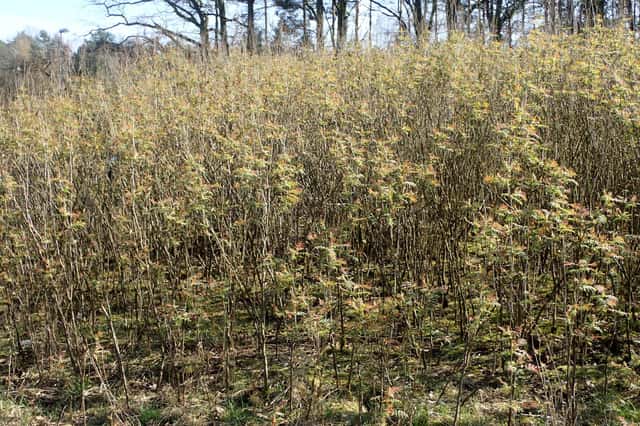
Sorbaria sorbifolia is a vigorous, suckering deciduous shrub in the rose family (Rosaceae), native to the temperate forests of Siberia, the Russian Far East, northern China, Korea, and Japan. It forms an upright, multi-stemmed mound of fern-like, pinnately compound leaves that resemble mountain ash foliage, topped in early-to-mid summer by dense, pyramidal panicles of small white flowers that attract bees and other pollinators. Extremely cold-hardy and adaptable, it is prized in northern gardens for erosion control, mass plantings, and informal hedges, though its spreading root suckers mean it needs room to roam or regular edging.
How to Propagate Ural False Spirea?
Division of root suckers
Suckers separate easily since Sorbaria naturally spreads this way; division is the fastest and most reliable method.
- 1 Locate a rooted sucker growing away from the main clump
- 2 Dig around the sucker to expose its roots, keeping as much root mass intact as possible
- 3 Sever the sucker from the parent plant's root system with a sharp spade or pruners
- 4 Transplant immediately into a prepared bed or pot with well-draining soil
- 5 Water thoroughly and keep consistently moist until new growth appears
Materials needed:
Seed propagation
Seed-grown plants take longer to establish than divisions; stratification improves germination rates.
- 1 Collect ripe seed from dried seed capsules in fall
- 2 Sow seed in a cold frame or refrigerate for several weeks to break dormancy
- 3 Sow in trays of well-draining seed compost in late winter
- 4 Keep lightly moist and in bright, indirect light until germination
- 5 Transplant seedlings outdoors after their first year once well established
Materials needed:
How Big Does Ural False Spirea Grow?
TLDR: Ural False Spirea can reach up to 3.0m tall with Fast growth rate.
Max height
3.0m
Spread
3.0m
Growth rate
Fast
Foliage
Deciduous
Plant Uses
Ornamental
Great for decoration
Ground Cover
Soil coverage
Culinary Uses
- Young leaves and shoots can be cooked and eaten in small quantities, though caution is advised due to limited safety data
Is your plant showing symptoms?
Click on the symptom to discover possible causes:
What Diseases Commonly Affect Ural False Spirea?
TLDR: Ural False Spirea is susceptible to 4 known diseases. Monitor regularly for early detection.
Powdery Mildew
Powdery mildew is a common fungal disease caused by various fungi species including Erysiphe, Podosphaera, Oïdium, and Leveillula. It affects over 10,000 plant species worldwide. The disease thrives in warm, dry climates with high humidity and appears as a distinctive white powdery coating on plant surfaces.
Aphids
Aphids are small, soft-bodied, pear-shaped insects (1/16 to 1/8 inch long) that feed by sucking nutrient-rich sap from plants. They reproduce rapidly and can quickly weaken plants, causing distorted growth and transmitting plant viruses. Aphids come in various colors including green, black, red, yellow, brown, and gray. They secrete honeydew, a sticky substance that attracts ants and encourages sooty mold growth.
Spider Mites
Spider mites are tiny arachnids (less than 1/20 inch long) related to spiders and ticks that feed on plant sap. They thrive in hot, dry conditions and can cause significant damage to ornamental and vegetable plants. During severe infestations, crop losses can reach 14% or higher as these pests disrupt vital plant processes including photosynthesis, carbon dioxide absorption, and transpiration.
Scale Insects
Scale insects are small sap-sucking pests that appear as brown, shell-like bumps on plant stems and leaves. There are over 25 species, divided into armored (hard) and unarmored (soft) scales. They feed by piercing plant tissue and extracting sap, which weakens the plant and can lead to yellowing, stunted growth, and even death if left untreated. They also excrete honeydew, which attracts ants and promotes sooty mold growth.
Meaning & Symbolism
In its native Siberian range, Sorbaria's hardiness and readiness to reclaim disturbed ground have made it something of a folk emblem of resilience and renewal after harsh winters.
Fun Facts
Its compound, fern-like leaves closely resemble mountain ash (Sorbus) foliage, which is where the genus name Sorbaria comes from.
Native to Siberia and the Russian Far East, it can survive winters as cold as USDA zone 2 (down to about -45°C).
The plant spreads by root suckers so effectively that a single shrub can form a substantial thicket within a few years.
It carries the RHS Award of Garden Merit as a reliable, low-maintenance garden shrub.
Frequently asked questions
Is Sorbaria sorbifolia invasive?
How much sun does false spirea need?
Is Sorbaria sorbifolia toxic to pets?
When should I prune Sorbaria sorbifolia?
How cold-hardy is Sorbaria sorbifolia?
Compare with similar plants
| Attribute | Difficulty | Light | Watering | Pet Safe |
|---|---|---|---|---|
| Field Maple | Easy | Bright indirect | 14d | ✓ |
| Silver Birch | Easy | Direct sun | 14d | ✓ |
| Common Blanketflower | Easy | Direct sun | 10d | ✓ |
| Cushion Bush | Easy | Direct sun | 14d | ✓ |





