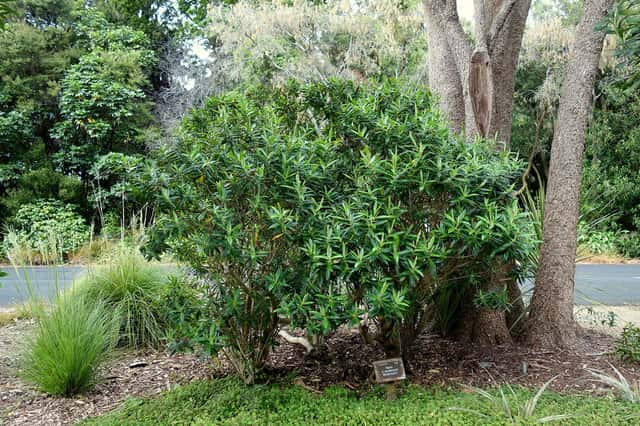
Plantaginaceae
Hebe 'Magic Color': Ground Cover Plant
Hebe 'Magic Color'
Hebe 'Magic Color' requires a sunny to partially shaded location, well-draining soil, and moderate regular watering without waterlogging. In colder regions, it appreciates protection from freezing winds, and in hot summers, light partial shade helps protect the leaf coloration.
Every 7 days
Bright indirect
-5° - 28°C
40% - 60%
Categories
What is Hebe 'Magic Color'?
Hebe 'Magic Color' (Hebe 'Magic Color') is a medium-care plant from the Plantaginaceae family. Hebe 'Magic Color' is an evergreen ornamental shrub from the plantain family (Plantaginaceae), belonging to the genus Hebe (formerly classified under Veronica), which is native to New Zealand. This cultivar is prized for its variegated foliage, where small opposite leaves display alternating shades...
Hebe 'Magic Color' grows up to 60cm, spread of 75cm, watering every 7 days, -5°C – 28°C, 40–60% humidity. It is not suitable for indoor environments and safe for pets.
Unlike many popular species, Hebe 'Magic Color' is safe to keep around pets.
How to Care for Hebe 'Magic Color'?
TLDR: Hebe 'Magic Color' needs Bright indirect, watering every 7 days, and temperatures between -5-28°C with 40-60% humidity.
How Often Should You Water Hebe 'Magic Color'?
Water regularly once the top layer of soil has slightly dried out, but never leave the soil waterlogged—hebes are sensitive to root rot. It is better to water at the base of the plant rather than on the leaves to reduce the risk of fungal diseases.
How Much Light Does Hebe 'Magic Color' Need?
It grows best in a sunny to lightly shaded spot. In areas with very hot summers, it appreciates afternoon shade to prevent scorching and fading of the variegated leaves.
What Is the Best Soil for Hebe 'Magic Color'?
Prefers light, well-draining soil enriched with compost. Heavy clay or permanently waterlogged soils are unsuitable—improve drainage by adding sand or perlite.
What Pot Should You Use for Hebe 'Magic Color'?
A pot with sufficient drainage holes is suitable, ideally made of terracotta, which helps wick away excess moisture and reduces the risk of root rot.
Care Schedule
Fertilize
Every 60 days
Repot
Every 730 days
What Is Hebe 'Magic Color' and Where Does It Come From?
Hebe 'Magic Color' is an evergreen ornamental shrub from the plantain family (Plantaginaceae), belonging to the genus Hebe (formerly classified under Veronica), which is native to New Zealand. This cultivar is prized for its variegated foliage, where small opposite leaves display alternating shades of green, cream, and pinkish-purple. In late summer and autumn, the shrub is adorned with small clusters of purple to white flowers. It is a compact, densely branched shrub suitable for garden beds, containers, and low hedges.
How to Propagate Hebe 'Magic Color'?
Stem cuttings
Use clean and sharp tools; keep the substrate slightly moist but not wet to prevent the cutting from rotting.
- 1 In spring or summer, cut an 8-10 cm long non-flowering shoot.
- 2 Remove the leaves from the bottom half of the cutting.
- 3 Insert the cutting into a moist substrate mixed with perlite for good drainage.
- 4 Maintain high humidity using a transparent bag or cover and place in a bright spot without direct sunlight.
- 5 Once rooted (usually by the following spring), transplant into an individual pot.
Materials needed:
How Big Does Hebe 'Magic Color' Grow?
TLDR: Hebe 'Magic Color' can reach up to 60cm tall with Medium growth rate.
Max height
60cm
Spread
75cm
Growth rate
Medium
Foliage
Evergreen
Plant Uses
Ornamental
Great for decoration
Ground Cover
Soil coverage
Is your plant showing symptoms?
Click on the symptom to discover possible causes:
What Diseases Commonly Affect Hebe 'Magic Color'?
TLDR: Hebe 'Magic Color' is susceptible to 10 known diseases. Monitor regularly for early detection.
Root Rot
Root rot is a serious fungal disease that affects the root system of plants, causing them to decay and die. It is primarily caused by overwatering, poor drainage, or soil-borne fungi such as Pythium, Phytophthora, Rhizoctonia, and Fusarium. The disease thrives in waterlogged conditions where roots are deprived of oxygen, making them susceptible to fungal infection.
Leaf Spot
Leaf spot is a common fungal disease caused by various pathogens including Alternaria, Ascochyta, Colletotrichum, Septoria, and Venturia. It primarily affects leaves, causing discolored spots that can lead to premature leaf drop if left untreated.
Septoria Leaf Spot
Septoria leaf spot is a destructive fungal disease caused by Septoria lycopersici, particularly devastating during seasons of moderate temperature and abundant rainfall. The disease starts on lower leaves and progresses upward, causing small circular spots with tan to gray centers and dark brown margins. If left untreated, it can dramatically reduce plant yields and cause complete leaf blight.
Downy Mildew
Downy mildew is a fungal-like disease caused by oomycetes (water molds) that thrives in cool, wet conditions. It affects a wide range of plants, causing yellowing leaves with fuzzy white-gray growth underneath, leading to defoliation and reduced yields if left untreated.
Meaning & Symbolism
The genus Hebe is named after the Greek goddess of youth, Hebe, daughter of Zeus and Hera, who served the gods the nectar of eternal youth. In garden symbolism, the plant is therefore associated with youth, vitality, and renewal.
Compare with similar plants
| Attribute | Difficulty | Light | Watering | Pet Safe |
|---|---|---|---|---|
| Dark Fieldcap | Medium | Low light | 2d | ⚠️ |
| Azalea | Medium | Partial shade | 3d | ⚠️ |
| Muriel's Bamboo | Medium | Partial shade | 3d | ✓ |
| Bougainvillea | Medium | Direct sun | 7d | ⚠️ |
Choose & Compare
Sources & References
- How to Plant, Grow, and Care for Hebe Shrubs - Epic Gardening
- Hebe: Grow And Prune Guide - BBC Gardeners World Magazine
- Common Hebe Plant Diseases: How to Identify and Treat
- Root Rot Or Pests? Effective Hebe Treatments - Horticulture.co.uk
- Toxic and Non-Toxic Plant List - Cats | ASPCA
- Hebe | Greek Goddess of Youth - Britannica
- Variegated Hebe Growth: Height vs. Width
- Hebe (Veronica spp.)-Downy Mildew - PNW Pest Management Handbooks




