Asteraceae
Velvet Centaurea (Centaurea cineraria)
Centaurea cineraria
Give it full sun, very well-drained soil and little water. It is drought tolerant once established, survives light frosts (to about -5 °C / 23 °F) and is grown as an annual in colder climates. Trim off flowers and tidy it after flowering to keep the foliage dense.
Every 10 days
Bright indirect
-5° - 35°C
30% - 60%
Categories
What is Velvet Centaurea?
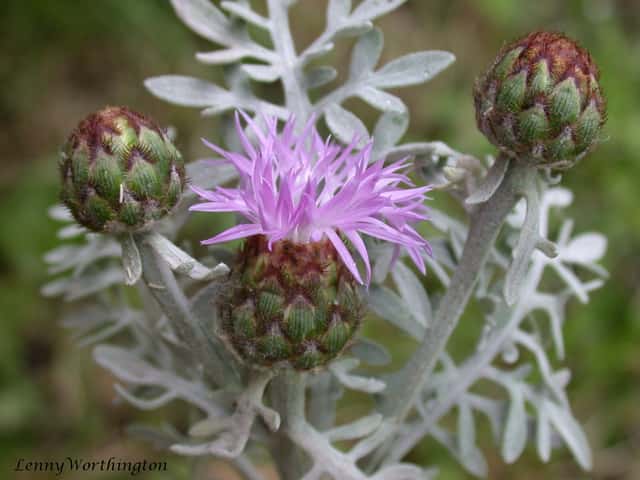
Velvet Centaurea (Centaurea cineraria) is a easy-care plant from the Asteraceae family. Velvet centaurea (Centaurea cineraria) is a perennial sub-shrub in the aster family (Asteraceae), endemic to the coastal cliffs of southern Italy. It is grown for its foliage: deeply lobed leaves covered on both sides with fine, matted hairs that give a silvery-white, felt-like look. In summer it be...
Velvet Centaurea grows up to 60cm, spread of 45cm, watering every 10 days, -5°C – 35°C, 30–60% humidity. It is not suitable for indoor environments and safe for pets.
Unlike many tropical plants, Velvet Centaurea tolerates watering mistakes. Best for beginners. Unlike many popular species, Velvet Centaurea is safe to keep around pets.
How to Care for Velvet Centaurea?
TLDR: Velvet Centaurea needs Bright indirect, watering every 10 days, and temperatures between -5-35°C with 30-60% humidity.
How Often Should You Water Velvet Centaurea?
Water only when the top few centimetres of soil are dry, roughly every 10 days in summer and much less in winter. Soggy soil leads to root rot. Avoid wetting the leaves: the silver fuzz turns green when wet.
How Much Light Does Velvet Centaurea Need?
Needs full sun (6 or more hours of direct light). It tolerates partial shade but gets leggy and less silvery.
What Is the Best Soil for Velvet Centaurea?
Light, sandy or chalky, very well-drained soil; acid, neutral or alkaline pH is fine. In pots, use a cactus mix blended with garden soil.
What Pot Should You Use for Velvet Centaurea?
Clay or terracotta pot with drainage holes, so the mix dries out between waterings.
Care Schedule
Fertilize
Every 60 days
What Is Velvet Centaurea and Where Does It Come From?
Velvet centaurea (Centaurea cineraria) is a perennial sub-shrub in the aster family (Asteraceae), endemic to the coastal cliffs of southern Italy. It is grown for its foliage: deeply lobed leaves covered on both sides with fine, matted hairs that give a silvery-white, felt-like look. In summer it bears purple, thistle-like flower heads, which many gardeners trim off to keep the plant compact. It is also sold as dusty miller, a name it shares with Jacobaea maritima (Senecio cineraria), a different plant.
How to Propagate Velvet Centaurea?
Seed
Do not keep the mix soggy; seedlings rot easily.
- 1 Sow in trays 8 to 10 weeks before the last frost
- 2 Cover the seed with a thin layer of mix
- 3 Keep at 18-24 °C with the mix lightly moist
- 4 Plant seedlings out once the risk of frost has passed
Materials needed:
Tip cutting
Use clean tools and a barely moist mix; too much water rots the cutting.
- 1 In summer, cut 8-10 cm tips from semi-hardwood stems
- 2 Strip the lower leaves
- 3 Insert into a sandy, free-draining mix
- 4 Keep in bright light out of harsh sun and water sparingly
Materials needed:
How Big Does Velvet Centaurea Grow?
TLDR: Velvet Centaurea can reach up to 60cm tall with Fast growth rate.
Max height
60cm
Spread
45cm
Growth rate
Fast
Foliage
Evergreen
Plant Uses
Ornamental
Great for decoration
Is your plant showing symptoms?
Click on the symptom to discover possible causes:
What Diseases Commonly Affect Velvet Centaurea?
TLDR: Velvet Centaurea is susceptible to 4 known diseases. Monitor regularly for early detection.
Root Rot
Root rot is a serious fungal disease that affects the root system of plants, causing them to decay and die. It is primarily caused by overwatering, poor drainage, or soil-borne fungi such as Pythium, Phytophthora, Rhizoctonia, and Fusarium. The disease thrives in waterlogged conditions where roots are deprived of oxygen, making them susceptible to fungal infection.
Aphids
Aphids are small, soft-bodied, pear-shaped insects (1/16 to 1/8 inch long) that feed by sucking nutrient-rich sap from plants. They reproduce rapidly and can quickly weaken plants, causing distorted growth and transmitting plant viruses. Aphids come in various colors including green, black, red, yellow, brown, and gray. They secrete honeydew, a sticky substance that attracts ants and encourages sooty mold growth.
Powdery Mildew
Powdery mildew is a common fungal disease caused by various fungi species including Erysiphe, Podosphaera, Oïdium, and Leveillula. It affects over 10,000 plant species worldwide. The disease thrives in warm, dry climates with high humidity and appears as a distinctive white powdery coating on plant surfaces.
Rust
Rust is a common fungal disease caused by fungi in the order Pucciniales that affects a wide variety of plants. The disease gets its name from the characteristic orange, yellow, or reddish-brown pustules that appear on leaves, resembling metal rust. This obligate fungal parasite requires living plants to survive and can cause significant economic losses in agricultural crops.
Fun Facts
In the wild it grows on coastal cliffs in southern Italy, from sea level up to about 350 m.
It is listed as Endangered by the IUCN in its natural habitat.
When the leaves get wet, the white fuzz fades and the green of the leaf shows through.
Frequently asked questions
Is velvet centaurea the same as dusty miller (Senecio cineraria)?
How often should I water velvet centaurea?
Is velvet centaurea frost hardy?
Should I remove the flowers?
Compare with similar plants
| Attribute | Difficulty | Light | Watering | Pet Safe |
|---|---|---|---|---|
| Field Maple | Easy | Bright indirect | 14d | ✓ |
| Iberian Houseleek | Easy | Direct sun | 14d | ✓ |
| Silver Birch | Easy | Direct sun | 14d | ✓ |
| Common Blanketflower | Easy | Direct sun | 10d | ✓ |